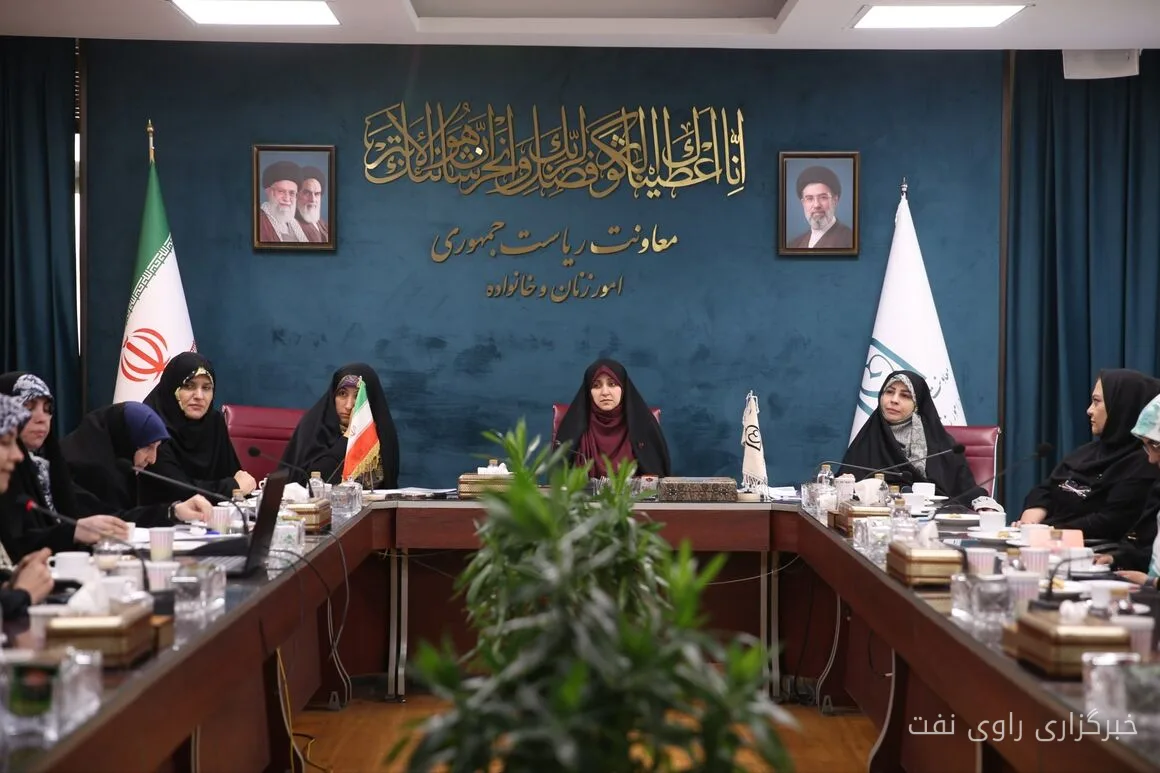
Zahra Behrouzazar addressed the actions taken to reduce energy consumption at a meeting reviewing the role of families in energy management and demand. She mentioned the consumption reduction campaign that began at the request of the President to lower ambient temperature by 2 degrees, stating: "Effective measures have been taken in electricity consumption management programs, resulting in significant savings. However, to achieve sustainable results, the support and cooperation of responsible agencies must be strengthened."
The Necessity of Action in Energy Consumption Management
Behrouzazar emphasized that consumption management must move from awareness and persuasion to action, adding: "Today, almost everyone is aware of the necessity of reducing consumption and the role of women in this regard; the issue is to know what actions to take in the field and how to convert this awareness into sustainable behavior."
Read more: The U.S. Supreme Court is addressing the Boulder climate lawsuit against Exxon and Suncor
The Vice President for Women and Family Affairs considered the role of women in household consumption management to be effective and stated: "We cannot place the responsibility for changing consumption patterns solely on women." She continued: "If energy-efficient appliances are to be purchased or family consumption patterns are to change, the economic decision-making of the family and the participation of men must also be considered alongside the role of women."
Family-Centered Perspective and Collective Participation
Behrouzazar emphasized the necessity of a family-centered approach to energy consumption management, stating: "Without a family-centered perspective, we may create more pressure and conflict within the family instead of solving the issue. Therefore, women and men must participate together in this path, and consumption management should become a shared family responsibility."
She also referred to utilizing neighborhood capacities, adding: "We must determine what can be done in neighborhoods and how to leverage local fields and networks. At this stage, we need operational plans and a division of labor among agencies more than we need to produce more content."
Behrouzazar pointed out the capacity of women's affairs consultants in agencies, provincial managers, and governors, stating: "A wide network of managers and consultants across the country is connected to families, and with a clear division of labor, this capacity can be used to implement consumption management programs at the family and neighborhood levels."
Attention to Renewable Energies
She emphasized the necessity of focusing on renewable energies and increasing the use of solar panels, stating: "Alongside consumption management, attention must be paid to increasing the production of renewable energies and utilizing the capacity of industrial units for energy production."
Behrouzazar further noted: "In the area of household consumption, especially considering the upcoming winter and the gas consumption challenges in some provinces, we must reform our energy usage patterns. Part of the issue relates to consumption culture, and we must help families change their consumption patterns without creating pressure and conflict."
The Vice President emphasized the necessity of involving women in the economic benefits arising from consumption pattern reforms, stating: "We must also consider the family economy in this matter and examine how women's participation can be linked to economic benefits for the family; merely recommending consumption reduction without considering economic benefits and mechanisms cannot lead to sustainable change."
In conclusion, Behrouzazar discussed the role of the Women and Family Affairs Office in this area, stating: "We do not see ourselves as the responsible authority in the specialized energy field, but rather view our role as facilitators and connectors between the specialized agency, families, experts, and social networks. Whenever the issue requires law, regulations, policymaking, or coordination among agencies, the office can act as a connecting link and facilitator alongside the specialized agency."
Read more: The decrease in the Caspian Sea level and its impact on Iran's rights · 17% increase in CNG consumption in Kurdistan following gasoline price reform