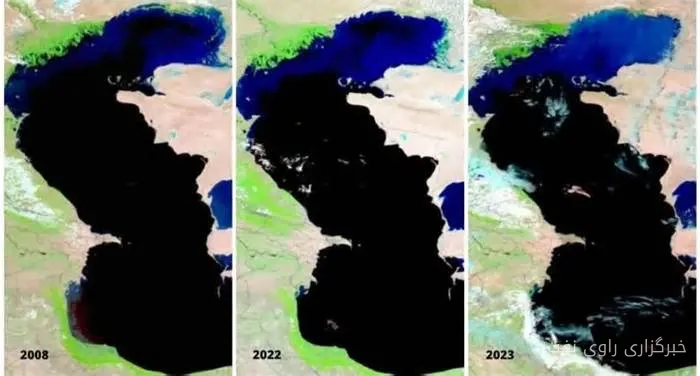
The decline of the Caspian Sea water level, estimated at about 630 cubic kilometers over the past two decades, is related not only to climate changes but also to human and managerial changes. Iran, with the shortest coastline among the five bordering countries, is in a sensitive position, and the seabed and underground resources of the sea have yet to be fully determined.
Current Situation and Legal Challenges
The government has sent a bill for the approval of the "Convention on the Legal Regime of the Caspian Sea" to the parliament in 1405. The review of this bill continued until the end of Shahrivar 1405, and its final approval has not yet been announced. The 2018 convention does not specify a share for Iran and has not delineated the final borders of the seabed.
Read more: Mohammad Bahrami emphasized the importance of developing renewable energy
Factors Influencing Water Level Decline
Recent research indicates that increased evaporation and reduced water inflow from the five main rivers to the Caspian Sea, especially from the Volga River, have been key factors in the decline of the water level. Between the periods of 1991 to 2005 and 2006 to 2020, the average inflow from these rivers decreased by about 41.9 cubic kilometers per year, with the Volga accounting for nearly 31.9 cubic kilometers of this decline.
The Volga, as one of the most important water sources for the Caspian Sea, has been affected by human activities and climate changes, significantly impacting the sea's water balance. This situation increases the vulnerability of countries like Iran, which are heavily dependent on the flow of this river.
Environmental and Economic Impacts
The decline in the Caspian Sea water level also has negative effects on coastal ecosystems. Particularly in the Gorgan Gulf and Anzali Wetland, this decline has led to environmental changes and reduced water reserves. In the Gorgan Gulf, the water reserve has decreased from about 1,443 million cubic meters in 1998 to about 220 million cubic meters in 2024. This concerning issue could lead to more serious problems in the future.
Ultimately, Iran faces serious challenges in legal negotiations regarding the Caspian Sea. Historical documents such as the treaties of 1921 and 1940 have not clearly defined Iran's share, and given the geopolitical changes following the collapse of the Soviet Union, the need for a reassessment of this issue is increasingly felt.
Read more: Development of hazardous waste management programs in Bangladesh · The General Court of Luxembourg declared parts of the green investment classification criteria illegal