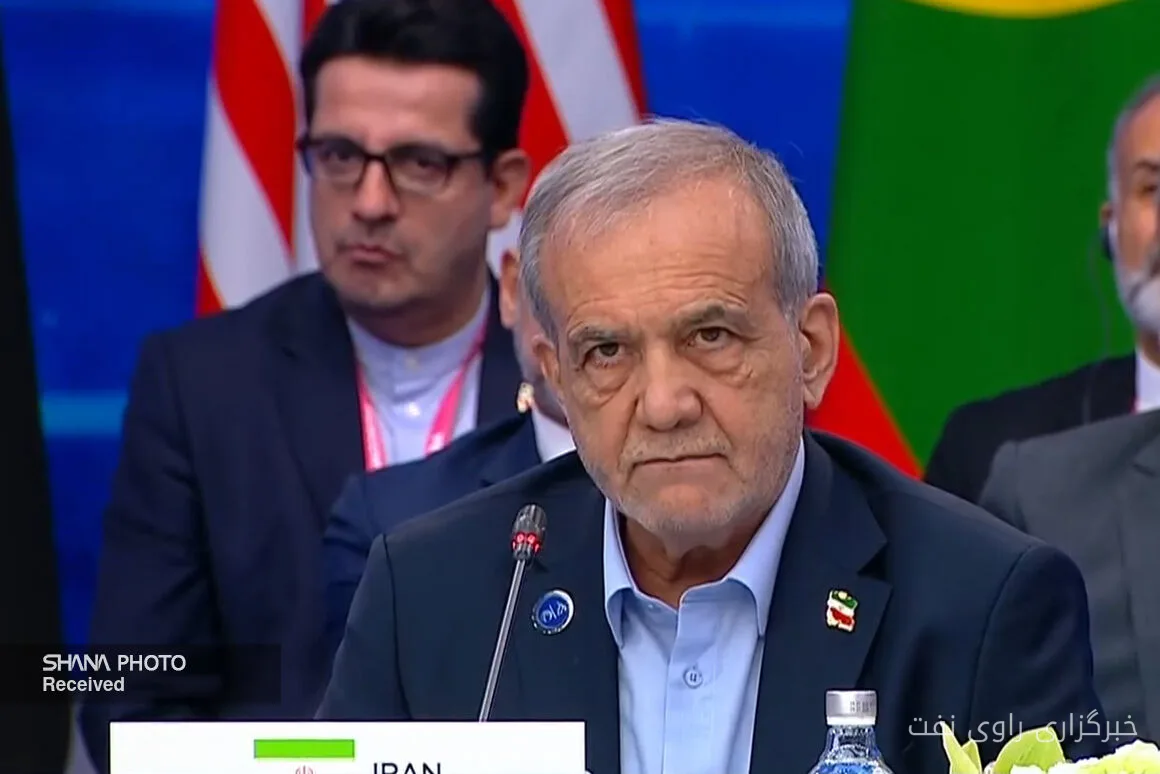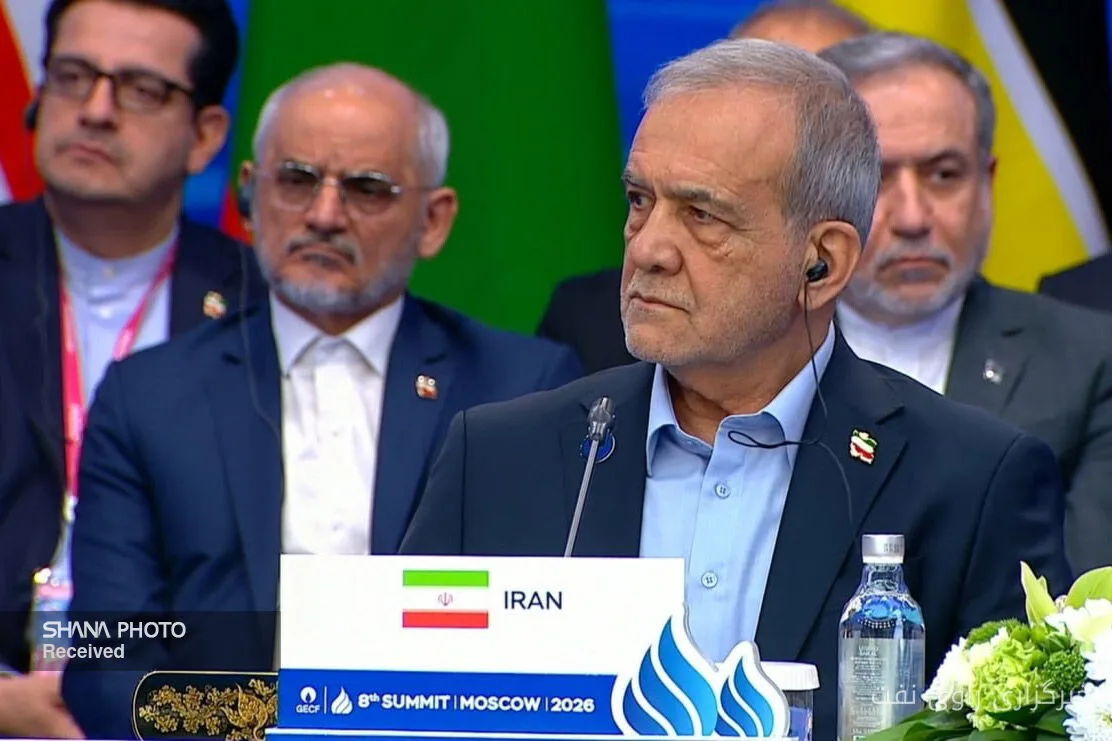
Massoud Pezeshkian today (Tuesday, November 5) at the eighth summit of the Gas Exporting Countries Forum (GECF) in Moscow highlighted the challenges of global energy security and stressed the need for market stability and gas trade development. He pointed out that geopolitical developments and military actions by the United States and the Zionist regime against the Islamic Republic of Iran have jeopardized global energy security and the economy.
Challenges of Energy Security and Sanctions
Pezeshkian stated at the summit: "The military aggression of the United States and the Zionist regime against Iran amidst political negotiations is a regrettable and dangerous event against global security. These actions have also led to the destruction of our country's energy facilities and disrupted the energy transfer process. The imposition of unilateral sanctions and economic terrorism has also posed a serious threat to the stability of energy markets. This issue must be condemned by the major energy suppliers of the world and effectively addressed."
Read more: Russian refineries' diesel production increased in October
The Role of the Gas Exporting Countries Forum
The President emphasized the role of the Gas Exporting Countries Forum in multilateral diplomacy, stating: "This forum can play an effective role in solving the world's energy problems and constraints." He added: "Addressing the provisions of the forum's charter and the summit statements, especially in the development of technologies and sustainable environmental management methods, is of special importance."
Pezeshkian also stressed the need to develop cooperation in two areas: "governance and strategic management" and "technical-engineering operations." In the strategic area, the focus should be on market stability and how to increase the volume of natural gas trade. In the technical and engineering area, the development of joint investments in the gas value chain from production to consumption and increasing efficiency while reducing the environmental impacts of gas production and consumption should be considered.
He emphasized: "The existing capacities in member countries should be transformed into operational projects and common benefits. The effective implementation of the forum's long-term strategy, in line with market developments and the long-term outlook of supply and demand, can provide a clear path for aligning the priorities of the members."
Pezeshkian, as one of the founding members of the Gas Exporting Countries Forum and the second-largest holder of proven natural gas reserves in the world, announced Iran's readiness to play a more active role in advancing multilateral diplomacy and developing investment opportunities. He also referred to Iran's strategic position in the global energy corridors and the existing capacities in the gas industry.
He added: "Iran, with a 70% share in the energy basket and 95% coverage of the country's population under the national natural gas network, has suitable capacities for international cooperation."
Pezeshkian also emphasized the importance of the participation of oil and energy ministers from member and observer countries in this forum, stating: "Constructive cooperation among members is of great importance."
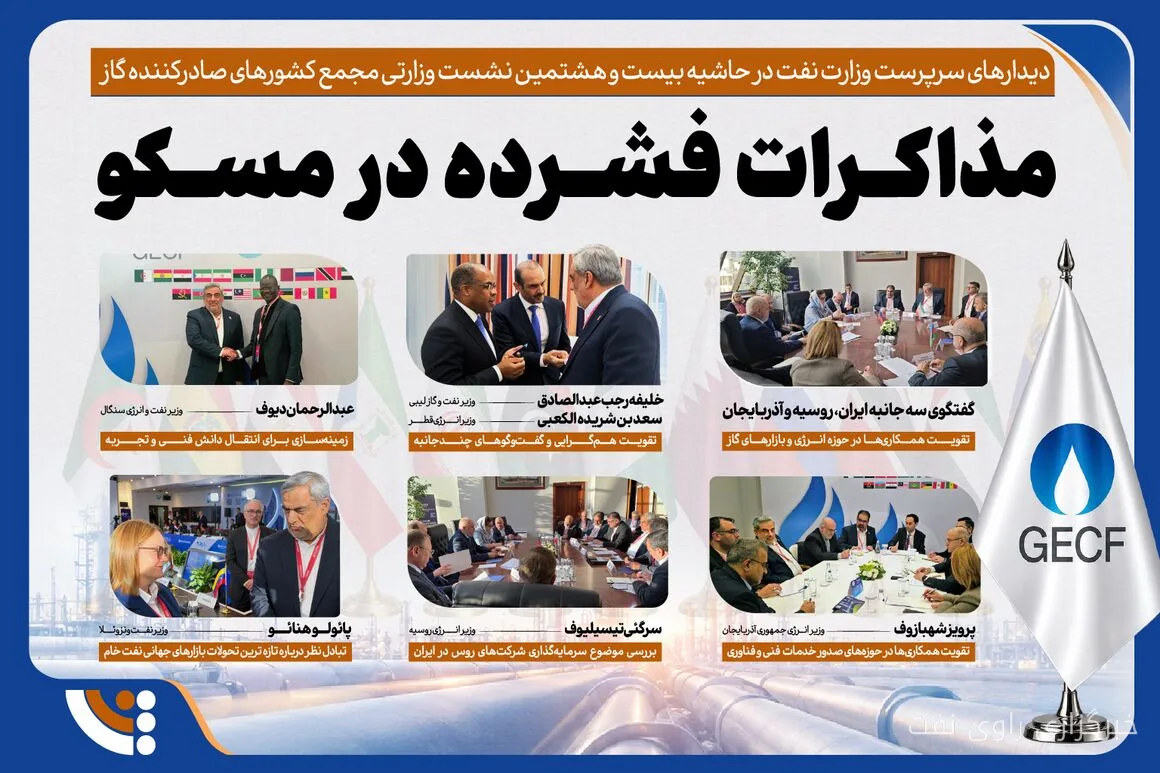
The summit of the member countries of the Gas Exporting Countries Forum is held every two years. The first summit was held in 2011 in Doha, Qatar, and subsequently, Moscow, Tehran, Santa Cruz, Bolivia, Malabo, Equatorial Guinea, Doha, and Algiers have been introduced as hosts of the subsequent sessions. The Gas Exporting Countries Forum has 12 main members, which together hold about 70% of the world's proven natural gas reserves.
Read more: Britain is reviewing the cancellation of its large non-operational oil field · Massoud Pezeshkian traveled to Moscow