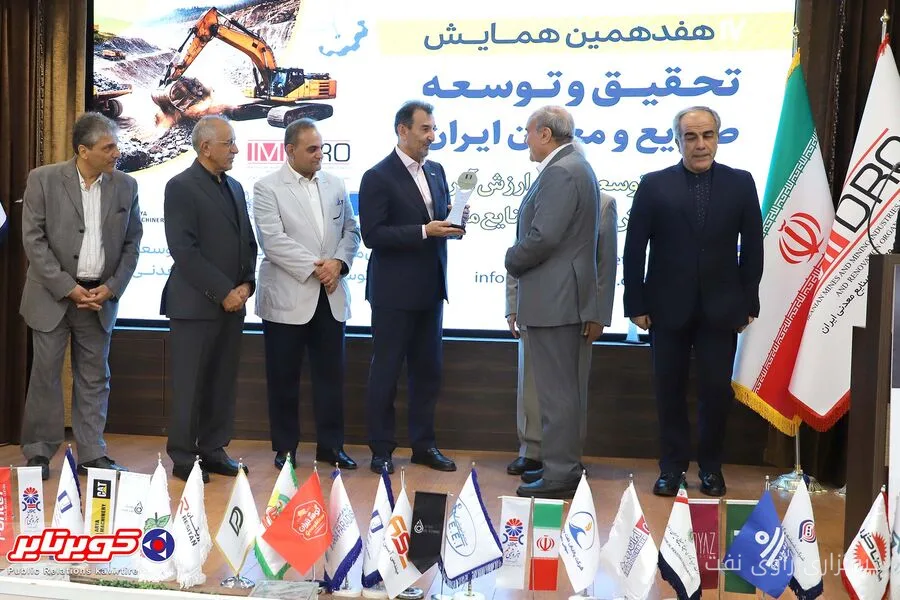
The seventeenth conference on research and development of industries and mines in Iran was hosted by IMIDRO and the Association for Research and Development and Innovation of Industries and Mines in Iran. This conference emphasized the importance of research and development (R&D) as a value-creating link in the value chain of mining and mineral industries. This message is particularly clear for the tire industry, which is dependent on minerals.
Emphasis on Research and Development
The tire industry is directly dependent on raw materials such as carbon black, silica, steel cord, and advanced compounds. For this reason, the tire production process requires a complete chain of research and development. The secretariat of the conference has announced that this year's focus is on transitioning from a traditional economy to a knowledge-based economy and examining the role of R&D in reducing the risk tolerance of businesses.
Read more: National Gas Company emphasized readiness to manage gas imbalance
Ali Masoumi, the Secretary General of the Association, had previously emphasized the association's activities at three levels: legal infrastructure, innovation ecosystem development, and empowering R&D units. The draft law for dedicated support of research and development in the industrial sector has also been under review in the parliamentary committees since 2020. The approval of this law could treat R&D expenses as investments.
Challenges and Opportunities in the Tire Industry
The Iranian tire industry faces serious challenges, including dependence on natural and synthetic rubber. R&D units in other countries are working on modified silica and nano compounds that can reduce rolling resistance by up to 20 percent. This means reduced fuel consumption for vehicles and alignment with the new standards of the National Standard Organization of Iran.
The second conference on digital mining also highlighted the importance of smart mining and related industries. In the tire factory, from automatic control systems to simulating tire behavior, everything relies on digital R&D. Kavir Tire, as one of the few domestic manufacturers with an active research and development unit, has focused on optimizing tread design and reducing noise, offering high-size tires with a fuel consumption label of B.
Majid Ghasemi, the head of the Council of Scientific Associations of Iran, rightly pointed out that research and development starts with an idea and a pencil. In the tire industry, this process requires field tests and road tests. Companies with strong R&D units can redesign formulations with available materials under sanctions.
Financial and Development Opportunities
Unlike previous sessions held at Khatam University, the seventeenth conference has directly entered the value chain of mining and mineral industries. The Iran Conmine 1405 exhibition has also provided an opportunity for tire manufacturers to participate in financing and mining diplomacy panels. In this exhibition, 128 domestic and foreign companies from 36 countries are participating, and one of the main panels is dedicated to financing, banking, and mining.
Given the tire industry's need for heavy investments, connecting to financing networks can pave the way for development. The Iranian tire industry cannot compete with global brands relying on old formulas. Investment in R&D must be moved to the heart of factories to achieve greater successes.
Kavir Tire's experience shows that even in tough economic conditions, investment in research and development can yield returns. The approval of tax incentives for research and development expenses and the obligation for large companies to publish annual innovation reports can help boost this industry.
Read more: Isfahan as the second most war-affected province with 37 trillion tomans in damages · Message from Mohammad Shariatmadari on the occasion of National Export Day in the Petrochemical Industry