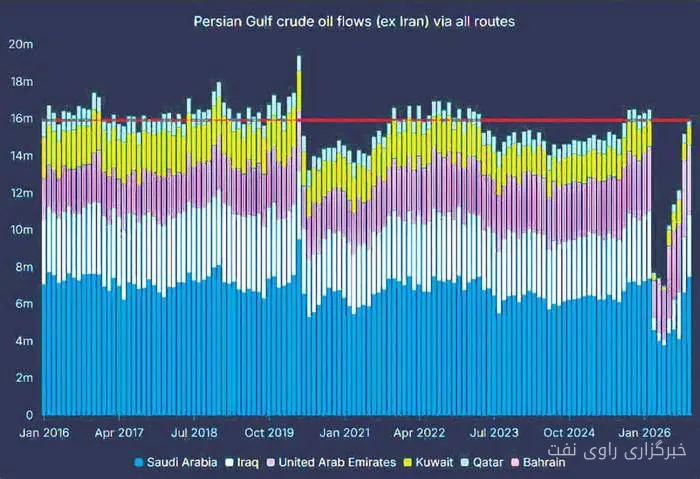
Iran's oil exports have significantly decreased and reached zero amid the Hormuz crisis. While Gulf countries have restored their oil exports to pre-crisis levels after eight months since the outbreak of the war, Iran continues to face serious restrictions on maritime crude oil exports.
Status of Oil Exports from Gulf Countries
New data shows that Gulf countries, especially Saudi Arabia and the United Arab Emirates, have managed to increase their oil exports by 16 million barrels per day. This increase in exports is due to improved security conditions and a return to global oil markets. In contrast, Iran has been unable to deliver even a single barrel of oil to international markets due to economic sanctions and challenges arising from the Hormuz crisis.
Read more: Brent oil price has reached $100 and market fluctuations continue
Factors Affecting Iran's Oil Exports
Economic sanctions and international pressures have severely impacted Iran's oil exports. Additionally, the existing insecurities in the region and the occurrence of war in neighboring countries have increased Iran's challenges in accessing global markets. According to estimates, Iran's oil production capacity has decreased by 3.8 million barrels per day, which is not fully utilized due to the inability to export.
Thus, Iran, as one of the major oil-producing countries, is currently facing a serious crisis in crude oil exports. This situation has not only negatively affected Iran's economy but has also harmed the stability of the global oil market.
Read more: New attacks on oil tankers have caused an increase in oil prices · ONGC is negotiating to acquire oil fields in Venezuela