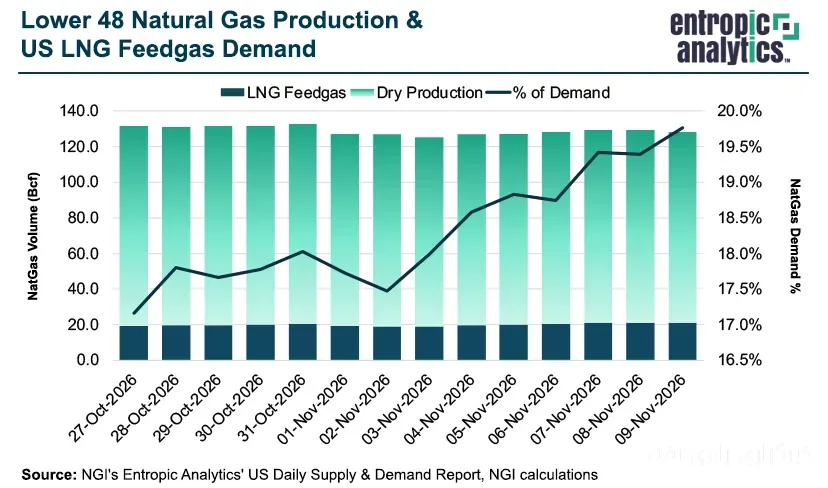
Physical natural gas prices continued their upward trend on Monday as the new week began, following last week's increase. This price rise has occurred due to high LNG demand and low natural gas production alongside weather fluctuations caused by decreasing temperatures.
Increase in LNG Demand and Its Impact on Prices
The increase in LNG demand in global markets, especially from Asia and Europe, has been a key factor in the rise of natural gas prices. According to statistics, U.S. LNG exports reached 8.5 million tons in September, marking a 15 percent increase compared to the same period last year. This increase is due to the need of various countries to secure energy for the cold season.
Read more: Continuing Attacks on Aramco Facilities Amid Regional Tensions
Gas Production and Weather Conditions
Alongside the increase in demand, natural gas production in the United States has remained relatively low. Estimates indicate that natural gas production last week reached 98 billion cubic feet per day, showing a 3 percent decrease compared to the same period last year. This production decline is due to periodic maintenance in gas fields and weather-related constraints caused by seasonal storms.
Temperature fluctuations have also influenced this trend. With a cold wave entering the northern regions of the United States, the demand for natural gas has increased, leading to price hikes in local markets. For example, the price of natural gas at the Henry Hub reached $3.50 per million BTU, reflecting a 10 percent increase compared to last week.
Ultimately, despite the existing challenges in the supply and production of natural gas, the trend of rising prices is likely to continue in the coming months. The need for sustainable and timely energy supply in changing weather conditions, along with increased demand for LNG, are among the factors that will impact the future of the natural gas market.
Read more: Brent Falls 7 Percent Amid Hopes for Peace in Iran · Increase in Natural Gas Prices in the Final Week