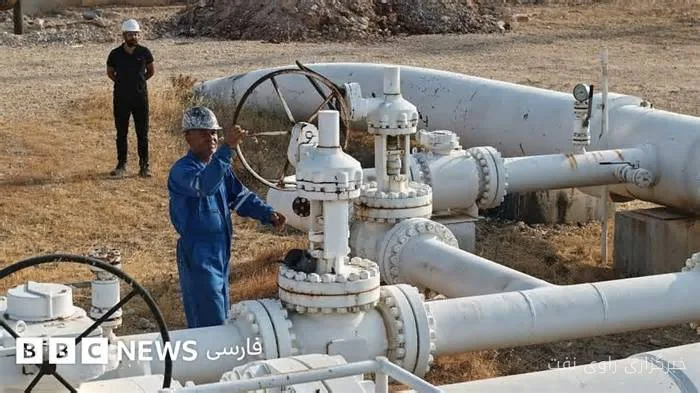
Syria's oil and gas infrastructure has been facing a series of explosions and attacks for several months, affecting pipelines from the northeast of the country to the Mediterranean coast.
Details of Recent Incidents
The state-owned Syrian Oil Company has recorded at least six incidents targeting pipelines and energy facilities between August 18 and October 15. These disruptions began on August 18, when an explosion halted pumping operations through the gas export pipeline from the Jabsa facility in Hasakah province. The Syrian Oil Company announced that preliminary investigations indicated this explosion was due to a "deliberate sabotage act."
Read more: China's Crude Oil Imports Drop to 9.03 Million Barrels per Day
On September 28, a valve in the Jabsa gas pipeline between Al-Shoula and Deir ez-Zor exploded, causing a fire that halted gas transmission to power plants. According to officials from the Syrian Oil Company, this valve exploded due to "sabotage." Repair teams replaced a 18-meter section of the pipeline after the incident and transported approximately 950,000 cubic meters of gas daily.
Impact Analysis
On September 30, an explosion in a gas line at the Tishreen thermal power plant in Rif Dimashq province caused the Tishreen, Deir Ali, and Nasriyeh power plants to go offline, and the cause is still unknown. Additionally, on October 7, the Syrian Oil Company reported another "sabotage attack" on an oil pipeline near Tal Hamis, which caused a fuel leak and temporarily closed the Homs-Tartus highway.
According to the Ministry of Energy, Syria produced about 14.8 million barrels of crude oil and 1.429 billion cubic meters of raw natural gas in the first half of 2026. These incidents occur at a critical time when the Syrian government is trying to revive domestic energy production and rebuild infrastructure.
The Syrian Oil Company has implemented additional security measures to address these issues and announced plans to rebuild wells, oil fields, and transmission networks. These disruptions have also raised concerns about the security of energy infrastructure in eastern Syria.
Read more: Saudi Oil Tanker Loadings Rise to Highest Level Since February · Hamid Bord Announced the Reconstruction of 130 Million Cubic Meters of Gas Capacity



