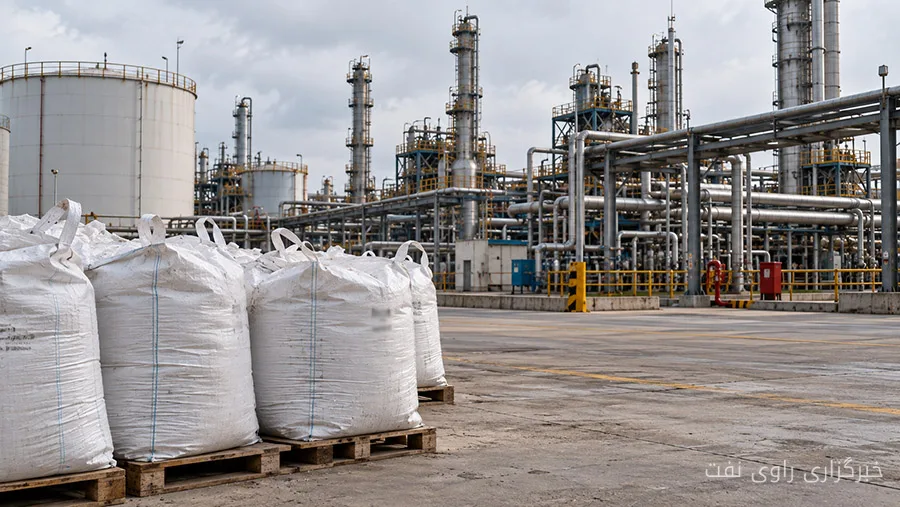
The price of petrochemical raw materials does not solely follow changes in oil and currency; feedstock type, global product prices, supply and demand for each grade, and trading conditions also play a role in its formation. Therefore, a decrease in oil prices does not necessarily lead to an immediate drop in polymer prices, and an increase in currency rates does not have the same effect on all products. This article examines the cost transfer to the raw materials market, the difference between base prices and transaction rates, invoice amounts, and the role of inventory and delivery time.
Factors Affecting Petrochemical Raw Material Prices
The polystyrene production chain is an example to explain the difference in product price trends. To compare offers, the type and grade of the material, manufacturer, order quantity, taxes, shipping, and payment terms must be standardized. Understanding these factors helps producers evaluate market news alongside the actual needs of the production line, warehouse capacity, and the final purchase cost.
Read more: Iran Begins Oil Exports to Tajikistan
A drop in oil prices does not necessarily mean a decrease in the cost of plastic raw materials; just as an increase in currency rates does not make all petrochemical products equally expensive. Between the oil market board and the proforma invoice received by a producer, there is a chain of costs, transactions, and business decisions. Understanding this chain helps buyers interpret price changes more accurately and not rely solely on daily oil and dollar news for raw material procurement.
The Impact of Feedstock and Contract Type on Prices
For packaging industries, component production, household appliances, and building insulation, changes in raw material prices can directly affect production costs. The type of petrochemical feedstock, global product prices, the currency rate related to the transaction, supply status, and even delivery time are all part of the answer to the question, "Why did materials become expensive?" Oil is one of the influencing factors on feedstock costs in part of the petrochemical industry. For example, naphtha is a byproduct of oil refining and is used in the production of petrochemical base materials.
However, this transfer is not always immediate, complete, and proportional to the percentage change in oil prices. Not all complexes consume the same feedstock, and some production chains use feedstocks whose market conditions differ from naphtha. Therefore, attributing all changes in polymer prices to oil presents an incomplete picture of the market.
In a market where part of the transactions and price comparisons are conducted in currency, changes in the exchange rate can shift the rial equivalent of a product. This effect can even be imagined when the dollar price of goods remains stable. Additionally, the exchange rate can affect the cost of imports, certain equipment and parts, international shipping, and seller expectations.
Therefore, when examining petrochemical prices, it is essential to understand not only the number but also the basis for its announcement. The price unit, inquiry date, order quantity, tax status, shipping costs, and delivery location must be specified. Comparing the price per ton in a bulk offer with the price per kilogram for a limited order, without standardizing these conditions, may lead to incorrect conclusions.
In market analysis, a temporary shortage of a grade should not be equated with a general shortage of all polymers. Such a distinction prevents decision-making based on news that does not have a direct connection to the consumable material of the factory. Polystyrene is a suitable example for examining the gap between the oil market and the final product price. The main material for producing this polymer is styrene monomer, and the conventional production chain of styrene is related to materials such as benzene and ethylene.
In the domestic market, understanding the producer and their product range is also important. For example, Tabriz Petrochemical has introduced regular, resistant, and expandable polystyrene among its products on its official website. Referring to the official information of the producer is a good starting point for understanding the product family and examining technical specifications; although the product list does not mean that all grades are available at all times.
Read more: Petrobras Announces Its Second Oil Discovery in a Deepwater Well in Brazil · Increase in Oil Drilling Activities in the U.S. Despite Price Drops



