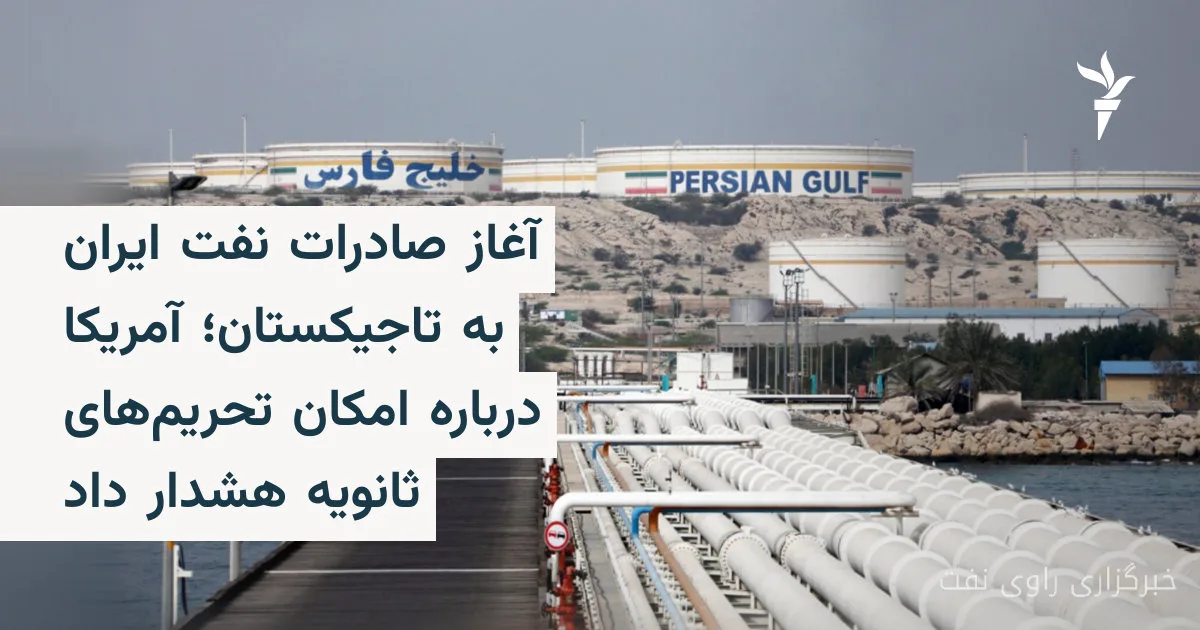
Tajikistan has announced that it has started exporting oil and petroleum products from Iran. This move could provide a new source of energy for Tajikistan, a country that previously relied mainly on Russia for its fuel needs.
Details of Shipment
The Ministry of Energy and Water Resources of Tajikistan has confirmed that shipments began in late August following negotiations between the two countries to expand oil cooperation. However, details regarding the volume of shipments, the commercial terms of these exchanges, or the method of transporting oil and petroleum products from Iran to Tajikistan have not yet been specified.
Read more: Reduction of taxes on diesel and jet fuel exports in India
Tajikistan aims to secure up to 2.55 million tons of crude oil and petroleum products annually from Iran, including gasoline, diesel, and aviation fuel. This figure is the maximum requested by Tajikistan and does not guarantee the import of this amount of oil.
Sanction Implications and Concerns
This action by Tajikistan raises questions about the possibility of facing secondary U.S. sanctions. Gigi O'Connell, a spokesperson for the U.S. Treasury Department, has warned about the risks of operating in Iran's oil and petrochemical sectors, stating that any entity engaging in this sector bears the responsibility for these risks.
The existing relations between Tajikistan and Iran are currently improving. Edward Lemon, head of the Oxus Association for Central Asian Affairs, states that this agreement reflects the closeness of the two countries' relations. Tajikistan and Iran have established diplomatic relations since 1992, and the volume of bilateral trade reached $438 million in 2025.
Tajikistan is striving to negotiate with neighboring countries for its fuel needs, especially considering the fuel shortages in Russia and the export restrictions of that country. In the first half of 2026, Russia supplied over 91% of Tajikistan's petroleum product imports.
The agreement to secure energy from Iran could help Tajikistan find alternative sources, but logistical issues and the economic feasibility of transporting large volumes of oil from Iran to landlocked Tajikistan remain in question.
Given the increasing U.S. pressure on Iran's oil revenues, Tajikistan must be careful about how it can maintain its economic interests while balancing relations with global powers such as the United States and Russia.
Read more: Amplitude Energy decides to develop the East Coast Supply project · Reduction of 250 million cubic meters of gas in Iran and the challenges of winter 1403



