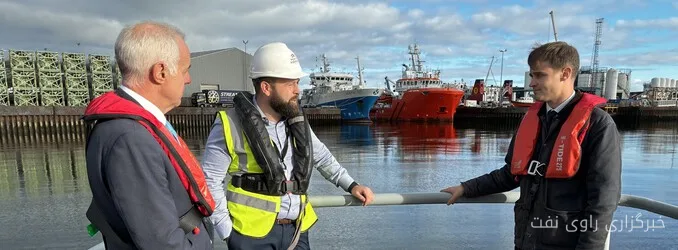
Abern Port, one of the oldest centers of the oil and gas industry in the North Sea, has announced that the decline of oil and gas activities at the port is continuing at an increasing pace. The port is striving to diversify its activities towards loading, cruising, renewable energy, and decommissioning equipment. In this regard, Abern Port officials introduced their priorities for the future during a meeting with Kier Mather, the UK Minister of Maritime Transport.
Efforts to create job opportunities and develop infrastructure
Bob Sanguinetti, CEO of Abern Port, stated during this meeting: "Oil and gas remain our largest market, but the decline in activities at this port has accelerated. Therefore, we are focusing on growth in the areas of loading, cruising, renewable energy, and decommissioning equipment." He also added that with the support of governments and the industry, the port will be able to create new jobs and provide more opportunities for local businesses.
Read more: Iran opened the Strait of Hormuz to China and India
Environmental goals and new investments
Abern Port handled nearly 3 million tons of cargo in 2025 and traded with 36 countries. During this meeting, port officials also called for the establishment of a joint industrial center in the southern port, where floating offshore wind turbines could be transported for component replacement. They also examined solutions to make the costs of supplying shore power more manageable for ship operators, which is vital for achieving the goal of making Abern Port the first carbon-free port in the UK by 2040.
Kier Mather, the UK Minister of Maritime Transport, announced that the UK government is investing £448 million to help the maritime industry reduce greenhouse gas emissions. He said: "It was incredible to see how Abern Port is investing in the green infrastructure of the future." This meeting comes at a time when North Sea activities in the UK are facing increasing pressures, especially with the passage of a new energy independence bill that will lead to the end of new drilling in the area.
Read more: Increase in demand for US crude oil in Asia · Increase in shipbuilding orders in the tanker and maritime freight sector