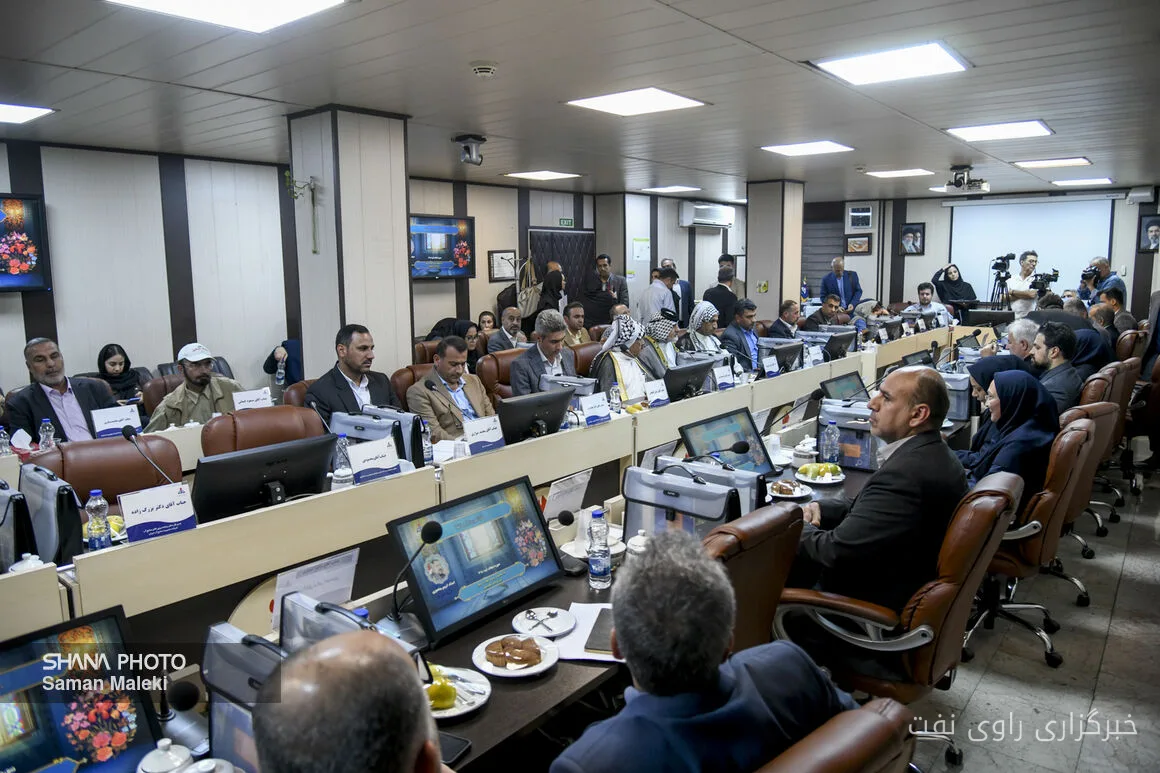
Shahram Ahmadi, at the brainstorming session on the protection and restoration of the Hawr al-Azim wetland, pointed out the discussions held in this meeting and said: Activities should be conducted in a way that, while promoting sustainable development, prevents environmental destruction and harm to the Hawr al-Azim.
Attention to Water Rights and Interaction with Local Communities
Ahmadi stated: The concerns of the attendees were articulated precisely, and a suitable interactive atmosphere was created. The discussions in this meeting can be examined in three sections: protection of water rights, activities conducted within the wetland area and their implementation, as well as issues concerning local communities and how to interact with them, all of which require serious attention.
Read more: The United Nations warns that the world must be prepared for life beyond 1.5 degrees Celsius
The Hawr al-Azim Issue Raised with the Ministry of Oil
The Director General of Health, Safety, and Environment at the Ministry of Oil stated that the Hawr al-Azim issue is a national matter, saying: Issues related to this wetland, including those raised about the Sohraab field permit, will be discussed with Hamid Bord, the caretaker of the Ministry of Oil, and necessary actions will be taken to follow them up.
Ahmadi emphasized: Environmental destruction and harm to the Hawr al-Azim contradict sustainable development, and activities should be conducted in a manner that causes the least harm to the environment and local communities.
Necessity of Attention to the Environment and Sustainable Development
He stressed the necessity of simultaneously considering development, economy, environment, and the interests of local communities, stating: Creating a dichotomy between developmental activities and the environment is not desirable, and a solution must be found that meets developmental and economic needs while also considering environmental considerations and the interests of local communities.
The Director General of Health, Safety, and Environment at the Ministry of Oil, referring to the serious challenges facing the country regarding climate change, including drought, dust phenomena, and severe temperature increases throughout the year, stated: To combat these challenges, specific environmental obligations have been formulated within the framework of the seventh development plan.
Creating Interaction Between Executive Bodies and Local Communities
Ahmadi emphasized the necessity of creating an interactive space among executive bodies, local communities, and civil society organizations, saying: The issues of local communities must be given more serious attention, and the views of all parties should be heard in decision-making.
The Director General of Health, Safety, and Environment at the Ministry of Oil expressed hope that with the continuation of this interaction and listening to the views of all parties, a solution will be found that, while achieving the goals of development plans and activities, causes the least harm to the environment and local communities.
Read more: The U.S. Supreme Court is hearing the Boulder climate lawsuit against Exxon and Suncor · Development of floating power plants as an innovative solution for energy production