Jam Petchem achieved the highest score of 99.18 among the 13 listed petrochemicals evaluated. In contrast, Jam Petrochemical ranked at the bottom of this list with a score of 80.55.
Performance of Petrochemicals
Following Jam Petchem, Pars Petrochemical, Khorasan Petrochemical, and Noury Petrochemical all ranked second with a score of 98.75. Other petrochemicals include Bu Ali Sina Petrochemical (score 98.36), Khark Petrochemical (score 97.92), Fanavaran Petrochemical (score 97.52), and Shazand Petrochemical (score 97.50) in subsequent ranks.
Read more: The Stability of the Capesize Freight Rate Index Despite Existing Risks
Kermanshah Petrochemical, symbolized as "Kermasha," scored 96.34, while Pardis Petrochemical and Shiraz Petrochemical recorded scores of 95.90 and 95.02, respectively. At the bottom of this table, Ghadir Petrochemical scored 86.60 and Jam Petrochemical scored 80.55. A noteworthy point about Jam Petrochemical is its low score in the accountability and information disclosure component, where it only achieved 5 out of a total of 20 points in this section.
Performance of Refineries
In the refinery group, Tehran Oil Refinery, symbolized as "Shatran," achieved the top rank with a score of 99.18. Tabriz Oil Refinery, symbolized as "Shabriz," placed second with a score of 97.54, and Isfahan Oil Refinery, symbolized as "Shapna," secured the third rank with a score of 96.69. Shiraz Oil Refinery scored 93.35, ranking fourth, while Bandar Abbas Oil Refinery, symbolized as "Shabandar," recorded the lowest score of 81.75 among the five refineries.
The gap in corporate governance scores between Shatran and Shabandar reaches 17.43 points. In the sector of holdings related to the oil and petrochemical chain, Petrochemical Investment, symbolized as "Vapetro," leads with a score of 99.47. TAPIKO with a score of 97.93 and Petrol with a score of 97.13 occupy the next positions.
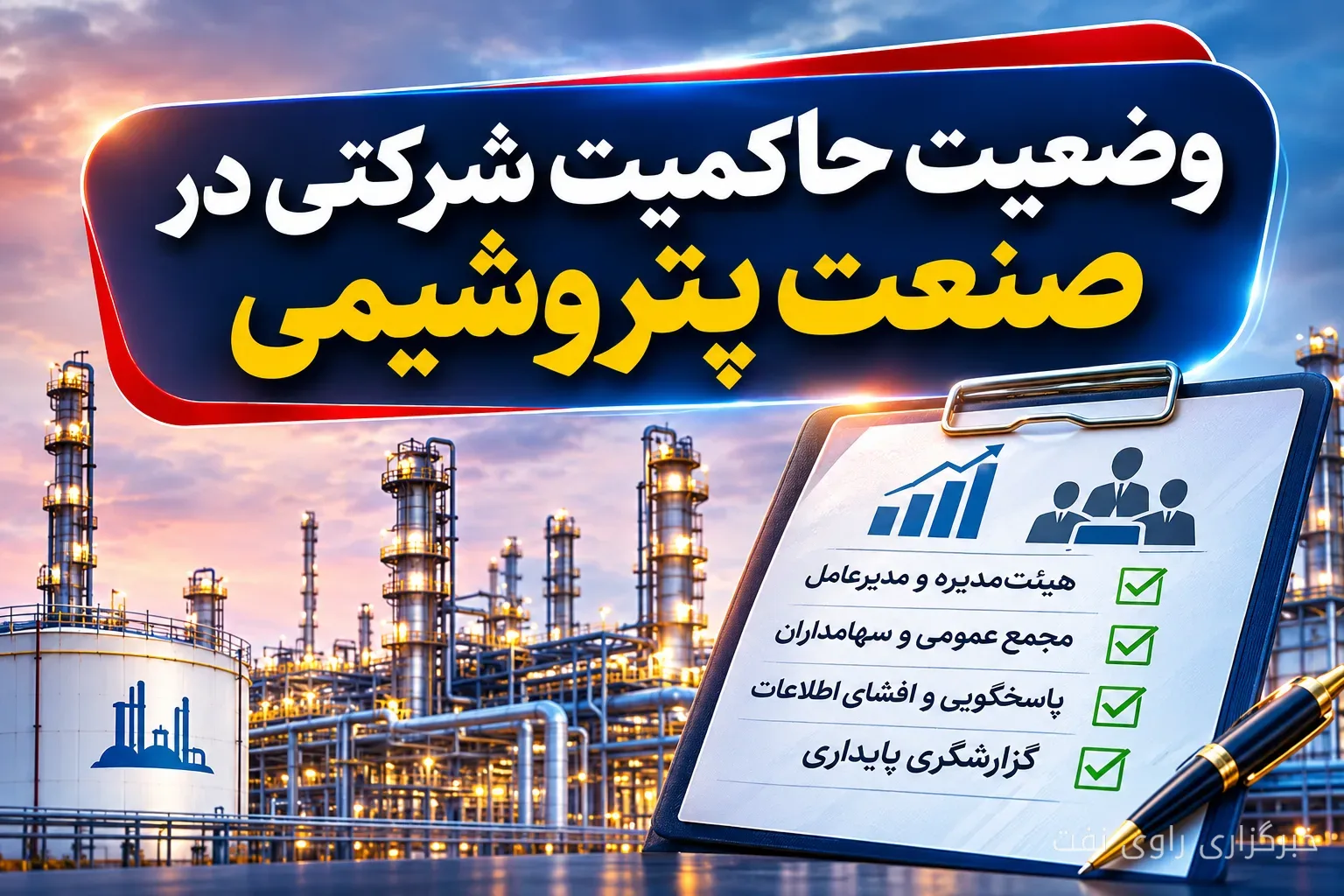
Overall, this assessment was conducted based on four main axes including the board of directors and CEO, general assembly and shareholders, accountability and information disclosure, and sustainability reporting. The results of this assessment indicate that the gap in transparency, accountability, and adherence to corporate governance principles among major oil, gas, and petrochemical companies is significant.
Read more: Performance of Eight Major Refineries in Iran in the First Half of 1405 · The European Union Revises Oil Refinery Policies