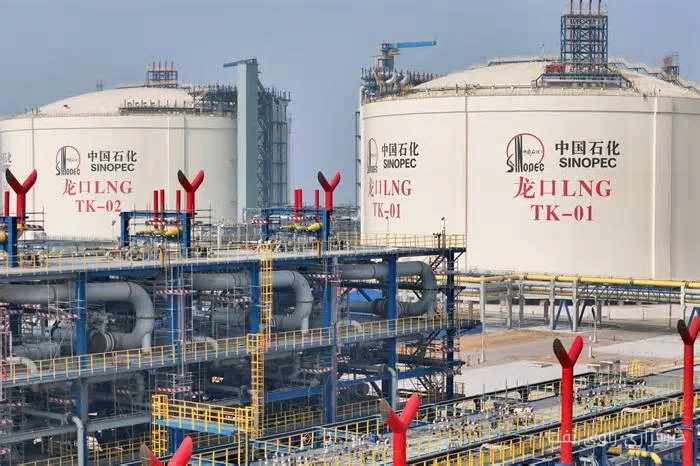
The Ningbo Economic and Technological Development Zone model in China, as a successful example of coordinated management of industrial infrastructure on a regional scale, shows that the competitiveness of major petrochemical hubs goes beyond production capacity. This area, with over 56 square kilometers and hosting major chemical and petrochemical companies, has become a prominent model for utility supply.
Utility Infrastructure Development in Ningbo
In Ningbo, electricity supply is achieved through connection to the East China Power Grid and also through local power plants. The Jiufeng thermal power plant with a production capacity of 37 megawatts and the Zhenhai refining and chemical plant with a capacity of 350 megawatts play a significant role in meeting the energy needs of this region. The design of a dual-feed system enhances the reliability of the power grid and improves the continuity of electricity supply in case of disruptions.
Read more: Saudi Arabia seeks to increase oil and natural gas production despite tensions with Iran
In addition to electricity, the Ningbo steam network has also been developed jointly. In this network, various production sources participate, and steam is distributed at different pressures according to the process needs of the units. This design allows companies to utilize the capacity of other sources in case of a reduction in the capacity of one unit, thus facilitating the management of steam supply and demand on a regional scale.
Industrial Water and Gases Supply
In the industrial water sector, Ningbo has a centralized network with two independent pipelines that has increased the capacity for industrial water supply from 30,000 cubic meters per day to 300,000 cubic meters per day. This development reflects the increased capacity of the network with the expansion of industrial activities. Additionally, the arrangement of transmission lines helps maintain access during repairs or disruptions.
The infrastructure for supplying industrial gases has also been developed jointly and supplies various gases needed by the chemical industries. The existence of 28.6 kilometers of tunnels and shared service corridors for the passage of chemical, water, and steam transmission lines organizes access to infrastructure and facilitates the transfer of materials between industrial units and export terminals.
The lesson from Ningbo for Iran's petrochemical industry is that creating a centralized structure, without diversity in sources and alternative routes, can create significant dependency. Therefore, integrated design, when anticipating backup capacity, allows for the advantages of scale alongside greater reliability.
Read more: Ali Salehnia emphasized the need for a paradigm shift in the petrochemical industry · National Petrochemical Company improved the supply and distribution of urea fertilizer



