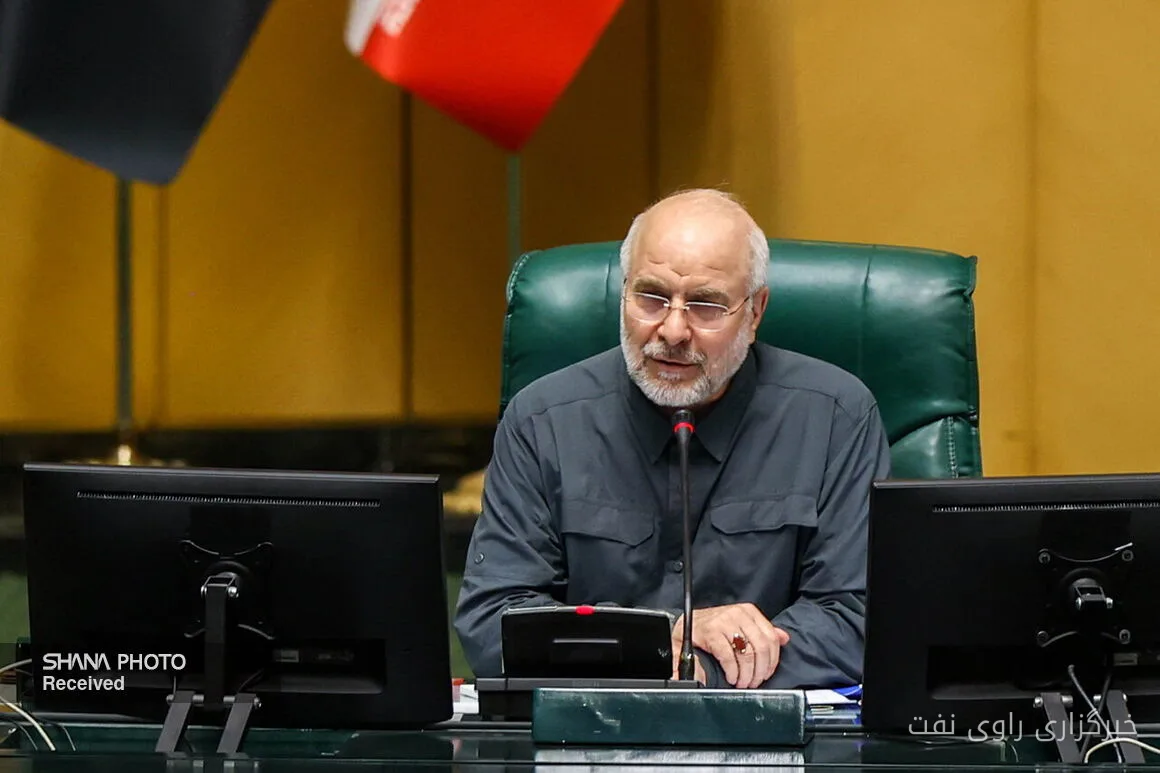
Mohammad Baqer Qalibaf today (Sunday, October 25) in an open session of the Islamic Consultative Assembly, in his pre-speech remarks, pointed out the approaching cold season and emphasized the necessity of addressing energy imbalance and turning gas conservation into a national action.
Structural challenges in energy consumption
He stated that wastefulness and inefficient energy consumption have long been a structural challenge in the country, asserting that protecting the country's vital resources and preventing energy waste is a necessity that must be pursued with the participation of all sectors.
Read more: Baltic dry freight rate index rises to 2693 units
Mechanism for conservation certificates
The Speaker of the Islamic Consultative Assembly pointed to the legal capacities created in the seventh development plan, stating: The Islamic Consultative Assembly has provided for the mechanism of conservation certificates in section 2 of paragraph "P" of article 46 of the seventh development plan, and today nearly 100 private companies have entered this field.
Qalibaf continued: According to this mechanism, any individual or entity that conserves gas should be able to benefit from the income generated from this conservation, and this income should be deposited into individuals' bank accounts so that the economic impact of conservation can be visibly seen by households.
Government support for investors
He emphasized the necessity of government support for investors in this area, stating: Our demand from the government, the Ministry of Oil, and the National Iranian Gas Company is to expedite the issuance of conditional certificates prior to achieving conservation, with the aim of activating the private sector's capacity to reduce energy consumption as quickly as possible.
The Speaker of the Islamic Consultative Assembly emphasized that overcoming the upcoming winter requires a national mobilization and that all agencies, media, and civil institutions must play their roles in this regard, asserting: We expect the media, civil institutions, Islamic councils, and governors across the country to activate local and household capacities to create the conditions for achieving the goal of at least 10% reduction in gas consumption.
Qalibaf stated: People should not view conservation merely as a one-sided sacrifice, but rather as economic partners who directly benefit from the profits generated from conservation. With the cooperation of the people, we can also overcome this challenge with dignity.
Read more: Warm weather forecast affects natural gas prices in November · Farhad Shahroki turned gas into a production asset