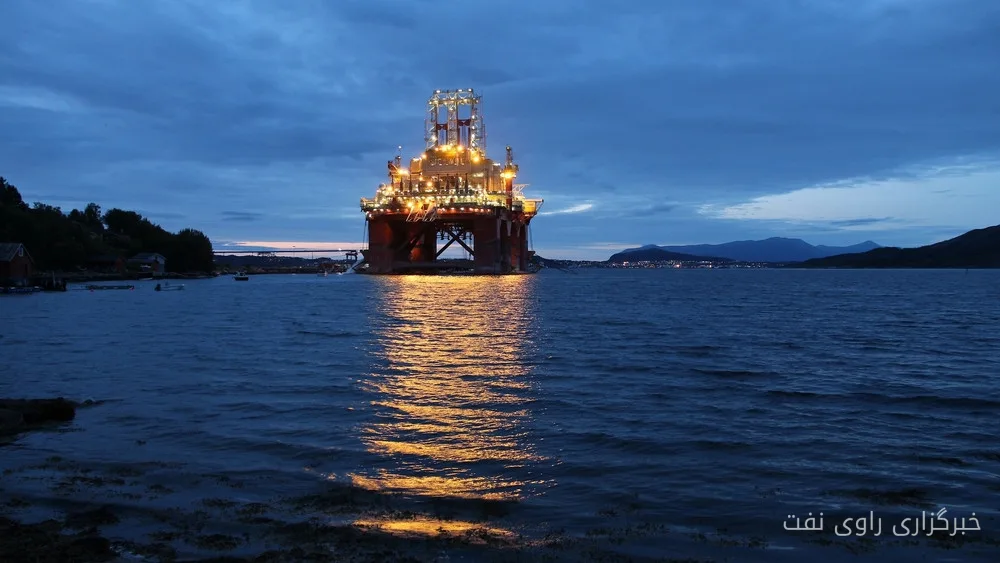
John Healey's budget, the UK Chancellor of the Exchequer, refers to the approval of oil and gas exploration projects in the North Sea, which are expected to produce over one billion barrels of oil and gas. This move is a clear sign of the government's planning to approve a new wave of drilling following the Jagdawe and Rosebank projects.
Details of the New Projects
The office responsible for the budget, the Office for Budget Responsibility (OBR), has predicted that increased tax revenues will arise from "the development of new fields." This includes the controversial Rosebank oil field and other "future discoveries." Estimates from the North Sea Transition Authority (NSTA) indicate that the government intends to approve the extraction of all "potential" resources in the North Sea. These resources are defined as untapped reserves currently available under existing licenses.
Read more: The UAE supplies Indonesia with up to 30 million barrels of oil
Any approvals will not be based on the government's 2024 election pledge to ban new drilling licenses in the North Sea, but this decision represents a significant shift in the government's stance on Britain's energy reserves. The recent approval of the Jagdawe project and the potential approval of the larger Rosebank project are among the factors influencing this change.
Impact on Energy Security and Future Production
Miata Fahenbule, the Energy Minister, approved the Jagdawe project last week, stating that this project will aid "the country's energy security with domestic gas." The decision regarding Rosebank, which is more controversial due to its higher oil production, is now on her desk but has not yet been approved, despite the Treasury budgeting for it.
The Jagdawe and Rosebank projects have been under long-term consultations, which both Fahenbule and Andy Burnham have referred to as "quasi-judicial." Information obtained indicates that energy companies seeking to drill for new discoveries will have to overcome similar obstacles that the owners of Rosebank and Jagdawe faced in obtaining government and regulatory approvals.
According to the latest estimates from the NSTA, approximately 1.2 billion barrels equivalent of oil and gas fall under the category of potential resources, meaning that the Office for Budget Responsibility has indicated a significant uptick in drilling activity. This body has stated that oil and gas production is expected to decline by about 10 percent annually from 2027 to 2031 if new fields are developed. However, if production from new fields is not permitted, this decline rate will increase to 14 percent.
The fact that OBR officials have considered extraction indicates that the government may face a multi-billion-pound shortfall in public tax revenues if it cannot approve new fields at the expected pace. A Treasury spokesperson stated, "OBR takes into account assumptions regarding future North Sea production in its tax revenue forecasts, and Rosebank has been included in government forecasts since 2019. This is entirely separate from the Energy Minister's independent decision on the project, which will be made based on a quasi-judicial process and taking into account all relevant factors."
Read more: Hamid Bord announced the reconstruction of 130 million cubic meters of gas capacity · 30% increase in gas consumption in the residential and commercial sectors in the past five days