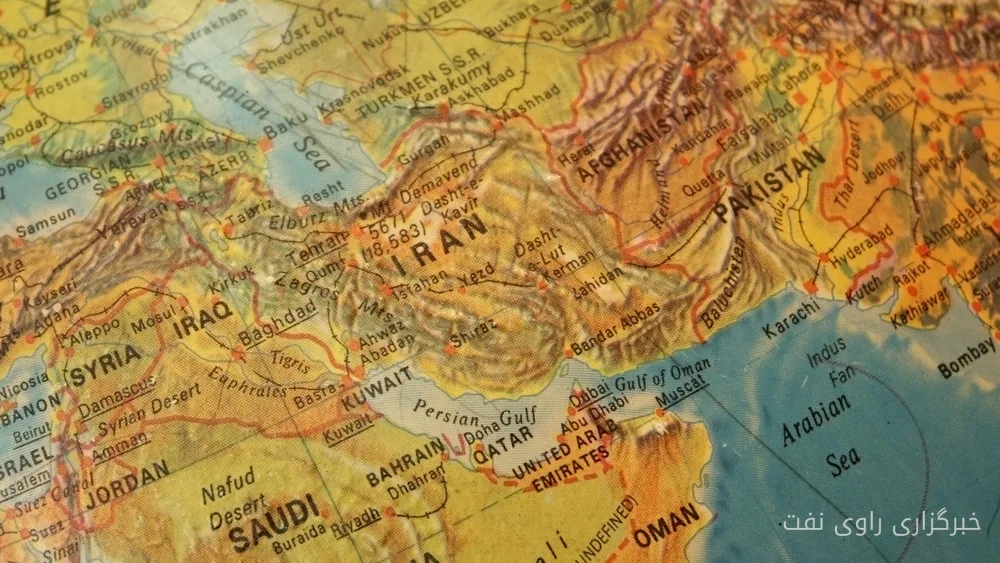
The Islamic Revolutionary Guard Corps of Iran announced that four oil tankers were destroyed due to colliding with naval mines in a restricted area in the southern Strait of Hormuz. This incident occurred at a time when attacks on ships in this region have significantly increased, and oil flows have also decreased.
Details of the Incident and the Status of the Tankers
According to the IRGC, these four oil tankers are still burning, and two other tankers have also been captured by Iranian forces. This action is part of escalating tensions in the Strait of Hormuz, which plays a key role in transporting Middle Eastern oil to global markets.
Read more: Iran Commodity Exchange Plans to Offer 414,000 Tons of Industrial and Mineral Products
Impact on Oil Exports
In October, oil, condensate, and fuel exports from the Middle East decreased to 17.1 million barrels per day, showing a significant decline from 18.9 million barrels per day in September. This decrease comes as analysts previously expected that oil flows would increase with improved security conditions in the region. George Morris, an analyst at Vortexa, stated that October data indicates a slight decrease in maritime oil exports from the Middle East due to increased risks in the Strait of Hormuz.
Kpler also reported a decrease of 1 million barrels per day in total oil and condensate exports. Oil and condensate flows through the Strait of Hormuz, the Red Sea, and the Gulf of Oman temporarily dropped to 16.1 million barrels per day in October.
Security Challenges and Monitoring of Tankers
Despite a significant increase in oil flows from the Middle East following severe declines in April and May, security concerns and repeated attacks on oil tankers have made monitoring ships difficult. Tanker tracking companies are increasingly relying on satellite imagery to verify movements, as ships often turn off their transponder devices to avoid detection while passing through the Strait of Hormuz.
Currently, the security situation in the Strait of Hormuz is clearly deteriorating, which could have serious consequences for the global oil market and maritime security in this sensitive region.
Read more: Mild Growth in Natural Gas Futures Prices Following Production Fluctuations and Cheap Purchases · Rystad Energy Predicts Oil Flow in the Strait of Hormuz Will Not Return to Pre-War Levels



