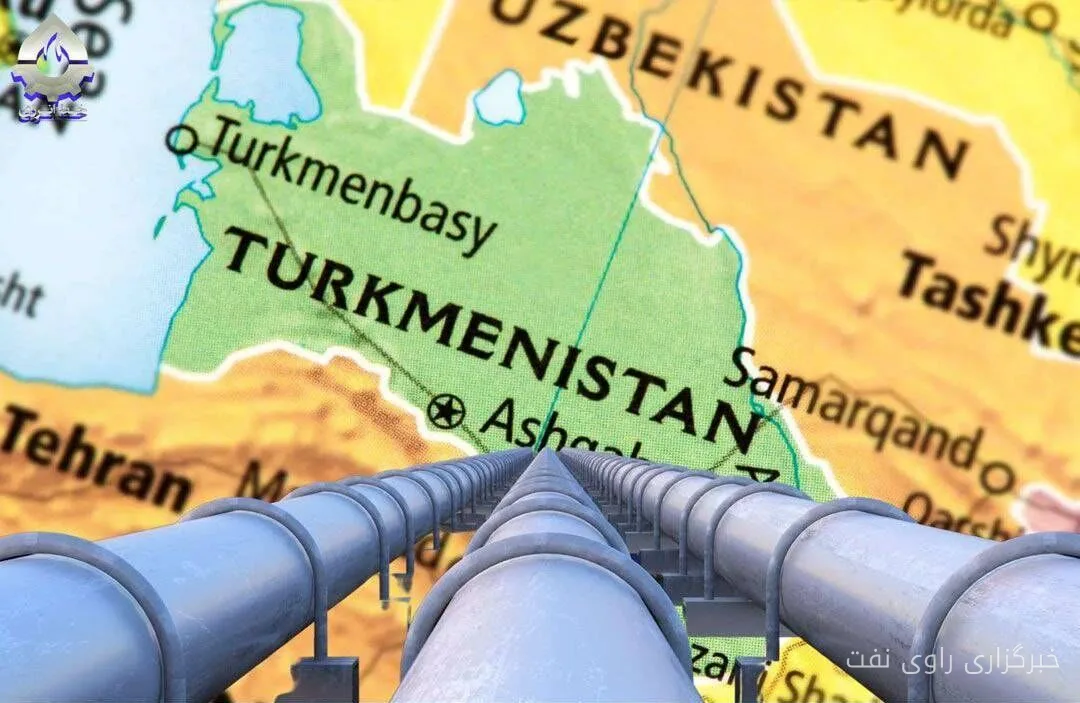
Iran and Turkmenistan are on the path to achieving a $3 billion trade. This strategic relationship is expanding with a focus on hydrocarbon swap projects and the revitalization of multi-faceted railway corridors. Although the target for the volume of joint economic exchanges has reached $3 billion, the bilateral trade record stands at around $504 million, indicating a significant gap.
Analysis of Iran and Turkmenistan's Trade Structure
Foreign trade between Tehran and Ashgabat has long been affected by quantitative and tariff restrictions. The recorded figure of $504 million in the annual non-oil trade balance reflects a meaningful distance from the potential capabilities of the two countries. The leaders of Iran and Turkmenistan have repeatedly referred to the $3 billion target as a medium-term goal, but achieving this objective requires identifying fundamental obstacles.
Read more: Consumer confidence in the Eurozone drops to -16.5
One of the root causes of this historical gap is the dependence of bilateral trade on sporadic patterns and the lack of long-term industrial contracts. A significant portion of the current $504 million exchange is attributed to the export of complementary products and construction materials from Iran, while imports from Turkmenistan mainly consist of cotton and textile fibers. To grow the volume of exchanges to the level of $3 billion, there is a need for diversification in the commodity basket and a reduction in border tariffs.
Gas Swap and Energy Imbalance
Energy is the main pillar of the economic link between the two countries. The Galkynysh gas field in Turkmenistan, with its large natural gas reserves, requires diversification of export routes. Iran, due to its population and industrial density in the north, faces an imbalance in the national grid during the cold seasons. Reviving gas swap contracts among Turkmenistan, Iran, and Azerbaijan could help improve energy relations.
Pipelines connected to the Serakhs border and the Kordkuy area can accept a significant daily volume of Turkmen gas to meet the needs of Golestan and Mazandaran provinces. This process could enhance the regional energy balance through the export of electricity and high-value-added products. Expanding this mechanism to electricity exchanges and increasing the volume of gas swaps would turn the two countries into an energy coordinating hub.
However, structural barriers such as the lack of reliable and transparent financial infrastructure continue to impact the trade flow between the two countries. Turkmen banks, due to strict capital account controls, have little inclination to establish brokerage channels with Iranian banks.
Read more: Rail Alliance and AD Ports Group Launch Integrated Rail Services · Iranian Mining Companies at the Metal Expo Russia 2026



