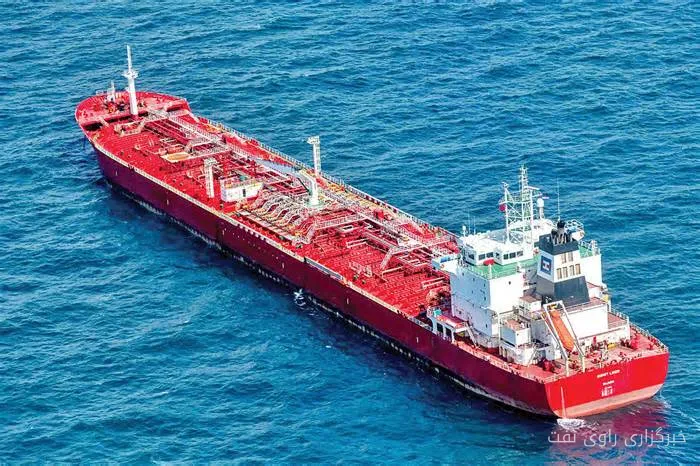
The transport rates for Russian crude oil have sharply increased due to Western sanctions and restrictions arising from tensions in the Black Sea. This situation stems from three main factors that have put pressure on Russia's oil logistics chain.
Factors Pressuring the Oil Logistics Chain
First, Western sanctions have deprived Moscow of the European market, forcing the country to send its oil to distant markets such as India and China. Oil that previously reached European refineries quickly now has to pass through the Baltic and Black Sea ports. The route from the Baltic to Western India, passing through the Suez Canal and the Red Sea, may take dozens of days, which means increased costs for ship rentals and insurance.
Read more: Progress in the Reconstruction of South Pars Refineries Emphasizing Production Capacity
Increase in Transport Costs
The second factor is the limitation in access to the fleet. Many tankers are avoiding loading in the Black Sea due to sanctions and insurance risks. As a result, in a situation where the supply of ships is low and demand is high, shipowners can easily demand higher rents.
For example, renting a 100,000-ton tanker from the Baltic to India costs about $23 million, equivalent to $31 per barrel. In contrast, a larger tanker traveling from the Black Sea to India charges about $30 million, which translates to $29 per barrel. These costs have significantly increased compared to September, when they were around $20, becoming a substantial part of the final oil price.
Meanwhile, Indian refineries are in a difficult position; although Russian oil is still offered at an attractive discount, high transport costs may eliminate this advantage. Additionally, rising rents put pressure on the revenues of Russian sellers, forcing them to seek lower rates.
There are various scenarios for the future, including the continuation of this situation until winter, a relative decrease in rates if new fleets enter the market, or a shift in routes and changes in the sales structure. Ultimately, this situation may impact global oil prices and benefit producers like Iran.
Read more: Persian Gulf Petrochemicals Redefines Exit Strategy · Oil Market Analysis, Especially in the Persian Gulf Fields



