Fire incident management at the South Pars gas refinery complex is documented based on experiences from the imposed war. Mohammad Masoudnia, head of safety and non-military defense at this complex, stated that these experiences have shown that incident management in wartime has significant differences from regular firefighting operations. He emphasized the importance of principles such as keeping forces safe from the possibility of a renewed attack, monitoring the location of personnel, and ensuring access routes for emergency vehicles.
Conferences to Transfer Experiences
To document and transfer these experiences, a conference will be held in November, coinciding with the non-military defense week programs, with the participation of managers and operational forces from the affected refineries. In this conference, wartime firefighting lessons will be reviewed and transferred to other organizations.
Read more: India's recycling market improved last week
100% Presence of Firefighters in Red Alert Conditions
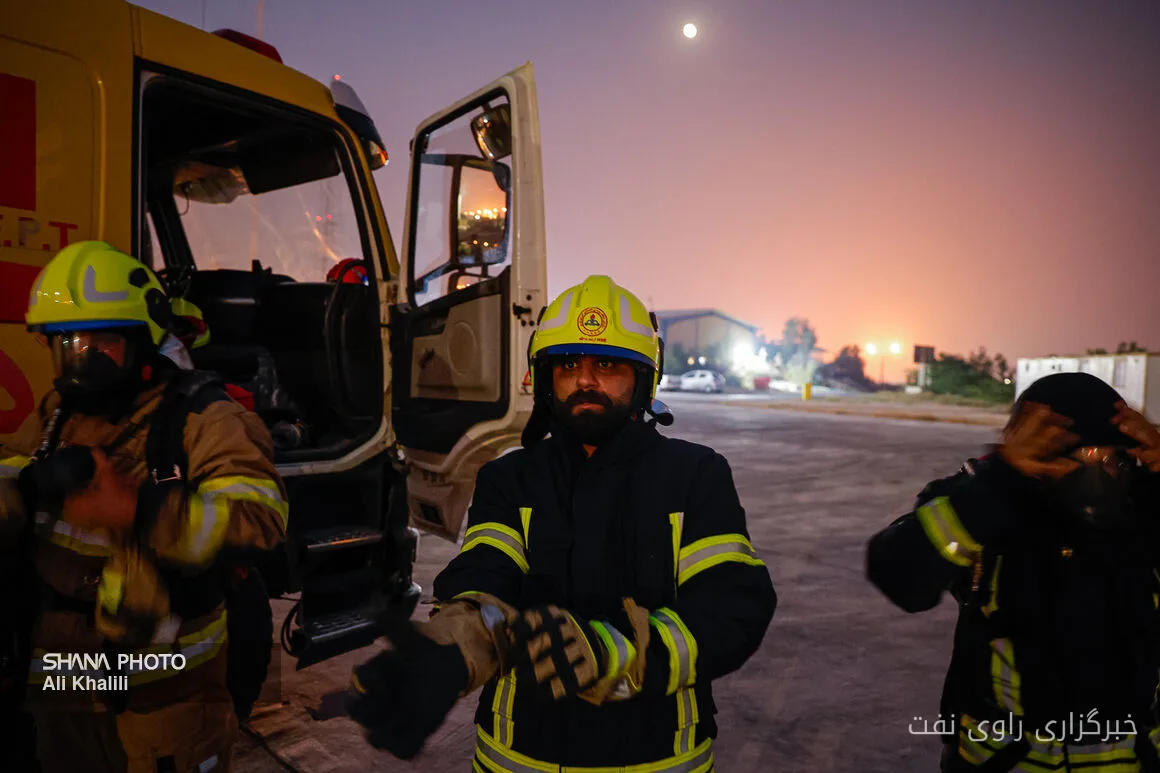
Mohammad Masoudnia also referred to the red alert conditions and said that under these conditions, according to general guidelines, the presence of some forces is reduced to 30%, but this limitation did not apply to emergency and firefighting forces, and firefighters were on standby at 100% capacity. On the day of the incident, coinciding with impacts on four facilities, firefighting forces participated in extinguishing, cooling, clearing, and searching for potential individuals trapped under the rubble from the moment the incident occurred until the next day.
Masoudnia emphasized that despite the volume of incidents and the scattering of debris from the impacts, operations were carried out without any casualties for the firefighting forces, and the prior training and preparedness of the personnel were effective in managing the scene correctly.
Wartime Lessons and the Necessity of Updating
He considered one of the important firefighting experiences to be the difference in incident management in wartime compared to regular incidents, stating that in normal incidents, the principle is for firefighters to reach the incident site quickly, but in a military attack, the possibility of a repeated attack exists, and forces should not leave a safe location without the commander's order. During the attacks on the South Pars refineries, firefighting forces initially remained in a safe location and only entered operations upon ensuring there was no possibility of a renewed attack, following the commander's order.
Masoudnia also pointed out the necessity of having accurate information about the location of personnel during an attack, stating that it should be continuously clear where operational forces and personnel of each unit are stationed so that rescue teams can be dispatched to the desired location without wasting time. Clearing the path for access to firefighting vehicles is also one of the important experiences from wartime operations that must be considered simultaneously with rescue operations.
Development of Firefighting and Rescue Fleet
The head of safety and non-military defense at the South Pars gas complex also announced the development and modernization of the firefighting and rescue fleet of this complex. Multi-purpose vehicles, pneumatic vehicles, water tenders, powder vehicles, rescue vehicles, hydraulic ladders, and diesel and gasoline ambulances are among the vehicles planned in this project, a significant portion of which are currently stationed and operational at the complex.
Masoudnia stated that the goal of developing this fleet is to increase the capacity to combat fires and enhance the speed and quality of response in emergency situations. Given the extensive activities of the South Pars gas complex and the existence of 13 gas refineries, shared facilities, and numerous ancillary infrastructures, having equipment and a fleet suitable for operational conditions and risks is one of the important requirements of the safety management system and preparedness in emergencies.
Read more: A reduction of 250 million cubic meters of gas in Iran and the challenges of winter 1403 · Petropars and the production of one billion cubic feet of gas from Phase 11 of South Pars