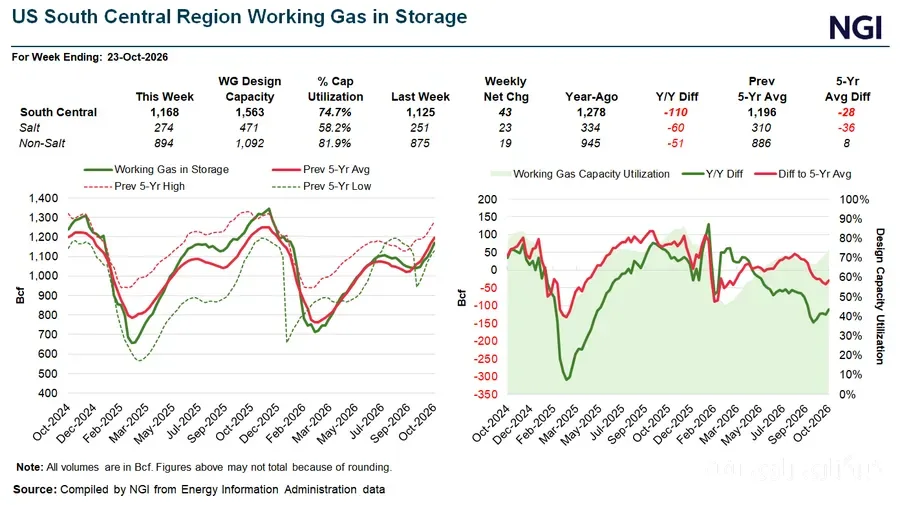
Natural gas reserves in the central south of the United States have fallen significantly below historical levels during the summer and early fall. Severe heat temperatures in this region have led to high demand for cooling, while strong consumption of liquefied natural gas (LNG) has also absorbed additional supply in the area. However, conditions have now changed.
Current Status of Natural Gas Reserves
According to recent data, natural gas reserves in this region have significantly increased and are expected to continue this trend. This change in reserve status is due to lower temperatures and reduced demand for cooling in recent months. Specifically, natural gas reserves have now reached 3.2 trillion cubic feet, which is a 20 percent increase compared to last year.
Read more: Analysis of Natural Gas Security and Low-Emission Gases in the ASEAN Region
Economic and Industrial Implications
The increase in natural gas reserves in the central south of the United States is beneficial for the country's energy industry. With the improvement in reserves, natural gas prices in the market are also moving towards stability. This could lead to reduced energy costs for consumers and industries. Additionally, the increase in natural gas supply could help reduce dependence on LNG imports from other producing countries.
According to forecasts, demand for natural gas is expected to gradually increase in the coming months, but due to the high reserves available, the market can adapt well to this demand. This situation will benefit the country's energy security and could help stabilize prices in the long term.
Read more: Formation of a Joint Company between Education and Hamrah Aval for the Development of Shad · Trafigura Signs New Gas Supply Contract with SEFE Germany