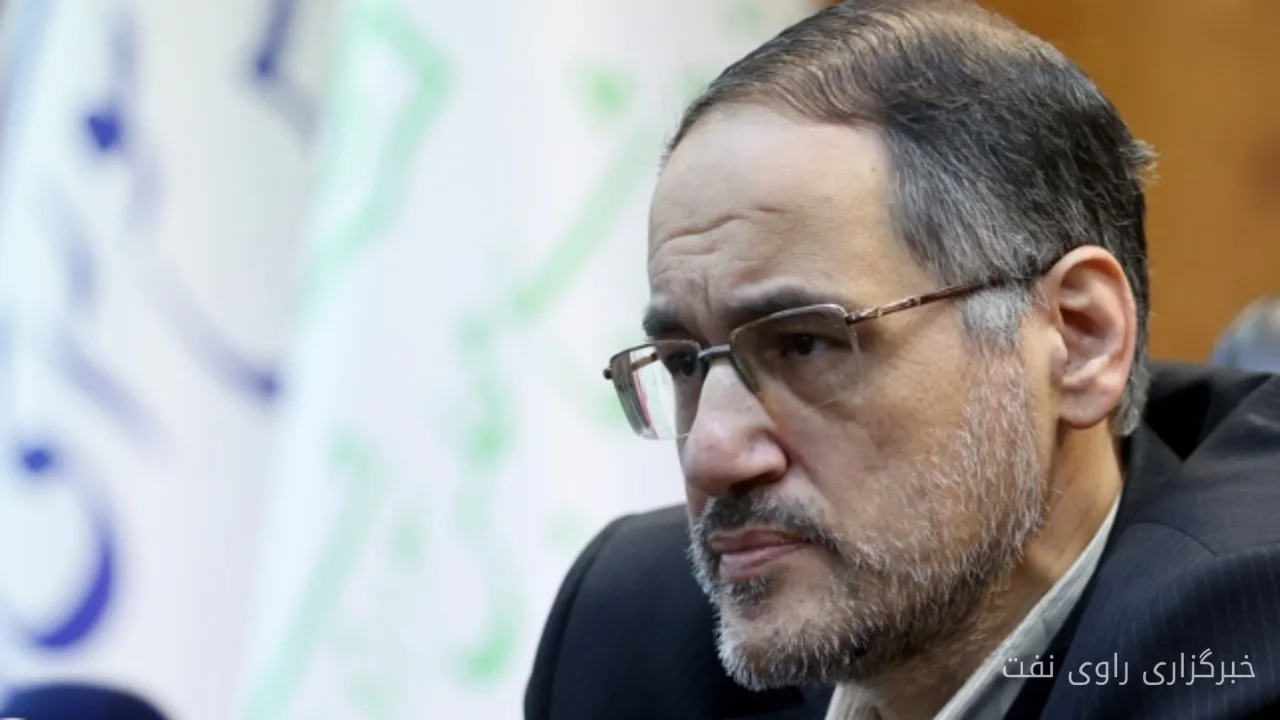
Babak Negahdari, Head of the Research Center of the Islamic Consultative Assembly, discussed the control status of the petrochemical industry in Iran during a meeting to organize the management of large public sector companies, attended by representatives of relevant agencies, experts, and specialists in this field at the Research Center of the Parliament.
Realities of the Petrochemical Industry in the Country
Negahdari pointed out that this issue has recently become one of the topics of interest for the country's officials, stating: Based on the guidance and oversight of Mr. Speaker Qalibaf, the honorable President of the Parliament, a plan for organizing and creating a chain of public sector companies has been prepared and drafted by the Research Center of the Parliament. This plan was presented in a meeting with the heads of the three branches, and it was decided that the Research Center of the Parliament would gather the opinions of experts and executive agencies in this regard and present a comprehensive report to the heads of the branches.
Read more: Oil trade with the possibility of escalating tensions in the Middle East after the U.S. elections
He noted the very high weight of public sector companies in the country's economy, stating: Alongside 346 state-owned companies, there is a large collection of companies under government control and companies belonging to non-governmental public institutions, pension funds, and state banks, which together include more than two thousand companies.
Prominent Role of Petrochemical Companies
Negahdari further emphasized: While 18 of the top 20 companies on the Tehran Stock Exchange are under public sector control, these 20 companies constitute over 60% of the market value of the Tehran Stock Exchange. In some key industries, the public sector's share of control over enterprises is significantly higher. Specifically, in the petrochemical industry, over 90% of control is held by the public sector.
He also referred to the challenges in managing these companies and added: The current situation of managing public sector companies is not satisfactory, and we are facing a series of structural issues such as weak investment and managerial instability. This means that despite abundant assets, many companies in the public sector operate independently of each other and compete unnecessarily in some markets.
Challenges of Privatization and Organization
Negahdari pointed out that transferring ownership to the private sector has not necessarily led to the formation of more efficient management, noting: In some cases, the result of privatization has been the fragmentation of ownership and a more complicated control structure. He emphasized that in industries where there is capable private sector presence, privatization can and should still be pursued, but for large companies and important industries, the possibility of effective privatization under current conditions is seriously questionable.
The Head of the Research Center of the Parliament concluded by stating: If privatization is not a sufficient and practical solution for a significant portion of large public sector companies, at least in the short and medium term, we must seek alternative models for organizing the ownership, management, and investment of these companies.
Read more: Iran and Russia's oil and gas cooperation came into focus · Increase in the feedstock price for petrochemicals to 7000 Tomans by Karimayi