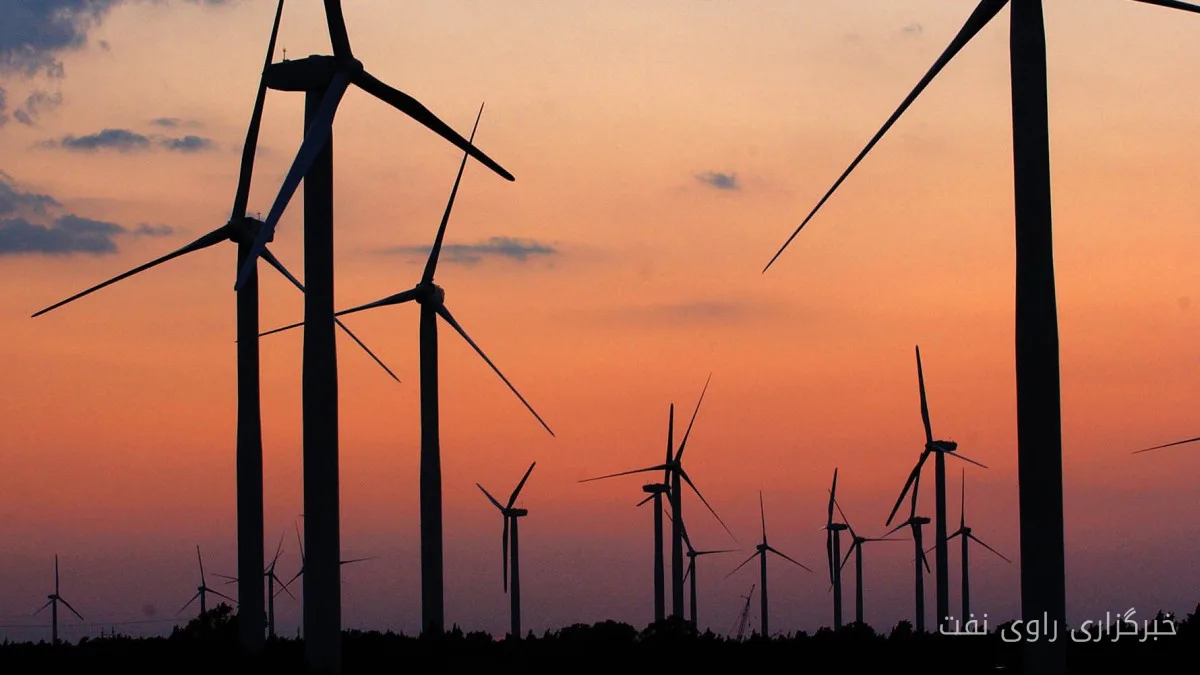
The Worakanabi Wind Farm in the state of Victoria, Australia, has received final approval from state authorities. This project will be sent to the Federal Department of Environment for final reviews.
Project Details and Energy Production Capacity
Sonia Kilkenny, the Minister for Planning of Victoria, signed her agreement for the construction of the Worakanabi Wind Farm this week. This project includes 219 wind turbines and two battery energy storage systems with a capacity of 300 megawatts, located on 26,000 hectares of agricultural land in Victoria's wheat belt. The site is in western Victoria, over 300 kilometers north of Melbourne, the state capital.
Read more: Texas Railroad Commission Blocks 2,022 Orphan Oil and Gas Wells in Fiscal Year 2026
The energy production capacity of this wind farm reaches 1.5 gigawatts, enough to supply the electricity needs of 1.2 million homes. If completed, it will be the largest wind farm in Australia and the largest in the Southern Hemisphere, surpassing the Golden Plains Wind Farm in western Geelong, Victoria, which has 215 turbines and a capacity of 1.33 gigawatts.
Renewable Energy Status in Victoria
The final approval for the Worakanabi Wind Farm in Victoria came about three weeks before the Labor government enters caretaker mode for the state elections in November. Victoria, with 2,610 megawatts of installed wind capacity, leads the country in this area, followed by South Australia with 2,053 megawatts. New South Wales, Queensland, Western Australia, and Tasmania rank third, fourth, and fifth, respectively.
Renewable energies in Victoria have grown significantly, providing 44.6% of the state's electricity production. The share of wind energy in this figure is about 24%, while solar energy accounts for approximately 16%. However, the state still relies on coal, with some estimates suggesting that this need is between 61.5% and 70%, primarily supplied by large coal-fired thermal power plants in the Latrobe Valley.
The federal government, led by Anthony Albanese, aims for a zero-emission future and to reduce the impacts of climate change. However, political parties and coal subsidies, amounting to billions of dollars, significantly contribute to maintaining the activity of the resources and related export sector.
Australia is gradually shutting down its old coal-fired power plants as part of the net-zero economy framework. The last domestic coal-fired power plants in Australia are expected to close around 2049, although the state of Queensland has delayed some closures of its state-owned plants.
Wind energy is considered one of the cheapest components necessary to replace the retiring coal-fired power plants and is a key element in the federal government's official goal of achieving 82% renewable electricity by 2030 and zero emissions by 2050. Australia ranks twelfth globally in terms of the share of wind and solar energy production, with wind energy supplying 14% of the country's total electricity production.
Read more: IMO Net Zero Framework and the Expensive Inga Hydropower Project in Congo · 90% Reduction in Transport Emissions Using Maritime Transport in Australia