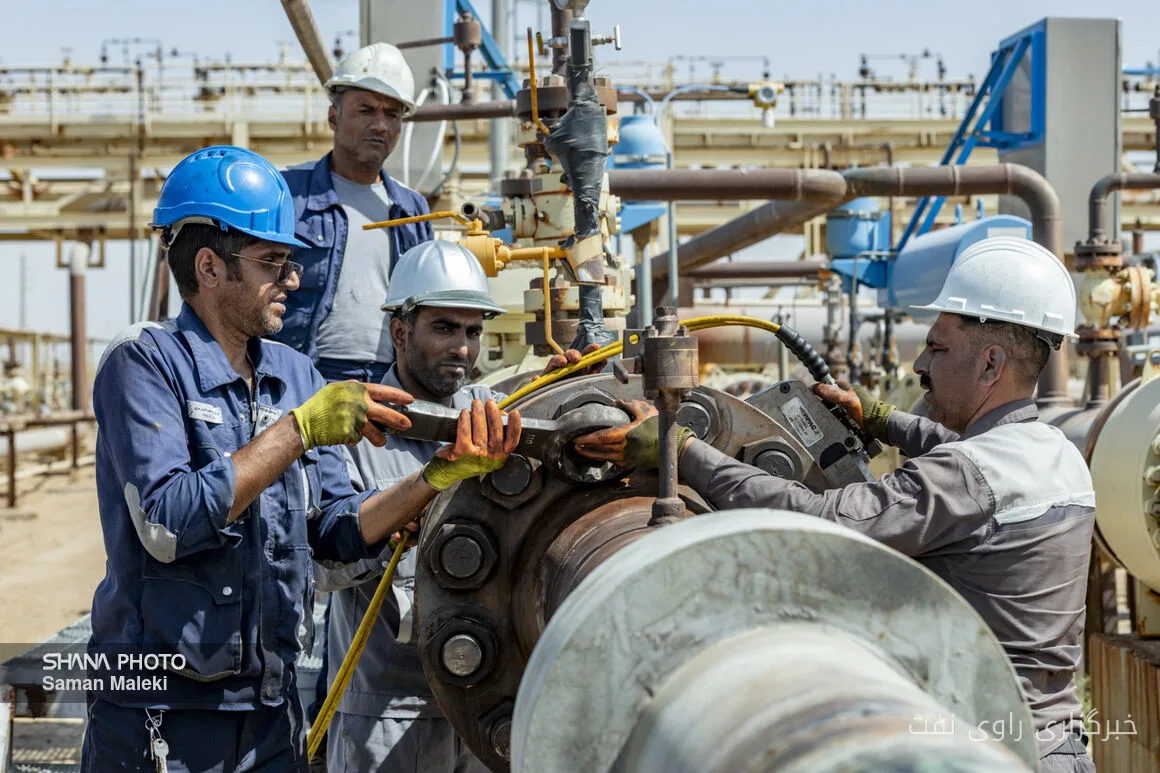
The Central Oil Fields Company of Iran has undertaken preparations in three operational fronts to ensure sustainable oil and gas supply during the winter season. These actions include reservoir management, well maintenance, and infrastructure development, all of which are essential to meet the country's energy needs.
Performance of South Zagros in the First Half of 1405
The operational areas of South Zagros, as one of the most important gas production sectors in the Central Oil Fields Company of Iran, achieved 106% of the gas production plan and 101% of the oil production plan in the first half of 1405. According to statistics, gas production in this region reached approximately 24 billion and 945 million cubic meters, and oil production reached 6 million and 700 thousand barrels. These figures reflect the high performance of this sector in meeting the country's energy needs.
The Parsian gas fields, supplying about 41% of South Zagros gas production, play a key role in maintaining production capacity. To optimize the management of these resources, projects related to pressure boosting stations in the Tabnak, Kangan, and Homa fields are being pursued. Additionally, a drilling and repair program for about 20 wells is included in the company's five-year plan, which will help strengthen production capacity.
Production Capacity Development in the East of the Country
In the east of the country, the East Oil and Gas Exploitation Company has addressed the gas needs of the northeastern provinces by increasing production from fields and developing well capacity. Gas production of this company in the first half of 1405 has increased by one billion cubic meters compared to the same period last year. The Khanguiran, Toos, and Gonbadli fields are recognized as the main parts of the gas production chain in this region.
Well number 97 in the Khanguiran field, with a daily production capacity of 1 million and 300 thousand cubic meters of gas, has entered the production cycle, and drilling operations for well number 4 in the Toos field have also been completed. These projects help strengthen production support during peak consumption days. Additionally, the Shourijeh D reservoir, with its high storage capacity, assists in managing consumption fluctuations throughout the year.
Ultimately, the gap between the production plan and the mandatory commitment in South Zagros and the east of the country indicates potential capacities for increasing production and ensuring sustainable energy supply in the winter season. Therefore, maintaining production is not only a quantitative goal but also part of the sustainable gas supply program during the consumption peak period.
Read more: North Sea oil producers call for the cancellation of the additional income tax · The sixth refinery of South Pars returns to gas production



