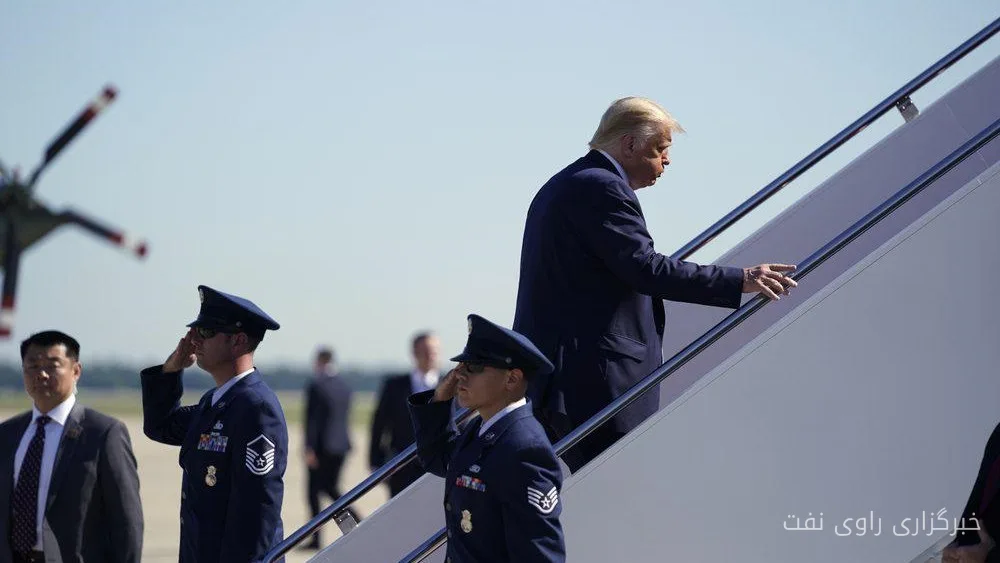
The United States government, led by Donald Trump, has presented a plan to finance the reconstruction of damaged energy infrastructure in the Gulf amounting to $5 billion. This proposal aims to assist Gulf countries in developing alternative oil export routes away from the Strait of Hormuz.
Details of the Reconstruction Plan
According to published information, the goal of this plan, named 'Partnership for Trust and Construction' (PACT), is to assist the countries of Saudi Arabia, the UAE, Qatar, Bahrain, Kuwait, Iraq, Oman, and Jordan. These countries have seen their energy infrastructure targeted by Iranian attacks due to the presence of U.S. military bases on their soil. Given the current situation, the United States has requested these Gulf countries to contribute to this reconstruction fund to reach a total of $10 billion.
Read more: 16.5% Decrease in Russia's Crude Oil Imports to India in August
Background and Challenges
Following the onset of the war initiated by the United States along with Israel last March, the negative impacts of this war on the economies of key Middle Eastern countries are evident. Some experts believe that the plan to create a reconstruction fund is somewhat premature, as the war is still ongoing, and the likelihood of achieving lasting peace seems very low.
Gulf countries, especially Saudi Arabia, are highly dependent on the Strait of Hormuz due to their geographical position. However, Iraq, with its pipeline to Turkey, acts as an alternative route for oil exports, although the capacity of this pipeline is less than that of the Hormuz route.
Saudi Arabia had previously been able to transport its oil from Hormuz to the Bab-el-Mandeb port using the East-West pipeline. However, this pipeline is currently under repair, and Saudi Arabia is forced to transport its oil via small boats to the Gulf of Oman.
Since alternative routes can also be targeted, creating secure routes for oil exports has become a fundamental challenge. For example, the UAE has announced plans this year to double the capacity of a pipeline to the port of Fujairah, which is located outside the Strait of Hormuz.
Nevertheless, no alternative route is completely safe, and thus achieving peace with Iran remains a primary condition for any developments in oil exports from the Middle East.
Ultimately, refinery infrastructures, oil fields, and gas facilities across the Middle East continue to be targeted, contributing to increased instability in the region. Gulf countries seem to have realized that the situation in the Strait of Hormuz will not return to its pre-conflict state in the short term, and there is a need to create reliable routes and corridors for oil exports.
Read more: McDermott Successfully Completed Its Financial Restructuring Plan · Return of Soybean Exports to China from the U.S. to 9.858 Million Tons



