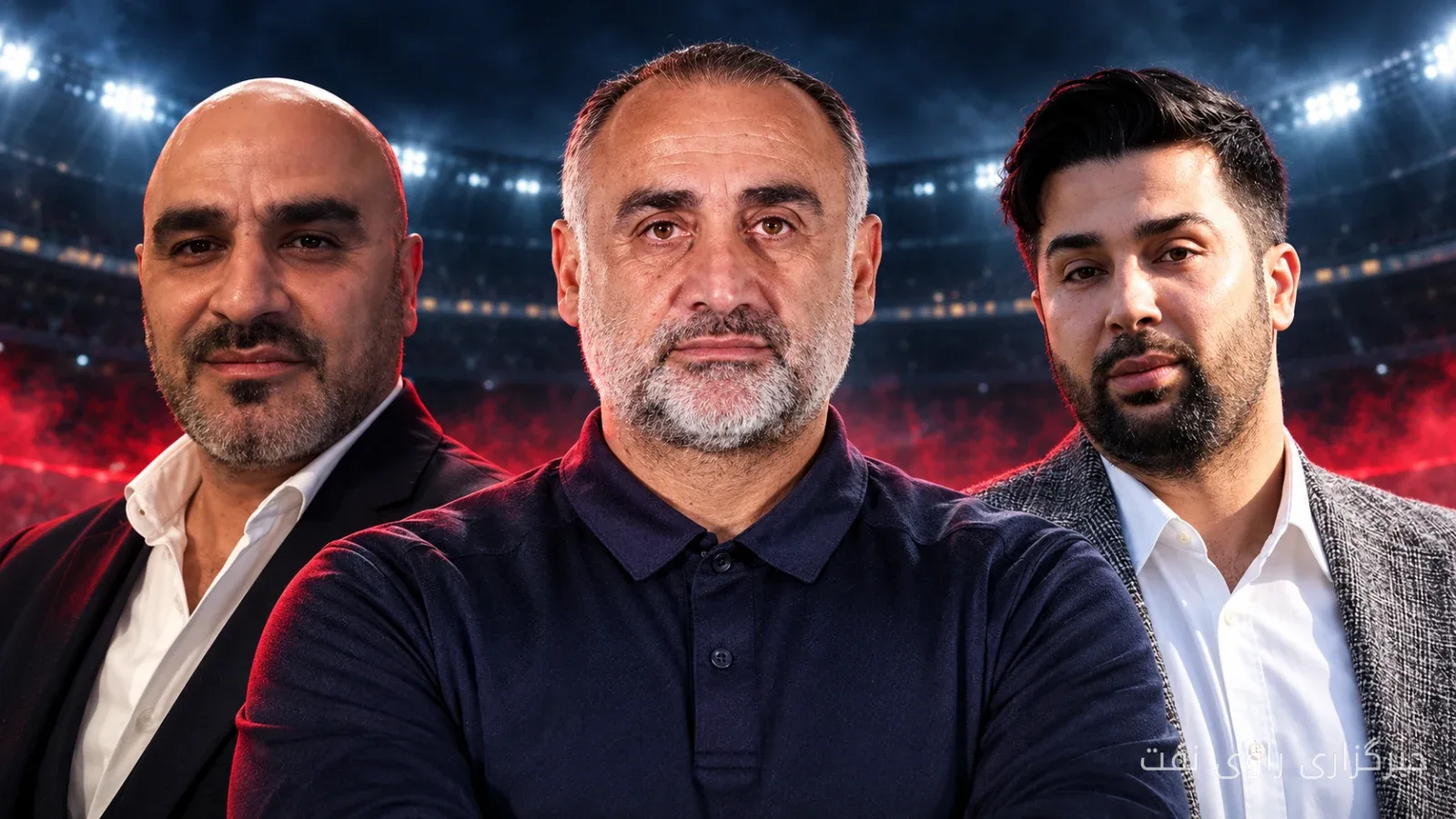
The elimination of the U-23 national team from the Asian Games brought together the names of Hossein Abdi, Houshang Saadati, and Shahab Zandi, placing direct questions about the role of intermediaries in selecting and fielding players in front of the Football Federation.
The field empties, the stands quiet down, but the main question is just beginning: who wrote the list, why did those players play, and who benefited from these decisions? This case has a clear axis: the link between the playing field and the transfer market, and the effort to increase players' value through their presence in the U-23 national team.
The Path of Interests; When the National Team Becomes a Price Board
Alongside Hossein Abdi as the head coach of the U-23 national team, two other names are repeated: Houshang Saadati and Shahab Zandi. This trio is the axis of questions; questions about how the influence of transfer intermediaries affects technical decisions, and how an invitation or minutes played can shift a player's value in the market. The meaning of this simple and shocking sentence is clear: when the national team becomes a pricing platform, personal interests find their way to the main lineup.
The questions are precise and measurable: which players were invited, which played, and which contracts coincided with these selections? The clear and documentable answer lies only in the financial and technical documents: contracts, payment minutes, selection criteria, and final decisions of the technical staff. Without these, the chain of interests remains hidden, and the national team pays the cost.
Danial Eiri; A Heavy Transfer and the Shadow of the National Team
The transfer of Danial Eiri from Mazandaran's Nassaji to Persepolis stood at the center of this discussion. The release fee was announced as 200 billion tomans, with only 10 percent going to the player himself. The direct question is: did his presence in the U-23 national team tie into this transfer and its surrounding benefits or not? The answer is found in the contract and payment documents; the terms of the agreement, the timing of transactions, and the signatures that pass from the club to intermediaries and the player. The Football Federation must clarify whether the process of inviting and fielding players was conducted according to pre-announced and defensible criteria or not.
A simple principle must be operationalized here: transparency. The criteria for invitations need to be publicly announced; to clarify which indicators brought a player closer to the list, and why a player received minutes in a critical period. When there is no transparency, doubt takes root, and every selection smells of conflict of interest.
Masoud Mohibi; Where is the Specialized Position and How is the Technical Decision Recorded?
The file of technical decisions reaches Masoud Mohibi. The narrative is clear: he plays as a central defender but has appeared as a forward in the next two matches. This position change requires an explanation. A decision of this impact must have documented reasons: opponent analysis, lack of players in the target position, or a tactical choice based on individual characteristics. When such a reason is not presented officially and transparently, a serious question arises: what impact did this shift have on the playing opportunities of other players and what effect did it have on the team's output?
The direct response from the technical staff dispels ambiguity. What is needed is the publication of technical documents: from analysis reports to tactical justifications. The national team is not a place for unaccountable trial and error; every decision must be defensible, and its effect on the lineup and result must be clearly explained.
Shahab Zandi; Role in Nassaji and Open Traces
The name Shahab Zandi is raised in two fronts. First, the question about his official status as "CEO" of Nassaji; this position must be clarified with registration documents and executive decisions. Second, his name is linked to cases related to football in Kerman and Rafsanjan; where payments to referees, connections with betting sites, and result manipulation occur. These are serious accusations, and to attribute any specific action, judicial rulings and documents are necessary. The precise meaning of this sentence is: if there is a result from an official investigation, it should be put on the table; if not, the path for follow-up and accountability should be clearly announced.
When a person's name is heard simultaneously in the club and around sensitive cases, conflict of interest does not become a matter of courtesy. The Football Federation must start from the first circle: announce the official status, explain the scope of powers, and provide traces of decisions. Wherever money and influence intersect with football, without documentation and accountability, public trust collapses.
The Role of Media; A Question about Varzesh 3
The influence of the Varzesh 3 website on player arrangements is also significant. The meaning of this claim is clear: when a media outlet has influence in the player selection layer, the technical independence of the national team is called into question. This issue requires a clear response: if there were contacts, meetings, or mechanisms for influence, where are the documents? If such a role is denied, it should be documented and clearly rejected. The role of the media must be clear: reporting and critique, not arranging and imposing.
The Football Federation; It’s Time to Publish Documents, Not General Sentences
The algorithm for response is simple: the Football Federation can and must answer these questions by publishing the criteria for inviting players, explaining technical decisions in matches, and clarifying potential conflicts of interest. This means publishing: a list of selection indicators, technical reports for each match, details of contracts and payments, and clarifying the roles of the mentioned individuals at club and national levels. When the document is published, the chain of events is complete: who signed, what was transferred, who benefited, and who must answer.
Until the moment these documents are on the table, attributing the elimination of the U-23 national team to the mentioned individuals remains within the realm of questioning, and final conclusions are not drawn. What is certain is the necessity of accountability; and what is demanded is the end of the safe margins of undocumented decisions in national youth football.
Links in a Chain; From the Locker Room to the Contract Office
This case follows a single path: from the lineup and substitutions on the bench, to transfer lists in the managers' room, and from there to bank accounts and payment trails. In this path, names and positions gain meaning. Hossein Abdi, as the head coach of the U-23 national team, must provide a technical response: what were the criteria for invitations and why did some players play in non-specialized positions? The response must be documented and precise. Houshang Saadati and Shahab Zandi, in their roles as intermediaries and managers, must answer about the connection between technical decisions and transfer interests: did the national team's decisions target player values? If not, where are the documents to refute that? If yes, how were the oversight mechanisms circumvented?
Danial Eiri is a concrete example on the table: the release fee of 200 billion tomans and the player's 10 percent share. These figures have no complete meaning without the technical and managerial groundwork. It must be clarified how the invitation process, minutes played, and the timing of transfers have aligned or diverged. Details of payments, contracts, and financial minutes either confirm or break any ambiguity. At this level, silence has no meaning.
Clear Demand: Standards of Accountability
The standards of accountability in such cases are clear: first, a table of selection criteria with specified weighting; second, technical reports of matches explaining key decisions (including the position change of Masoud Mohibi and its effect on the lineup); third, financial documents related to transfers that are mentioned alongside the national team (including the payment path for Danial Eiri's release fee and the shares of stakeholders); fourth, determining the official status of roles (such as the title "CEO" for Shahab Zandi at Nassaji) and publicly announcing potential conflicts of interest; fifth, clarifying any external influence on team arrangements, including the role of media outlets like Varzesh 3. Each item of this standard is a ray of light into the darkness of this case.
The Football Federation, by implementing these five items, either closes the case or paves the way for investigation. Any delay means the accumulation of public doubt and the erosion of social capital in national football; a capital that cannot be compensated for by any championship if trust is lost.
The Loud Voice of an Elimination; Meaning for the People
The elimination of the U-23 national team is not a simple sports result; its translation for the people is the feeling of personal interests being seen over national interests. When the youth of a generation play under the name "hope," the slightest shadow of conflict of interest is the biggest blow to public trust. People look to the national team to see merit and competence, not for hype around big transfers and hidden profit-sharing. Every undocumented decision at the U level will be repeated tomorrow in the senior team; where the costs are higher and the failures heavier.
Now is the time for the transparency bill. The names are clear, the questions are evident, and the path to answers is known: publish the documents. Write the criteria. Clarify the roles. If everything is clear and clean, show the evidence. If a mistake has occurred, accept it and correct it. The U-23 national team is not a place for testing personal interests.
Why This News is Important
This case reveals the contact line between the playing field and the transfer market. If participation in the U-23 national team becomes a tool for increasing player prices, national football is reduced to a showcase of transactions. Specific questions about the 200 billion transfer of Danial Eiri and the player's 10 percent share, the position change of Masoud Mohibi, and the role of Shahab Zandi in club layers and around sensitive cases, place the chain of interests in front of public opinion.
The importance of this news lies in the demand for transparency mechanisms: invitation criteria, technical reports, financial documents, and clarifying conflicts of interest. Without these four pillars, no football development program has meaning. Public trust is the only capital on which national teams stand; whenever this trust cracks, the result on the scoreboard also collapses. This report, with specific names and numbers, makes a precise demand: provide documented answers or give way to a mechanism that can be accountable.