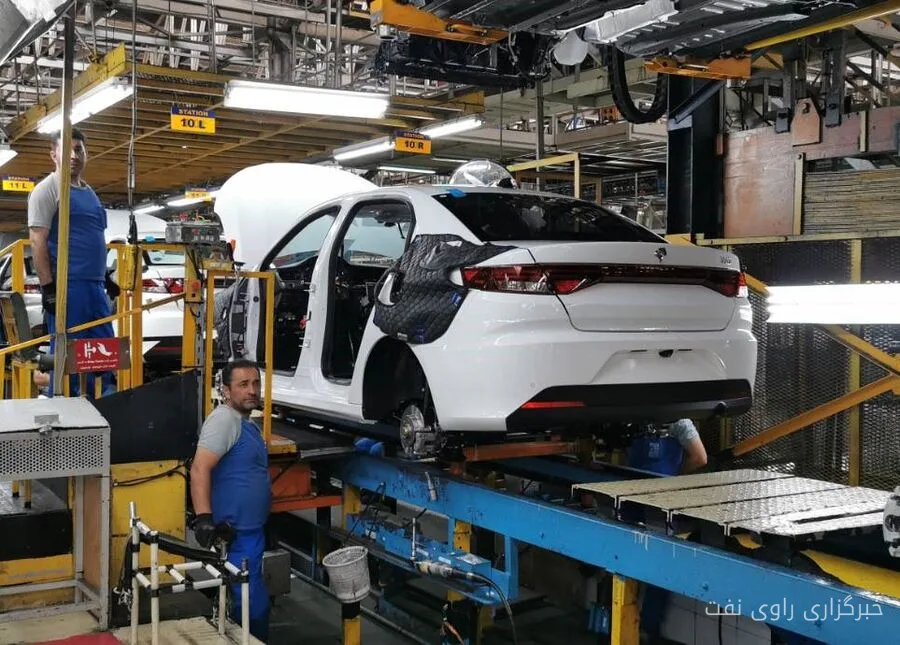
The automotive industry in Iran, as one of the most important economic sectors of the country, faces multiple challenges. The roots of the crisis in this industry include regulated pricing, rising production costs, regulatory instability, and liquidity problems among parts manufacturers. These challenges have a direct impact on automotive production policy and energy policy.
Link Between Automotive Production and Energy Policy
Pouya Abasian, an international trade expert, states that "a car cannot be considered merely an industrial product". He emphasizes the importance of the link between production and energy policies, stating that reforming the automotive industry is not possible solely through changes in pricing methods. The need for regulatory stability, transparency in the relationship between price and cost, and the establishment of real competition are other requirements for these reforms.
Read more: Dollar price rises to 194,500 Tomans in the free market
One of the key issues in this area is fuel policy. Abasian points out that "when fuel prices are low, the economic incentive to buy fuel-efficient cars decreases". If policymakers want to control fuel consumption, they must simultaneously strengthen the production structure of fuel-efficient vehicles to achieve sustainable results.
Need for Investment and Research and Development
Moving towards new technologies in the automotive industry requires significant investments, research and development, and training of human resources. Abasian explains that "producing electric or hybrid cars is not limited to just acquiring a technology" and that the necessary infrastructure for producing and maintaining these vehicles must also be provided.
On the other hand, the automotive industry must also take responsibility for enhancing productivity and technology. Abasian states that "an industry that has operated for years in a relatively closed market cannot attribute all its problems to government restrictions". This means that automakers must pay more attention to improving quality and productivity.
Another problem in the automotive industry is the gap between factory prices and market prices. This gap is not just a number on paper; it reflects the lack of coordination between supply and demand mechanisms and administrative pricing. When the price of a commodity is determined administratively and the market establishes a different price for it, this gap becomes an economic signal.
Ultimately, Abasian emphasizes that "supporting consumers does not merely mean keeping prices low through regulation" and that conditions must be created for consumers to have choices and receive accurate information about products.
Read more: Providing free gas consumption optimization services to Ilam subscribers · The future of green energy is at risk: major challenges facing the European Union



