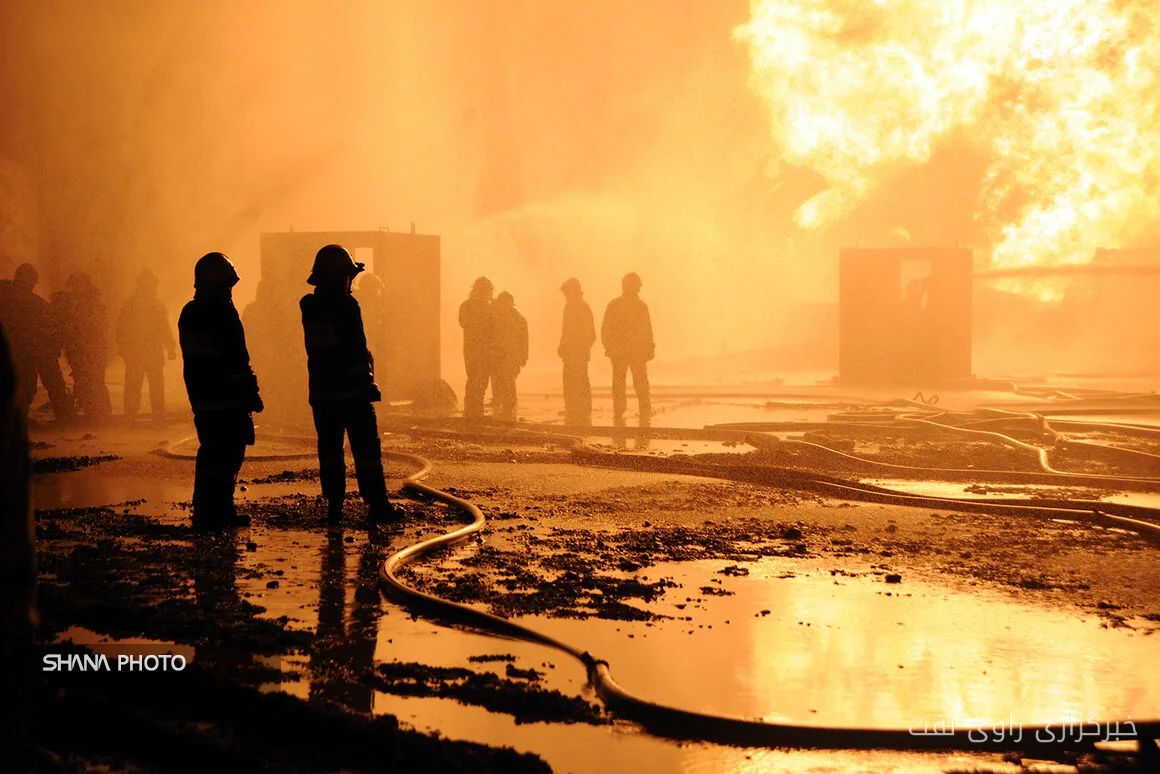
Firefighters at Station No. 3 of the Pars Special Economic Energy Zone during war days engaged in firefighting and rescue operations under critical conditions. This station, with 44 firefighters in four shifts, is responsible for supporting two docks and a mechanized sulfur warehouse.
Readiness in Critical Conditions
Sadrallah Hosseini, the head of Station No. 3, has experienced the war days up close. He says that the firefighters were on full alert during those days and were dispatched to extinguish fires and provide assistance to refineries and petrochemical complexes as soon as incidents occurred. These missions were accompanied not only by fire and explosions but also by the possibility of further attacks.
Read more: The Combination of Sanctioned Oil from Russia and Iran to Supply Energy to Europe
Hosseini recalls that at the moment he had to say goodbye to his family, he headed to work and faced bitter scenes of smoke and flames. He says, "Everyone had to leave the area, but we firefighters had to move against the direction of danger; we had to go into the heart of danger." This statement reflects the courage and sacrifice of firefighters who do not forget their responsibilities in critical conditions.
Training and Professionalism of Firefighters
The forces at Station No. 3 have undergone specialized training related to firefighting and rescue, and due to the region's maritime location, diving training has also been conducted for some of them. Reza Parsa, a firefighter with 22 years of experience, says that the day of the attack on the Mobin petrochemical site was one of the most different incidents of his career.
He explains that on the day of the incident, the forces were already on full alert, and after the impact, firefighters could not immediately enter the incident site. This was due to the possibility of further attacks and existing dangers. In wartime conditions, delays in entering the incident scene are considered part of the safety calculations of the operation.
Parsa emphasizes that firefighters, when going to work, say goodbye to their families like pilots, and this reality became more pronounced during the war days. For firefighters, a refinery or tank fire, no matter how large, usually has a specific process, but in a military attack, the incident may not yet be over.
Despite serious dangers, the firefighters at this station continue to carry out their missions and consider this job a noble and valuable profession. The experience of war days showed that readiness is not limited to having personnel and equipment; the location of personnel and equipment must also be defined according to new conditions.
Read more: The Status of Fuel Supply for Ships in the Gulf of America Affected by Weather Conditions · China's Petrochemical Industry Seeking Long-Term Contracts for U.S. Liquefied Natural Gas



