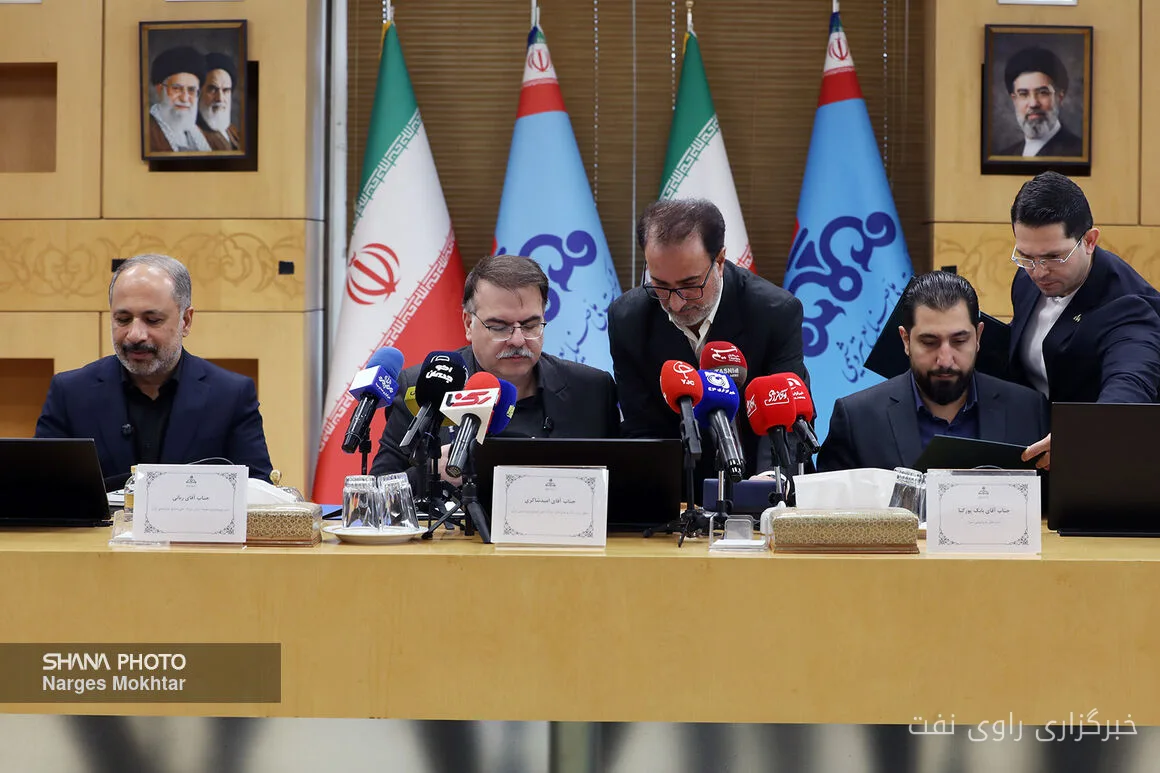
The 'Energy Pulse' campaign entered its third year of implementation with the signatures of Omid Shakouri, CEO of the National Petrochemical Company, Babak Pourkia, CEO of Shiraz Petrochemical Company, and Mohammad Ali Soleimani, board member of Pardis Petrochemical Company.
Objectives and Performance of the Campaign
Ali Rabani, the optimization manager of the National Petrochemical Company, explained the objectives and performance of the 'Energy Pulse' campaign at this ceremony, stating that the main goal of this campaign is to control the increasing trend of household gas consumption, which could lead to a reduction in gas supply to industries. By designing a collaboration model with the public and production companies, this initiative aims to reduce household gas consumption and create benefits for the public while ensuring a more sustainable gas supply for industries.
Read more: Iran's oil industry faces a 200,000-barrel increase in oil production
Participation and Results of the Initiative
Rabani referred to the collaboration of Zagros and Pardis petrochemical companies in previous years and Pardis and Shiraz petrochemical companies for the third year, adding that the goal is for people to reduce their gas consumption with simple solutions without compromising their standard of living, allowing the industry to have more gas available.
The energy consumption optimization manager also reported on the public's positive response to this initiative, announcing that nearly 500,000 subscribers have registered for the program, and over 10 billion tomans from the resources generated from this initiative have been spent on charitable activities.
He emphasized that this initiative is implemented without using government resources and solely with the participation of the public and the petrochemical industry. By reducing gas consumption, the public creates resources that are spent on charitable actions and projects chosen by the people themselves.
The results of this initiative in the past year showed that the total collaborations and efforts led to a 5.8% reduction in household gas consumption in the country in the year 1404 compared to 1403, and allocated approximately one billion cubic meters of gas more to the industry.
Energy consumption management demonstrated that by reforming consumption patterns and using simple solutions, both household consumption can be managed and more resources can be allocated for the continuity of production and the preservation of employment and industrial activities.
Read more: Mohsen Paknejad began the implementation of Article 10 at the Ministry of Oil · The cooperative cargo insurance portfolio covers various industries in the country



