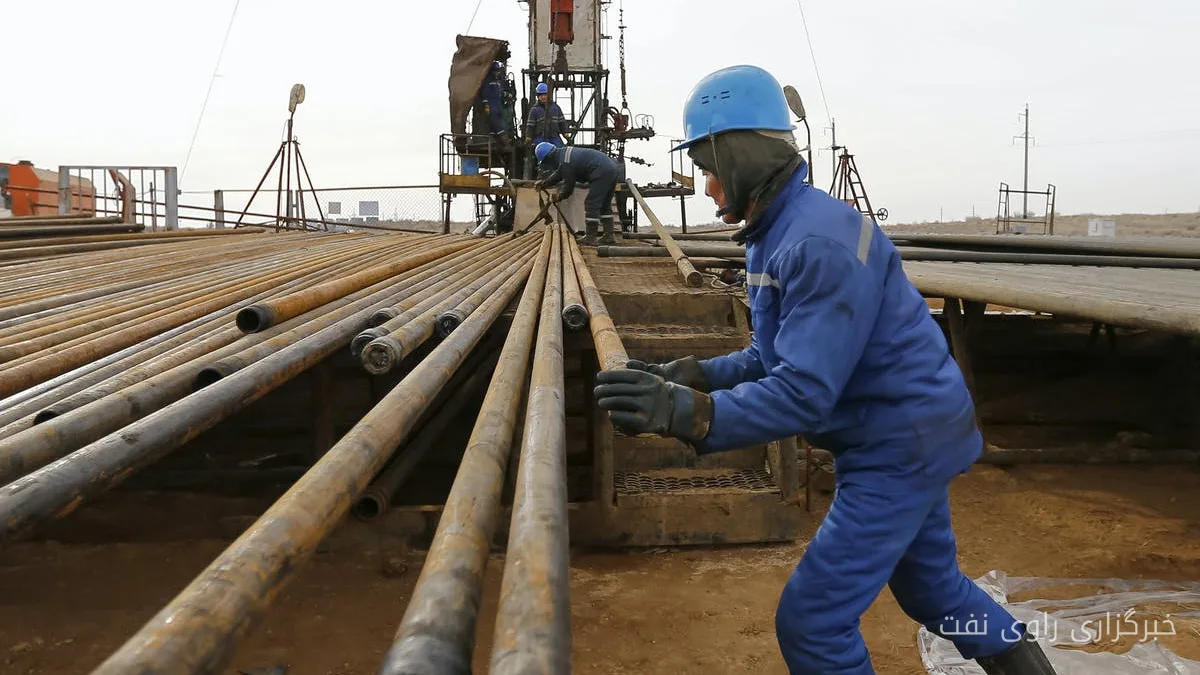
South Sudan is working to increase its oil production from around 170,000 barrels per day to 230,000 barrels per day by attracting new investment for 14 exploratory blocks. This comes as the military forces of Sudan and the RSF militia are dividing the country's oil under the pressure of Sudan's civil war.
Production Status and Challenges
The government of South Sudan has planned to hold an oil and energy conference in Juba at the end of this month, where this proposal will be presented to investors. Current oil production in South Sudan is reported to be 170,000 barrels per day, while the short-term target has been set at 230,000 barrels per day. An official from the country's Ministry of Oil announced in August that production had reached 175,000 barrels per day, with a lower target of 200,000 barrels per day set for 2027.
Read more: Qatar Energy Acquires 25% of PEL 82 Field in Namibia
Exports and Market Volatility
According to tanker tracking data, eight shipments worth 4.8 million barrels have been exported from two marine terminals in Sudan to global markets in October, equivalent to a total export of 155,000 barrels per day from Sudan and South Sudan. The Heglig fields in Sudan produced about 26,000 barrels per day in September, all of which was dedicated to exports. However, public information regarding the division of countries and the matching between reported production and loading volumes at Red Sea terminals is not available.
Currently, South Sudan is trying to capitalize on the crisis of Sudan's civil war, which has overshadowed its oil exports. The newly established African Energy Bank could be a source of new investment for the country. With an initial capital of $5 billion, it was established on October 31 in Abuja, and according to Farid Ghazali, Secretary-General of APPO, $500 million has been secured for investment.
Challenges of Crossing Sudan's Territory
Crude oil from blocks 1, 2, and 4 enters Heglig in West Kordofan via the Great Nile Pipeline, where RSF militants displaced the Sudanese army in December 2025. A trilateral security agreement has been made in this complex with the South Sudan People's Defense Forces. South Sudanese forces are now protecting these facilities, while the RSF controls the surrounding lands, and the Sudanese army controls the Red Sea terminals at the other end of the pipeline.
New analyses indicate that Juba pays RSF $4 for every barrel of oil that passes through its controlled territory out of an $11 fee. The army's share is also considered compensation for the operational costs of the pipeline. While South Sudan is trying to finance oil production through new investments, security challenges and revenue sharing between military and militia forces continue to persist.
Read more: Uniper Plans to Distribute €0.77 Dividend in 2026