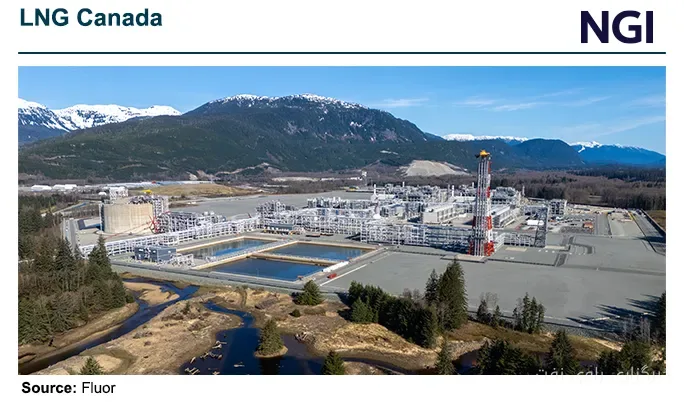
Shell on Tuesday approved Phase Two of the Canada LNG project. With this decision, the capacity of this facility will increase to 28 million tons per year (Mt/y). This action is particularly significant given the current situation where 20 percent of global gas supply has been indefinitely reduced due to the Iran war.
Details of the Canada LNG Project
The Canada LNG project, as one of the largest liquefied natural gas facilities in North America, is currently in its first phase, which has a capacity of 14 million tons per year. With the commencement of Phase Two, this capacity will double to 28 million tons per year. This project is located in the Kitimat region of British Columbia and aims to supply liquefied natural gas to Asian and American markets.
Read more: Completion of 63 Oil and Gas Wells by the National Drilling Company of Iran
Implications of Increased Capacity
The increase in Canada LNG's capacity could have significant impacts on the global gas market. Given that global gas supply is currently facing considerable challenges, this project could help meet market needs and reduce pressures on global prices. Additionally, this project could create new job opportunities in the region and contribute to the economic development of British Columbia.
By establishing this project, Shell has demonstrated its commitment to increasing production and ensuring sustainable energy supply globally. Considering the existing challenges in natural gas supply, this new phase could be seen as an effective solution to address the energy supply crisis.
Read more: The Need to Accelerate the Reconstruction of Petrochemical Complexes by Omid Shakri · Reduction of Natural Gas Reserves Deficit in the United States in Autumn



