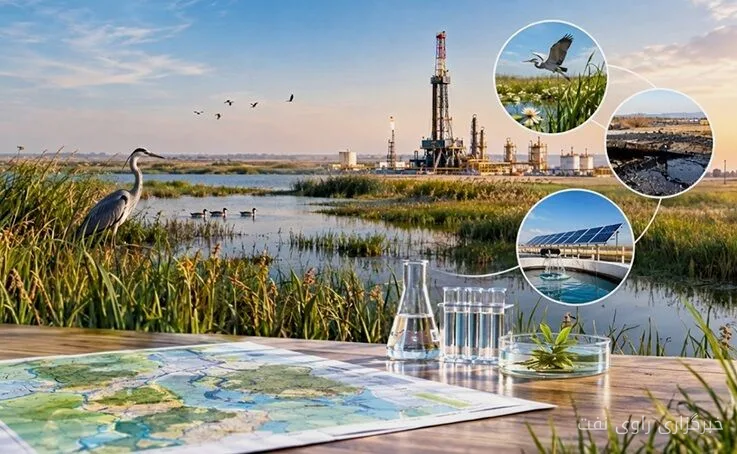
Saeed Saaviz, referring to the importance of Hoor al-Azim in the oil activities of the West Karun region, said: In order to perform better in the field of Hoor al-Azim, we are in the process of preparing a contract for the preparation of a plant and animal atlas for this wetland.
Purpose of the study and scientific investigations
The purpose of this study is not only to record plant and animal species, but also to achieve a more scientific and accurate understanding of the wetland's condition to provide a basis for environmentally compatible utilization and to ensure that the information from this study serves as a basis for future decision-making.
Read more: Mohsen Paknejad's participation in the one-day car-free campaign
The head of research and development at the Oil Engineering and Development Company emphasized the necessity of reducing the impacts of human activities on the environment, stating: Part of the response to the damages inflicted on the environment is conducting scientific studies and transforming their results into practical actions to reduce and control the effects of human activities.
Management of the impacts of fuel consumption
Saaviz announced the examination of a research project for managing the impacts of fuel consumption and oil waste on the environment, stating: This project is in the preliminary study phase and examines topics such as the complete elimination of oil burning, preventing the release of oil sludge into Hoor al-Azim, and eliminating or decommissioning fuel pits.
He emphasized: In this study, the use of a Life Cycle Assessment approach is also considered to evaluate environmental impacts with various options from the consumption stage to waste management and to select the most suitable solution.
Research project on oil wastewater management
The head of research and development at the Oil Engineering and Development Company also announced the definition of another research project in the field of oil wastewater management and reminded that: This project is in the contracting phase and aims to investigate the possibility of extracting fresh water from oil wastewater using solar energy.
Saaviz explained: Currently, oil wastewater is not released into the environment and is injected into the Asmari layer after management; however, this project aims to explore the possibility of recovering the water present in this wastewater and reusing it.
He added: In the first phase, laboratory studies will be conducted to determine which technology and process is most suitable for extracting water based on the characteristics of this wastewater. If the laboratory results are successful, the technical, economic, and environmental aspects of implementing the project on a larger scale will also be examined.
Saaviz emphasized that the goal of implementing research projects is not merely to produce a study report, stating: The real value of research is created when its results can lead to solving a problem, selecting a technology, or improving an operational method.
He stated: The environmental issues of oil projects are multidimensional, and managing them requires combining scientific data, field studies, specialized tests, and economic and environmental considerations.
The head of research and development at the Oil Engineering and Development Company emphasized: The ultimate goal is to transform research into one of the effective decision-making tools in the oil industry and to help guide projects towards more sustainable and environmentally compatible development.
Read more: Rescue of the rare sticky snail in the only lake in Wales · Oil price drop due to reduced Saudi supply concerns