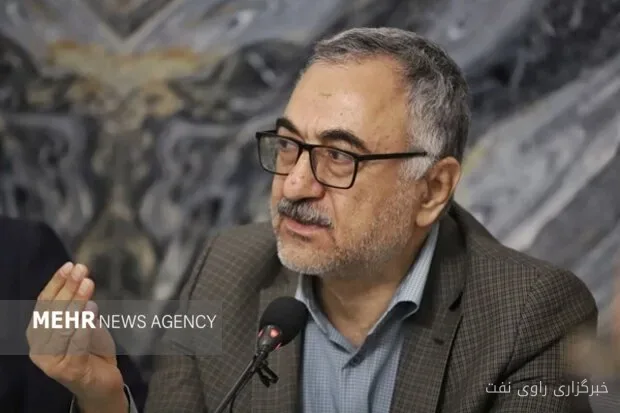
Saeed Leilaz, an economist, emphasized the importance of utilizing the internal potentials of the country's economy at the first specialized media meeting titled "War and the Future of Iran's Progress" and stated: A significant portion of the necessary facilities for reconstruction and enhancement of production is available within Iran, and by employing a coordinated industrial and economic policy, these facilities can be utilized.
War Damages and the Need for Reconstruction
He clarified: One of the areas affected as a result of the war is the construction sector, where approximately 200,000 residential units have been damaged. In this regard, a program for reconstruction can be defined, with its essential elements sourced from within the country, leading to the activation of various economic sectors.
Leilaz, referring to Iran's technical and industrial capabilities, noted: Our country has a specialized workforce and considerable engineering capacity, and in areas such as bridge construction, railways, and civil projects, we have good engineers and skilled labor. Therefore, the execution of many infrastructure projects is more dependent on securing resources and the will to advance the projects than on a lack of technical capacity.
Preventing Capital Flight and Economic Growth
This economist emphasized the necessity of preventing capital flight from the country's borders and said: Over the past few decades, attention has always been paid to capital accumulation in Iran's economy, but part of the capital has been accumulated abroad. If economic policies are designed in such a way that capital remains within the country and is directed towards production, significant capacity for economic growth will be formed.
He referred to the trend of capital formation in Iran's economy and said: The share of gross fixed capital formation has decreased in recent years, and this has become one of the fundamental challenges of Iran's economy. To achieve sustainable growth, conditions must be created to increase domestic investment and curb capital flight.
Leilaz also emphasized the need for targeted support for domestic production and said: Policies should be designed in a way that both the basic needs of the country are met and domestic productions are strengthened.
He pointed to the country's production capacities and stated: Half of the country's industrial capacity is unused, and to optimize the use of these capacities, we must move towards maximizing the utilization of domestic facilities. There is suitable infrastructure and human resources in the country, and if we organize the bureaucracy system, we can easily overcome this pause.
Read more: BaleARIA Launched a New Ferry Route in Tarifa · TotalEnergies Secured a $1.8 Billion Investment in Africa's Oil and Gas Infrastructure



