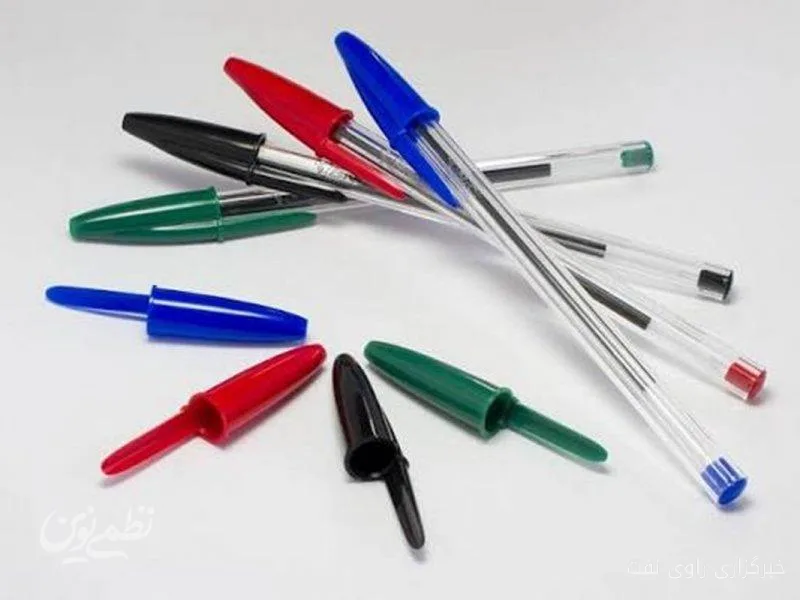
Reducing dependence on importing pen nibs is considered one of the main challenges in Iran's stationery industry. Mohsen Golestani, the head of the stationery union, has stated that the share of domestic production in the stationery market is about 80 percent. This figure was around 60 percent last year. Increased import restrictions and logistical issues, along with a decrease in smuggling, have contributed to this increase in share.
Production of 350 Million Stationery Items in the First Half of This Year
Mohammad Vassali, the director general of the stationery office at the Ministry of Industry, Mine and Trade, has mentioned that the depth of domestic production in this industry is over 85 percent and noted that about 350 million stationery items have been produced in the first half of this year. Despite this, some manufacturers are still dependent on securing raw materials from abroad. Jamshidi, one of the active producers in this field, emphasized that while some materials like ink are produced domestically, pen nibs are specialized components that can only be sourced from countries like India and China.
Read more: The European Union is examining delays in the implementation of the methane law
Problems Arising from Currency Fluctuations and Rising Costs
Fluctuations in the prices of petrochemical raw materials and currency restrictions are other problems that manufacturers face. Mahmoudreza Sanatkare, the head of the stationery manufacturers' association, has pointed out these issues and emphasized that these factors have led to increased production costs and consequently reduced purchasing power for customers. Jamshidi also mentioned the frequent changes in product prices, stating that in the past, producers usually adjusted prices only once a year, but now this interval has reduced to six months, and in some cases, prices change monthly.
Securing raw materials at high prices has become a serious challenge for producers. Jamshidi stressed that if import restrictions continue, manufacturers will face even more difficulties in securing raw materials.
The Impact of Rising Prices on Buyer Behavior
Although sellers in the stationery market have not yet faced a shortage of goods, price fluctuations and reduced purchasing power among customers have negatively affected their buying behavior. Two stationery sellers reported that customers are now more sensitive to prices than before, which has led to a noticeable decrease in their sales.
These problems have affected not only producers but also buyers. The head of the stationery manufacturers' association has previously mentioned the decrease in people's purchasing power and stated that producers are unable to pass all increased production costs onto consumers.
Ultimately, given the current market conditions and existing challenges, the future of the stationery industry in Iran is heavily dependent on securing raw materials and currency fluctuations, and producers must adopt more effective strategies to maintain production and reduce dependence on imports.
Read more: The CEO of the Airports Company announced the safety of flights in Iranian airspace · The Deputy Minister of Electricity and Energy announced plans for importing electricity from Turkey and Azerbaijan



