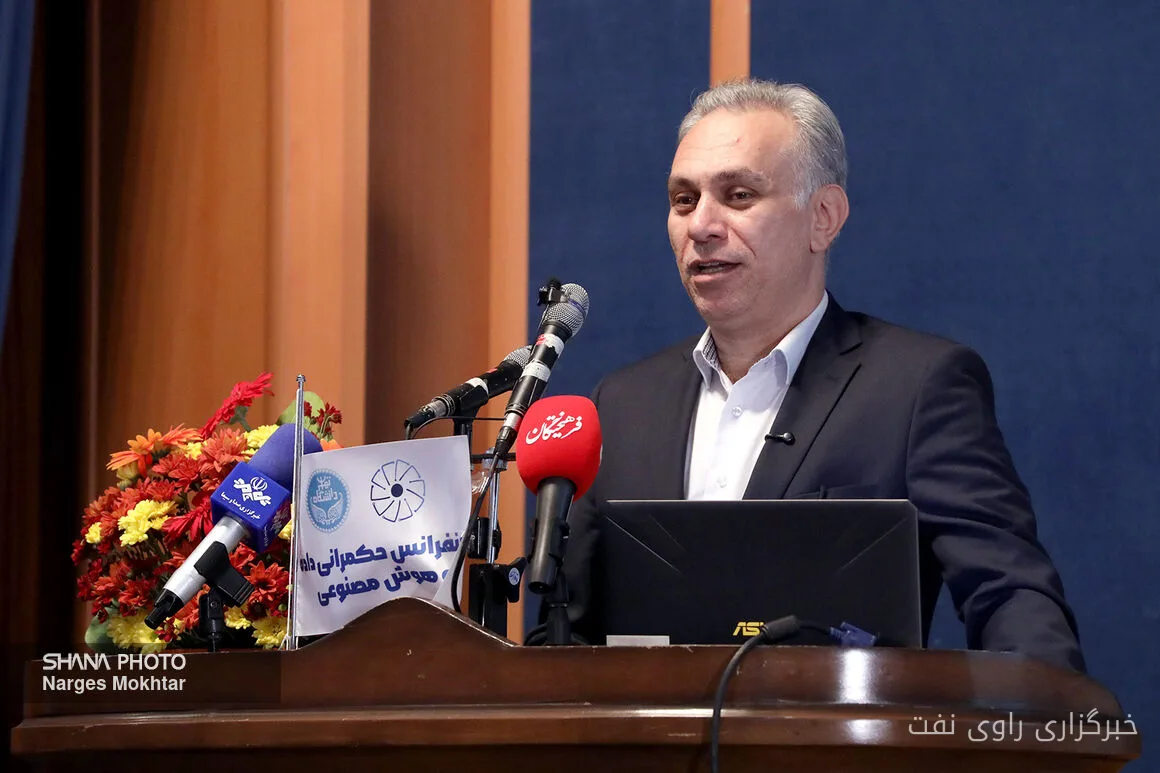
Pezhman Omid-Moghaddami, the Director General of Information Technology Development, Security, and Smartization at the Ministry of Oil, pointed out the importance of developing a roadmap for digital transformation in executive agencies at the second national conference on data governance and artificial intelligence held at the Faculty of Engineering of the University of Tehran. He emphasized that data governance is one of the components of this roadmap and stated that this area should be part of a comprehensive program for smartizing the government and enhancing the performance of executive agencies.
The Necessity of Moving Beyond Data Accumulation and Traditional Reporting
Omid-Moghaddami, referring to the development of information technology infrastructure in the country, said: "In recent years, many efforts have been made to create infrastructures and establish communication between systems, and now many agencies are equipped with data repositories and business intelligence tools." He added: "But are we using these capacities correctly?" He also emphasized the need to identify hidden relationships between variables and the reasons for changes, adding that artificial intelligence can be effective in achieving this goal.
Read more: The Presence of Nanotechnology in the Production of Iranian Oil Catalysts
Omid-Moghaddami referred to an example of the application of this technology in the oil industry and said: "If energy consumption in a refinery unit increases, merely observing this change is not enough; the cause must be investigated so that the manager can make a better decision."
Artificial Intelligence and the Role of Humans in Decision-Making
The Director General of Information Technology Development at the Ministry of Oil also emphasized that artificial intelligence cannot replace human decision-making. He said: "Data analysis and pattern recognition through artificial intelligence can assist managers, but the final decision must depend on managerial judgment and consideration of human factors."
Omid-Moghaddami stated: "In the oil industry, decisions such as continuing or stopping production are related to technical, economic, and organizational commitments. Therefore, evaluating all aspects of the decision and selecting the appropriate solution still requires human attention." He also pointed to the necessity of moving beyond a system-oriented view to the concept of smartization, stating: "Smartization makes sense when the capacity of artificial intelligence is used for analysis and decision-making."
The Director General of Information Technology, Security, and Smartization at the Ministry of Oil further referred to the multitude of programs and requirements in the field of information technology and said: "Digital transformation is valuable when it has a tangible output for the organization. This output is not limited to financial revenue but also includes increased speed, improved quality, and enhanced productivity."
Omid-Moghaddami also emphasized that if data governance does not lead to value creation, digital transformation cannot strengthen the organization's economy, and artificial intelligence does not have a measurable impact on performance, it will not succeed in achieving its main objectives.
Data Governance and the Development of the Digital Economy
Omid-Moghaddami continued by highlighting the importance of data in which an agency has unique authority and credibility, stating: "If legal, security, and privacy requirements are met, this data can be used to provide valuable services to other sectors. From this perspective, data governance can contribute to the development of the digital economy and the creation of added value."
He also emphasized the necessity of revising organizational structures, stating that digital transformation is not limited to the implementation of technological projects, but the organizational structure, processes, and required data must be redesigned in accordance with new conditions.
Omid-Moghaddami, referring to the complexities of data governance in the oil industry due to the extensive value chain, said: "Creating a smart and integrated platform requires a precise understanding of the relationships between different sectors of this industry, and it must be determined which essential data is needed to enable joint utilization of data and the development of digital services."
In conclusion, he emphasized that the future of digital transformation depends on identifying hidden patterns in data and strengthening intelligent decision-making, and maintaining the effective role of humans in decision-making is of special importance.
Read more: The Necessity for Industries to Utilize Nanotechnology to Enhance Products · Italy's Energy Sold Part of Its Share in Seven Indonesian Blocks