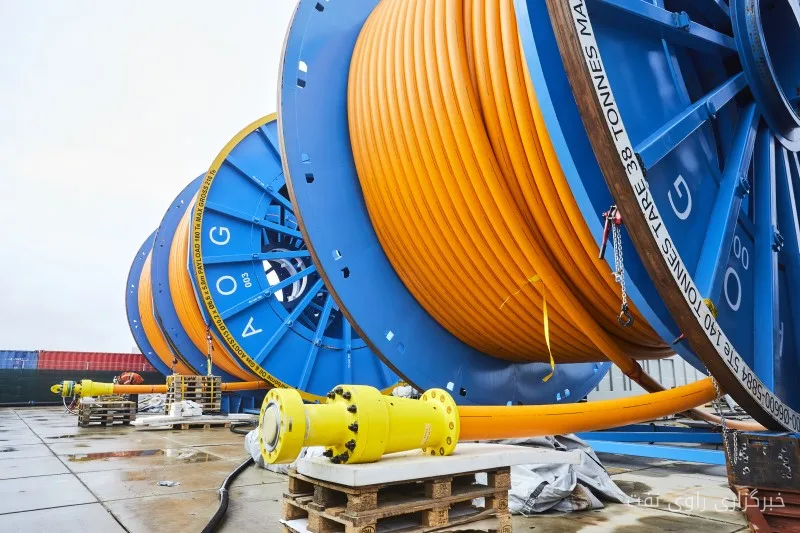
Petrobras has signed a contract with Strohm B.V. and its Brazilian subsidiary to supply thermoplastic composite pipes (TCP) for water injection and gas lift applications in Brazil's deep offshore post-salt provinces. This contract particularly focuses on innovative piping technologies that can enhance operational efficiency and reduce production costs.
Contract Details and TCP Pipe Technology
Thermoplastic composite pipes will be installed at water depths of up to 1500 meters. In addition to supplying the pipes, this contract includes qualification testing, project engineering, field services, and support for testing and installation at sea. Petrobras will evaluate this technology under real operational conditions and will test the transportation and installation methods using its regular pipelaying fleet.
Benefits of Composite Pipes and Officials' Comments
The TCP pipes produced by Strohm are made using carbon or glass fibers and polymers such as polyethylene or polyamide. These pipes are corrosion-resistant and retrievable, designed as a lighter alternative to traditional flexible and rigid pipes, which can simplify transportation and installation at sea.
Rento Bastos, Vice President of Strohm Brazil, regarded this contract as a testament to the credibility of the technology and Strohm's capabilities, considering it an important milestone in the company's roadmap. Martin van Anna, CEO of Strohm, noted that this project reflects Petrobras's efforts to introduce advanced piping technologies that contribute to improving operational efficiency and reducing production costs.
Details regarding the value of this contract, the volume of pipes supplied, and the specific post-salt fields where the technology will be utilized have not been disclosed. However, this contract could aid in the further development of piping technologies in Brazil and lead to improved operational conditions in the country's offshore projects.
Read more: NGL3100 Feed Gas Sale Contract Signed