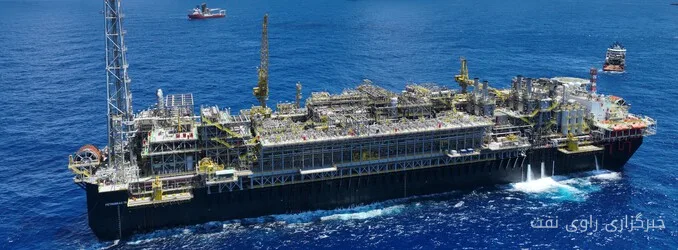
In the third quarter of 2023, Petrobras achieved an average production of 3.512 million barrels of oil equivalent (MMboed), which represents a 5.3 percent increase compared to the second quarter and an 11.7 percent increase compared to last year. The company attributes the production increase to high production efficiency over the past eight years and the startup of FPSO units P-78 and P-79 in the Buzios field.
Production Records in the Buzios and Mero Fields
In the third quarter, 12 new producing wells began operations, including six wells in the Campos basin and six wells in the Santos basin. Total operational production reached a record 5.08 million barrels of oil equivalent per day, and pre-salt production reached 4.46 million barrels of oil equivalent per day.
Petrobras' pre-salt oil production reached 2.454 million barrels per day, marking a 6.7 percent increase compared to the previous quarter. This increase was made possible by the startup of seven new wells, six of which are in the Santos basin. Production in deep and ultra-deep post-salt fields also decreased by 4.2 percent to 341,000 barrels per day, while production in coastal and shallow areas increased to 36,000 barrels per day.
Performance of FPSO Units and New Capacities
In the Mero field, the FPSO unit Alexander de Gusmão reached its designed capacity of 180,000 barrels per day in August. After a contract amendment to increase capacity, this unit achieved a new record of 190,000 barrels per day in September. Additionally, the FPSO unit Sepetiba, leased from SBM Offshore, surpassed its designed capacity of 180,000 barrels with a daily record of 212,000 barrels. Overall, the Mero platforms averaged 760,000 barrels per day this quarter, making it the third-largest producing field in Brazil after Buzios and Tupi.
The FPSO platform Almirante Tamandaré in the Buzios field set a monthly record of 263,000 barrels per day in July, remaining the highest-producing platform in Brazil. Furthermore, the Buzios platforms achieved an average natural gas export of over 11 million cubic meters per day for the first time.
The P-80 and P-82 platforms, recently launched from the Tuas Boulevard shipyard in Singapore, are en route to Buzios. Each of these platforms is designed to produce 225,000 barrels per day and compress 12 million cubic meters of gas per day, and they are expected to be operational as the ninth and tenth units in the field by 2027.
The associated gas utilization index reached a record 98.3 percent, and international production was maintained at 28,000 barrels of oil equivalent per day.