The Parsian operational area, with four active gas fields: Tabnak, Homa, Shanoul, and Varavi, has reached a daily production capacity of approximately 65 million cubic meters of gas. This area, with 102 wells, plays a significant role in supplying feedstock for the Parsian gas refinery and ensuring the stability of gas production in the country.
Details of Tabnak Gas Field
The Tabnak gas field, located in the southwest of Lamerd County, has 47 wells, 45 of which are in the production cycle. The daily gas production from this field is approximately 37 million cubic meters, and the production of gas liquids reaches 16,500 barrels. Additionally, the produced gas, after separation and purification, is sent to the Parsian gas refinery via two 30-inch pipelines.
Read more: National Iranian Gas Company and Energy Operators on the Path to Optimizing Gas Consumption
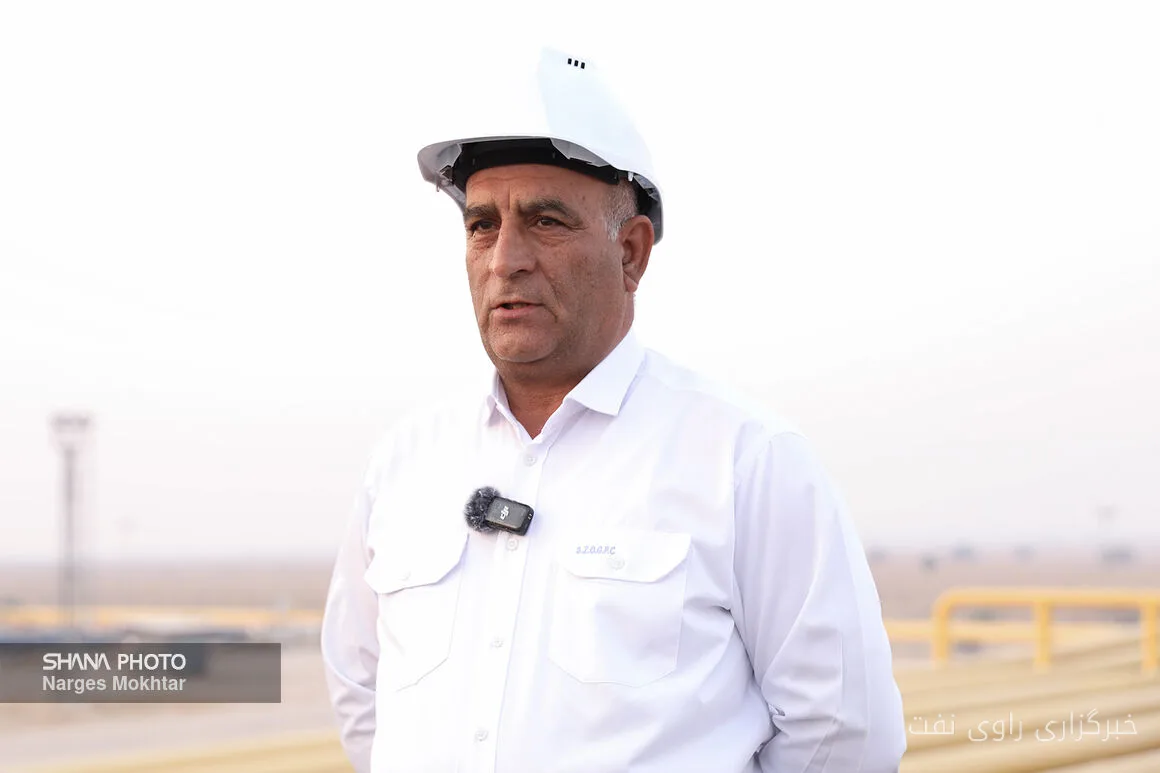
The head of the Parsian operational area, Jaber Cheroumi Zadeh, emphasized the importance of constructing the Tabnak separation center, stating that the separation of water and gas liquids from the extracted gas before transferring it to the refinery helps improve feedstock quality. This center is nearing completion, and its operation will enhance the preparation and transfer process of high-quality gas.
Major Repairs and Production Maintenance
Cheroumi Zadeh also referred to the production maintenance and major repair plans in the Parsian operational area, saying: "This year, major repairs have been carried out in the Homa and Shanoul fields and the separation center of these fields. Various preventive and corrective actions have been taken to increase the reliability of the equipment."
He also mentioned the replacement of damaged pipelines in the facilities, stating: "Some of the transmission lines were replaced due to corrosion and damage, based on the recommendations of the technical inspection unit, to avoid potential problems and production declines during the cold season." Additionally, various operations, including cementing and perforating on the wells, have been performed to improve performance and increase the production capability of the wells.
Cheroumi Zadeh emphasized that all these activities are aimed at maintaining production capacity and ensuring sustainable gas supply during the cold days of the year.
The Role of Local Workforce
The head of the Parsian operational area highlighted the role of local human capital in the activities of this area, stating: "About 1,200 people work in this area in four shifts and on a rotational basis, with approximately 50 percent of them being local workforce. Utilizing the capacity of local human resources in this area is of great importance."
Cheroumi Zadeh noted the efforts of employees during the imposed war, stating that during those times, gas production continued without interruption, and the necessary feedstock for the Parsian gas refinery was provided. He also referred to the difficult working conditions of the employees, stating that their work is done in 12-hour shifts with a rotational pattern of 14 days on and 14 days off.
Cheroumi Zadeh concluded with hope that, with the cooperation of the people in optimizing energy consumption, this winter will pass with the stability of the gas network and the fulfillment of subscribers' needs.
Read more: The Ministry of Oil Needs Experienced Managers Like Hamid Bord · Decrease in Natural Gas Prices in the United States Due to Mild Weather