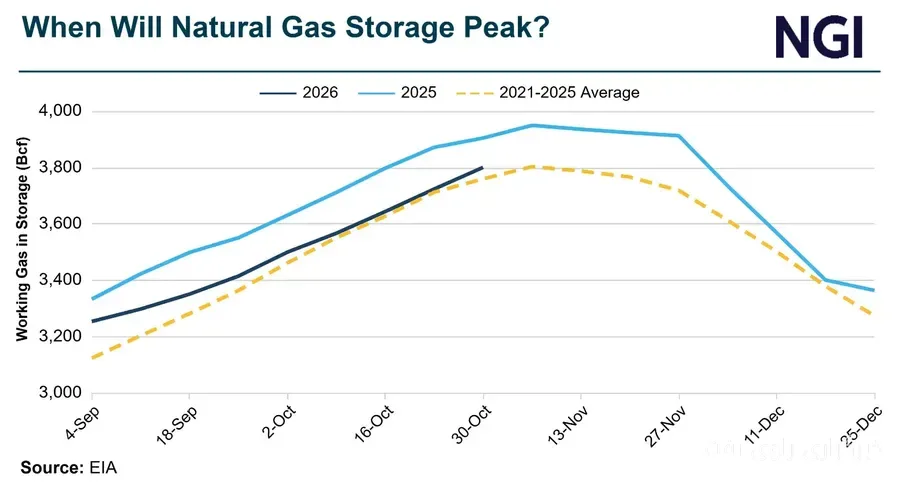
Natural gas reserves in the United States have approached 3.9 trillion cubic feet (Tcf), and mild weather conditions in November could help these reserves reach this level by mid-November. However, analysts believe that increased exports of liquefied natural gas (LNG) may create a need for more reserves to cope with winter demand fluctuations.
Current Reserve Status
Currently, natural gas reserves in the United States are increasing to 3.9 Tcf. This increase is due to mild weather conditions in November and reduced domestic demand. It is expected that these reserves will decrease in late November when winter withdrawals begin. According to reports, current reserves are about 5 percent higher compared to last year, but still 10 percent lower than the five-year average.
Future Challenges with LNG Exports
Analysts warn that increased LNG exports from the United States to global markets could put pressure on domestic demand. As global demand for natural gas rises, this could lead to a shortage of domestic reserves during the winter season. Currently, the United States is one of the largest LNG exporters in the world, and this export is significantly increasing.
With continued export growth, analysts predict that natural gas reserves may not be able to sufficiently meet domestic needs during the winter season. This could lead to price increases and volatility in the natural gas market. Therefore, there is a need for adequate storage to cope with rising demand and potential market fluctuations.
Additionally, according to seasonal forecasts, there may be increased demand for heating in the coming months. This necessitates more precise planning for managing natural gas reserves. Therefore, the status of reserves and natural gas exports must be carefully monitored to prevent negative impacts on the market and consumers.
Read more: Natural Gas Production Forecasts Remain Positive in the Future Market