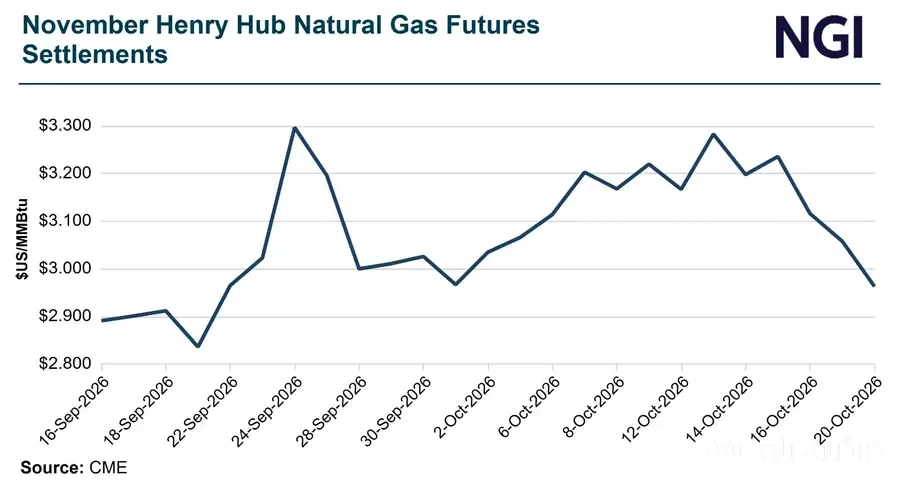
Natural gas futures significantly decreased on Tuesday, falling below $3.000 per MMBtu (million BTU). This price drop was influenced by forecasts of warmer weather and expectations of continued gas injections into the market until November.
Natural Gas Market Analysis
Reports indicate that demand for natural gas in global markets is declining due to rising temperatures and reduced heating needs in the final months of the year. These changes have led market participants to be concerned about future prices, thereby putting pressure on natural gas futures contracts.
Read more: Price pressure reduction in the U.S. requires policy attention
Seasonal Forecasts and Their Impact on Prices
According to seasonal forecasts, temperatures in many regions are expected to rise unexpectedly, leading to a reduced need for natural gas for heating. In this context, it is anticipated that gas injections into the market will continue, which will contribute to the ongoing price decline.
Furthermore, given the increase in natural gas inventories in the United States, experts predict that prices may remain under pressure. This situation, especially as producers seek to maintain their market share, could intensify competition among them.
Economic Implications of These Changes
The decrease in natural gas prices could have profound effects on the energy industry and the macroeconomy. On one hand, lower energy costs could benefit consumers and industries, but on the other hand, it will pose challenges for producers seeking to maintain profitability.
Ultimately, considering the climate changes and seasonal forecasts, market participants must be vigilant about price fluctuations and adopt appropriate strategies to manage the risks associated with these fluctuations.
Read more: Aref announced a 50% growth in trade between Iran and Tajikistan · Increase in LNG production and demand strengthened natural gas prices