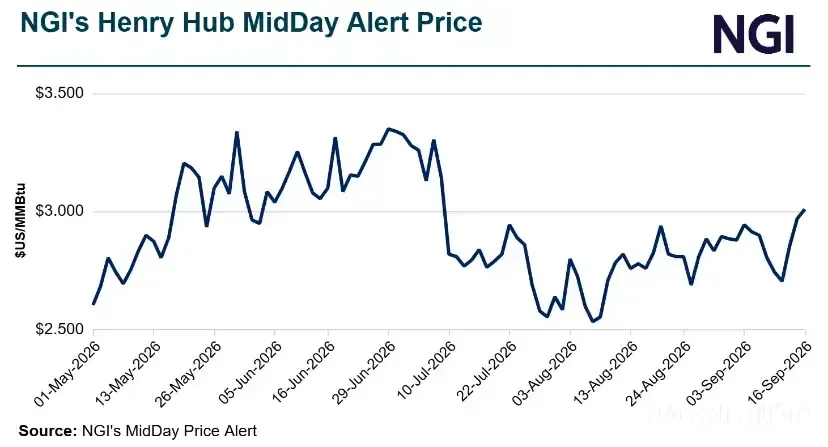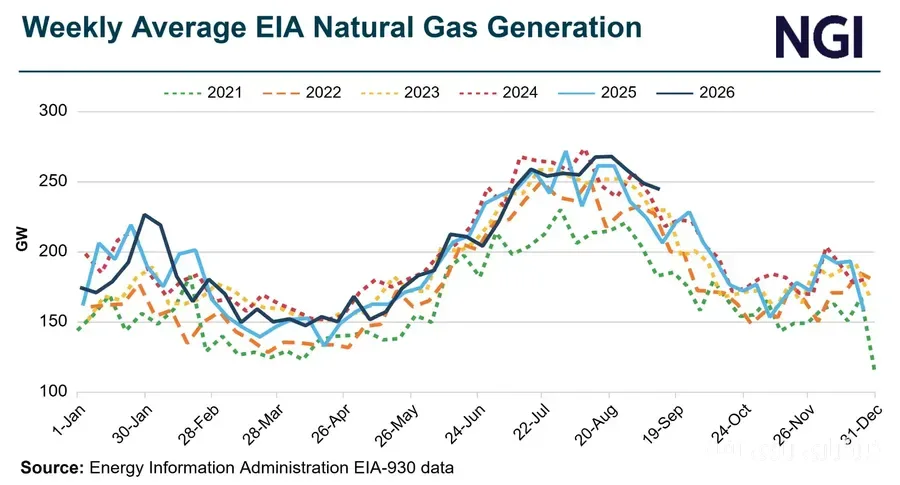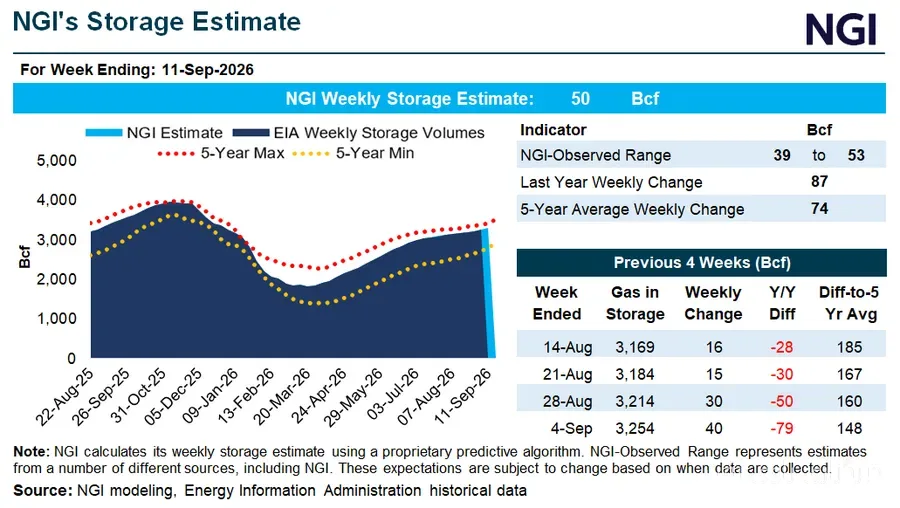
Natural gas prices in the futures markets faced a decline on Wednesday after recent attempts to break the $3.00 per million BTU (MMBtu) barrier. The continued downward trend in prices is attributed to reduced demand during the transition season and the impact of late summer heat on the market.
Demand Pressure on Prices
Weak demand during the transition season, which is approaching autumn, is the main factor behind the price drop in the natural gas market. Although some forecasts indicated an increase in demand during this season, weather conditions and temperature fluctuations have negatively impacted these predictions.
Read more: Monthly Report on Ship Auction Market in China in August 2026
Impact of Weather Conditions
The late summer heat experienced in some regions of the country did not significantly boost demand. As a result, natural gas prices have faced a substantial decline, dropping below $3.00 per million BTU. These conditions reflect the unpredictable fluctuations in the natural gas market, which are heavily dependent on weather changes.
According to reports, natural gas prices in futures trading have reached the $2.90 per million BTU mark, and this downward trend may continue in the coming days. Overall, analysts believe that as the cold season approaches, demand for natural gas may increase, but currently, the market is affected by weak demand.
Read more: EU Draft to Eliminate Hydrogen Requirements · Unprecedented Rise in Diesel Prices in America to $6.20 per Gallon