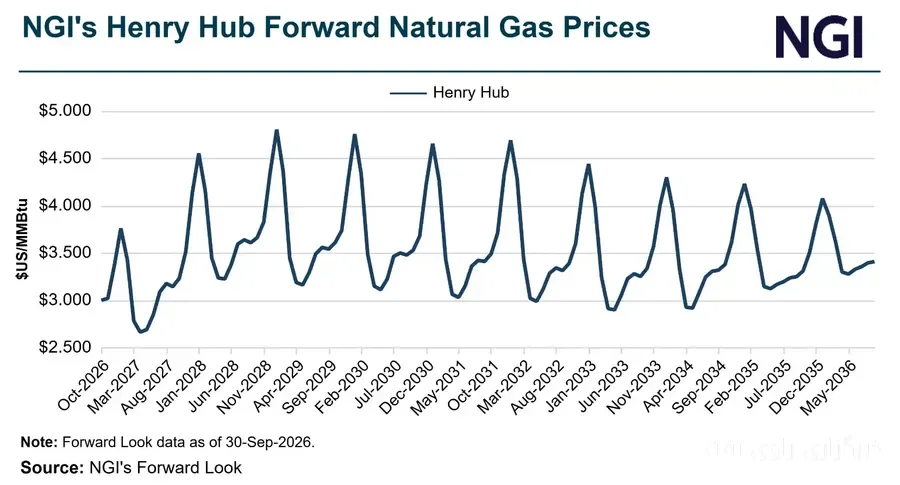
Natural gas futures struggled to gain meaningful momentum this week despite forecasts of mild weather. Meanwhile, contracts extending from December to February, known as the heart of the winter season, followed a similar pattern, although signs of a positive tone in these contracts are observed.
Weather Forecasts and Their Impact on the Market
Natural gas market analysts have warned that lower production may leave the market vulnerable to sudden weather changes. This is particularly important in the winter season when demand for natural gas peaks. For example, forecasts indicate that temperatures in some parts of the country will be significantly higher than historical averages, which could have substantial effects on demand.
Production Status and Its Impact on Prices
Natural gas production in the United States has been consistently declining, significantly impacting market prices. Currently, natural gas production has reached about 94 billion cubic feet per day, which represents a noticeable decrease compared to last year. This decline in production, coupled with forecasts of mild weather, has placed the market in a sensitive position.
Analysts believe that if natural gas production remains at low levels, the market may face further challenges, and prices could be affected by weather changes. This could benefit buyers and consumers, but in turn, producers may face more serious problems.
Ultimately, the analysis of natural gas futures indicates that while the market is moving towards stability, external factors such as weather can have significant impacts on prices and demand. This situation requires careful attention and ongoing monitoring from producers and consumers to effectively address the challenges ahead.