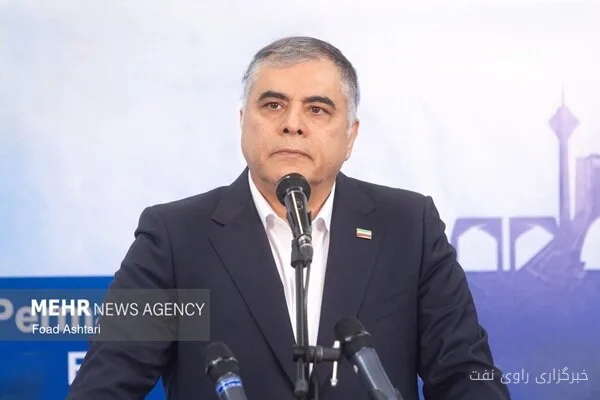
Mohsen Pak Nejad, the Minister of Oil, recently referred to the increase in diesel production at the country's refineries. This change in production has occurred due to the increase in crude oil feedstock at refineries and changes in processing mechanisms. Pak Nejad stated that until the middle of last year, Iran was recognized as a diesel-importing country, but with the reforms made in the refining industry and the increase in production capacity, this trend has stopped.
Increase in capacity and production at refineries
The Minister of Oil emphasized the importance of increasing diesel production, stating that refineries have been able to meet domestic needs with new capacities and improved processes. This action has not only helped reduce dependence on imports but has also led to an increase in energy security in the country. Pak Nejad also referred to the technical details of the production increase, adding that refineries have been able to significantly enhance the quality and quantity of production by utilizing modern technologies.
Read more: Continental signed an oil agreement with PDVSA in Venezuela
Persian Gulf Mehr refinery and its role in fuel supply
Pak Nejad continued by referring to the Persian Gulf Mehr refinery project and announced that this refinery will be operational by the end of the current year. The production capacity of this refinery is such that it can significantly contribute to the increase in the production of gasoline, diesel, and other fuels needed by the country. With the completion of this project, it is expected that domestic fuel needs will be significantly met, thereby reducing dependence on imports.
This refinery, with a daily production capacity of 300,000 barrels of crude oil, will be one of the largest and most advanced refineries in the country. Pak Nejad also highlighted the importance of the Persian Gulf Mehr refinery in improving the quality of produced fuels, stating: "This refinery, using state-of-the-art technologies, can adhere to global standards in fuel production and become one of the credible sources of fuel supply in the country."
In conclusion, the Minister of Oil emphasized that these actions are part of the government's comprehensive plan to increase self-sufficiency in fuel production and reduce dependence on imports. Given the changes made, it is expected that Iran will become one of the leading countries in diesel and other petroleum product production in the region.
Read more: India responds to U.S. tariff threats regarding Russian oil · Khangiran field is preparing for winter