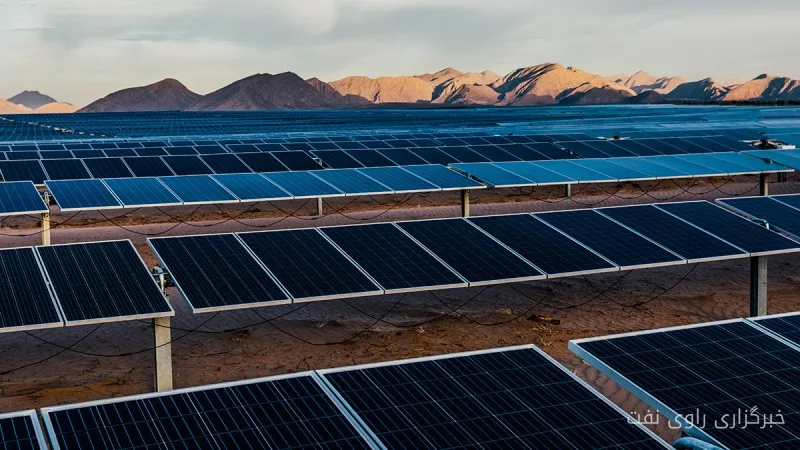
Mexico's state electricity company (CFE) is preparing to approve up to 60 renewable energy projects, primarily solar energy, which are expected to add 8.2 gigawatts of new capacity to the country's power grid. The total investment in these projects could reach $12.5 billion.
Project Details and New Capacities
The projects set to be approved today by the Federal Electricity Commission (CFE) may be fewer than 60. This information has been obtained from unnamed sources. However, although the number of projects may change, all of them will be part of the goal of providing about 32 gigawatts of new electricity generation capacity by 2030. According to plans presented by Claudia Sheinbaum, the President of Mexico, it is expected that about 70% of this 32 gigawatts will come from alternative energy systems such as solar and wind.
Read more: Savings of 153 billion rials in gas transfer area 7 by implementing 23 proposals
Investment Outlook and Capacity Growth
According to reports, the share of renewable energies in new capacity has now decreased to about 30%. Claudia Sheinbaum announced in February of this year: "Mexico not only has oil, but also has solar and wind resources that create less environmental damage. We are working on energy transition, and our main goal is to increase the share of renewable energy sources in consumed electricity. This is our main goal between now and 2030." Given recent events in Europe, where electricity prices in countries with the highest solar and wind energy production capacity are reaching record levels, the effects of energy transition may not be as clear and straightforward as many think. However, Mexico has abundant climatic resources that have not been properly utilized so far.
The Mexican government is striving to change this situation. Earlier this month, the Ministry of Energy announced that 42 solar energy projects with a collective capacity of 6.86 gigawatts are being planned, and there are also 13 wind energy projects with a capacity of just over 4 gigawatts in the pipeline. The Federal Electricity Commission holds nearly 70% of this pipeline. Additionally, 4.44 gigawatts of other solar projects are awaiting allocation, as well as 2.16 gigawatts of wind capacity also awaiting allocation.
The growth of wind and solar capacities is a priority in President Sheinbaum's energy policies. These policies emphasize a greater role for private companies in Mexico's energy sector. The current government has stipulated that the state company must produce at least 54% of the country's total electricity, but the remaining 46% is open to private producers. According to Luz Elena González, the Minister of Energy, private companies are ready to invest $4.75 billion to build 3.32 gigawatts of alternative production capacity in 20 separate projects.
There are hopes that adding more wind and solar capacities will strengthen the power grid, which has suffered from frequent outages over the years. However, these outages are usually related to weather phenomena, such as thunderstorms, and are not connected to the type of production capacity in the region. Furthermore, the final cost of new capacity may be higher due to the need to add transmission lines to carry electricity from wind and solar facilities to consumption centers.
However, the effort to develop renewable energies does not come at the expense of Mexico's oil and gas resources. In fact, President Sheinbaum seems to be pursuing a comprehensive approach to energy security, and increasing oil production is also a priority for her government, aiming to reach 1.8 million barrels per day by 2030. The focus on increasing electricity production seems to target a 140% increase in solar capacity, a 90% increase in geothermal capacity, and a 70% increase in wind capacity over the next four years.
Read more: Incident of the M/V Espírito Santo Express in the Atlantic Ocean · Mehdi Hosseini emphasized the participation of small investors in the development of renewable energies