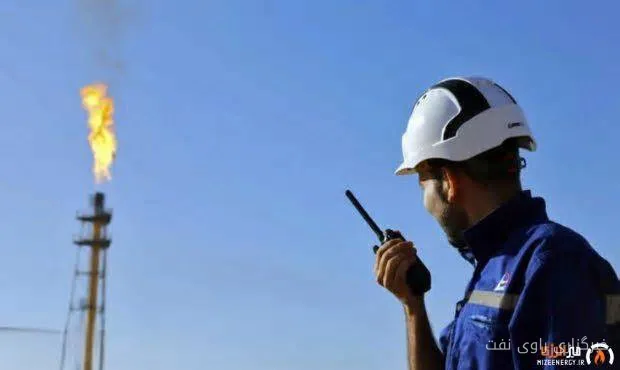
The volume of associated and flare gas collection has exceeded 17 million cubic meters per day. This achievement, along with ongoing projects and signed contracts, demonstrates the continued movement of the oil industry to fulfill the obligations of the seventh development plan and to maximize the utilization of the country's hydrocarbon resources.
Collecting Associated Gas as a Valuable Asset
Associated gas from oil is a valuable asset that can be converted into feedstock for petrochemical industries and value-added products instead of being burned in flares. Implementing flare gas collection projects is not only an environmental initiative but also part of the strategy to develop the value chain of the oil industry and increase the economic productivity of national resources.
Read more: OPEC+ Oil Coalition Policies Remain Unchanged
In this regard, a series of contracts and projects have been defined in collaboration with the private sector, which, while increasing collection capacity, also contributes to investment development, job creation, and reducing pollutant emissions.
Dehloran Petro Refinery; A Strategic Step in Flare Gas Collection
The Dehloran Petro Refinery project (NGL 3100), with an investment of about 1.1 billion euros, is one of the significant operational initiatives in this area. This project aims to collect and process associated gas from the Cheshmeh-Khosh, West Paydar, Danan, Sarvak, Azar, and Dehloran fields and has a processing capacity of 240 million cubic feet of gas per day. With the implementation of this project, 9 flares in the region will be extinguished.
The importance of this project is not limited to its processing capacity; it can also create added value and strengthen economic activities in the region by converting associated gas into usable industrial feedstock.
Moreover, transferring flare gas collection projects to the private sector is another approach of the Ministry of Oil that can significantly enhance the country's gas collection infrastructure. According to statistics, 6 work packages have been commissioned, 17 packages are underway, and another 16 packages are in the contract signing stage.
The gas collection capacity in the commissioned packages is reported to be about 78 million cubic feet per day, and with the completion of ongoing projects, the daily collection capacity will reach approximately 504 million cubic feet.
The seventh development plan has made the collection of flare and associated gases one of the key priorities of the oil industry, and the target of collecting 90% of flare gases by 2027 indicates the importance of this issue in the macro planning of the country's oil and gas sector.
Read more: Nasrollah Pezeshkian Emphasized the Launch of the Gas Savings Measurement System · Fire at Lukoil-Nizhny Novgorod Refinery in Russia



