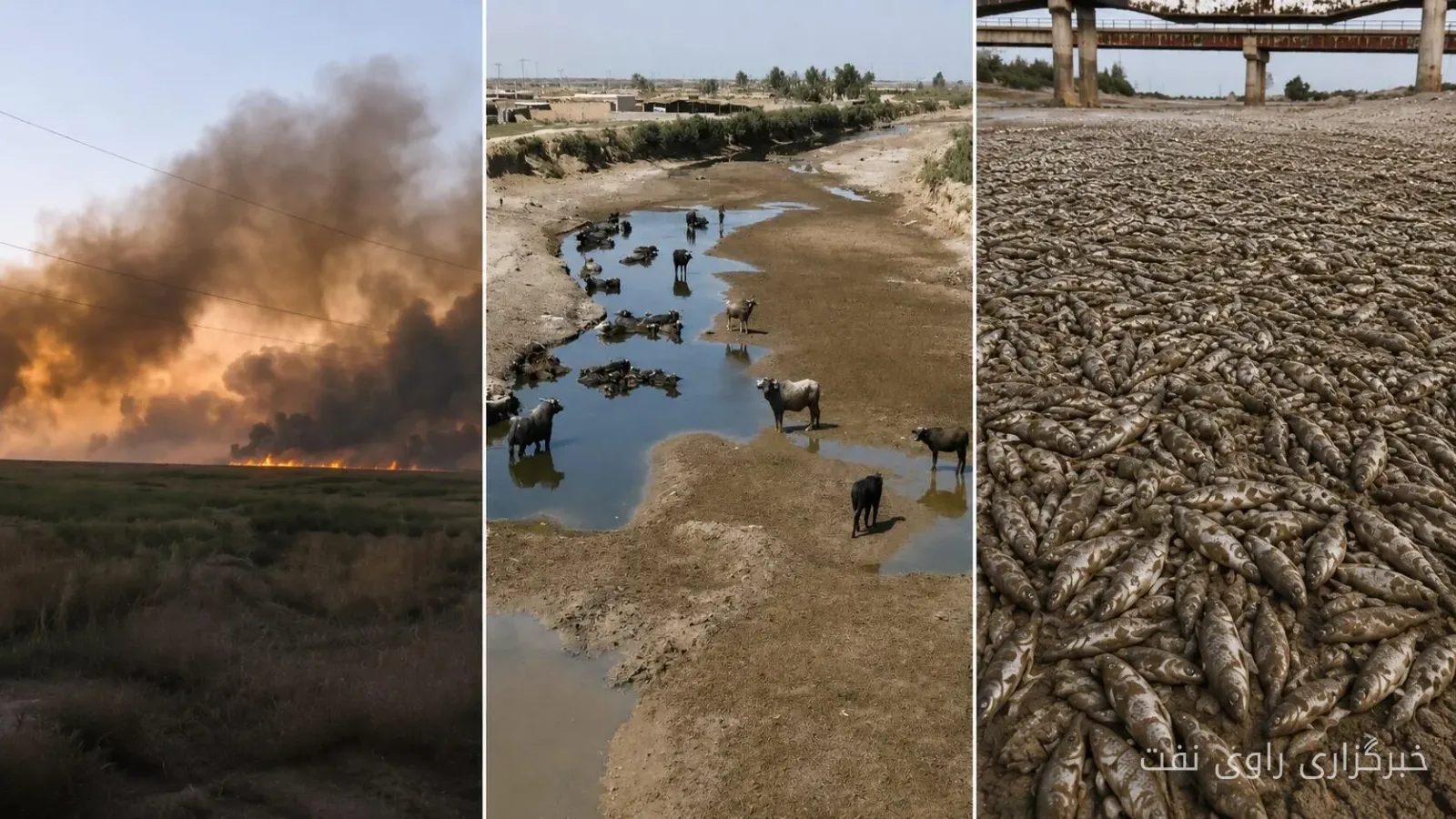
The Sohrob oil field, with a daily production capacity of 25,000 barrels of oil, is considered one of the important oil fields in the country located in Khuzestan province. In this regard, the Khuzestan Nature and Environment Lovers Association sent a letter to the new caretaker of the Ministry of Oil, requesting a review of the development model of this field and an examination of low-intervention options in the Hoor al-Azim wetland.
Necessity of Protecting Hoor al-Azim Wetland
The Khuzestan Nature Lovers Association has clearly stated in this letter that economic development and securing national interests should not come at the cost of environmental destruction and wildlife threats. They emphasized that the location of the facilities and infrastructure of the Sohrob field should be such that it creates minimal intervention in the Hoor al-Azim wetland. This wetland, as a sensitive ecosystem, requires special protection.
Read more: Wirana Shipping Emphasizes the Need to Implement Hong Kong Convention Standards
Currently, despite the issuance of an environmental permit for the Sohrob oil field development plan, the local community and environmental organizations remain concerned about the negative impacts of this project. The main question is whether it is possible to achieve production goals with less intervention in the wetland by utilizing modern technologies and engineering methods?
Suggestions from the Nature Lovers Association
The Khuzestan Nature and Environment Lovers Association has presented six specific proposals to the Ministry of Oil:
- Review the operational model of the Sohrob oil field before making permanent changes to the wetland structure.
- Compare two development scenarios with minimal intervention and the current model in terms of technical, economic, and environmental aspects.
- Maximize the use of directional and inclined drilling technologies to reduce facilities in the wetland.
- Assess the cumulative impacts of oil developments on hydrology and the quality of natural resources.
- Consider the value of ecosystem services of Hoor al-Azim in the economic calculations of the project.
- Hold a specialized meeting with representatives from the Ministry of Oil and environmental experts to discuss suitable technical options.
This association has also emphasized that their request does not mean the cancellation of the issued permit; rather, their goal is for the Ministry of Oil to consider lower-risk options before creating irreversible impacts.
Ultimately, the Khuzestan Nature Lovers Association, highlighting the importance of Hoor al-Azim for future generations, has urged the Ministry of Oil to approach this issue with a forward-looking perspective based on independent assessment. These actions can help secure the country's economic interests while also protecting the environment.
Read more: Transforming the Marmara Sea Ferry Fleet into Electric and Hybrid Ships · Luxembourg General Court Declares Parts of Green Investment Classification Criteria Illegal