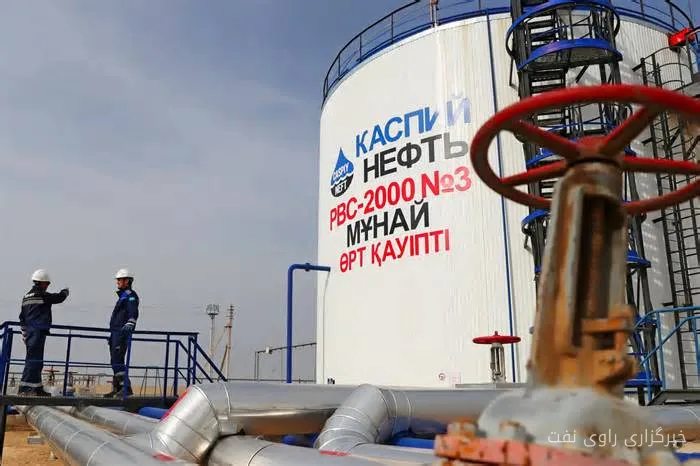
Kazakhstan has begun reviewing the construction of a Trans-Caspian route with a capacity of 35 million tons for its oil exports. This decision follows repeated drone attacks by Ukraine on oil terminals in the Black Sea and related tankers.
Reducing Dependence on Russia
Over 80% of Kazakhstan's oil exports, which are vital to its economy, are transported via the CPC pipeline through Russian territory to Europe. However, Ukrainian drone attacks on the terminal near Novorossiysk in Russia have intermittently halted CPC pipeline operations this year, forcing Kazakh producers to cut production.
Read more: Venezuela's Oil Exports Drop to 1 Million and 80 Thousand Barrels per Day
It is anticipated that shipments will be transferred from Baku to the Mediterranean Sea via the route through Tbilisi in Georgia and Ceyhan in Turkey. Two options for crossing the Caspian Sea are under consideration, which include a subsea pipeline or a larger fleet of tankers.
New Capabilities and Challenges
The total capacity of both options could reach 35 million tons annually, equivalent to more than half of the oil Kazakhstan exports via the CPC pipeline. Norlan Zhumagulov, executive director of the Kazakhstan Energy Monitoring Fund, emphasizes that this route will be costly.
A working group consisting of eight stakeholders active in Kazakhstan's largest oil fields, namely Tengiz and Kashagan, has jointly called for a review of this plan. The majority ownership of the Tengiz field is held by Chevron and ExxonMobil, while KazMunayGas, Eni, ExxonMobil, Shell, and TotalEnergies are among the largest stakeholders in the Kashagan field.
Despite the costs and time involved, Kazakhstan's oil industry needs alternative routes. With Chevron's $48 billion development plan in Tengiz, annual capacity has increased by 12 million tons, bringing production to 159,000 cubic meters of oil per day.
Drone attacks in July halted loading at the CPC oil terminal. Considering the disruptions in January and June, Kazakhstan's total production this year has decreased by 3.5 million tons. The consequences of these disruptions have led to a reduction in the 2026 production target to 96 million tons.
In 2024, Kazakhstan will be the third-largest supplier of crude oil to the European Union with exports of 52.4 million tons. However, if CPC pipeline exports are halted again, Kazakhstan can only transport about 100,000 tons of oil monthly via rail or ports in the short term.
Read more: Brent Oil Price Drops to $99 and WTI to $89 · Gabsun Report on U.S. Crude Oil Export Capacity and Proposed Infrastructure