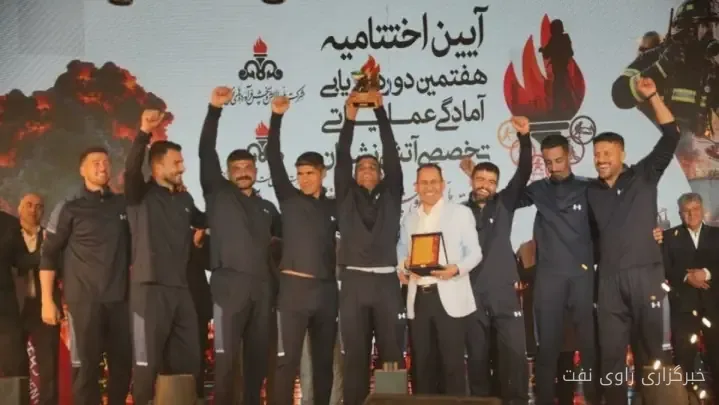
Isfahan Oil Refinery, by achieving the best record in the seventh round of the operational readiness assessment of firefighters from the National Iranian Oil Refining and Distribution Company, succeeded in securing the top position in this evaluation. This event, held to assess the operational capabilities and preparedness of firefighting teams in the face of potential incidents, is recognized as a key factor in ensuring safety and reducing industrial risks.
Details of the Assessment and Recorded Achievements
In this assessment, the firefighting team of Isfahan Refinery was able to showcase the best performance in three team items and one individual item. This success reflects the high effort and coordination of team members under tested conditions, particularly in firefighting and rescue operations, achieving remarkable results. For example, the Isfahan team reached unprecedented records in crisis response and firefighting operations, indicating the high readiness of this group compared to other teams.
Read more: Oil and gas production in the western fields of the country exceeded the mandated program
The Importance of Periodic Assessments
Conducting such assessments is of special importance for optimizing the performance of firefighting teams and increasing safety levels in oil and gas refineries. Given the potential hazards present in the oil industry, periodic assessments can help identify strengths and weaknesses in team performance and facilitate necessary planning for improvement. Additionally, these assessments can lead to increased confidence among employees and strengthen team spirit among firefighting group members.
The firefighting team of Isfahan Oil Refinery serves as a model for other refineries, highlighting the importance and necessity of preparedness for crises and unforeseen incidents. Considering the daily production capacity of this refinery, which exceeds 400,000 barrels of crude oil, this success can have positive implications for optimizing operations in emergency conditions.
Read more: Oil prices return to an upward trend on Thursday · Mohammad Reza Aref recalled his close associate in the introduction of Hamid Bord



