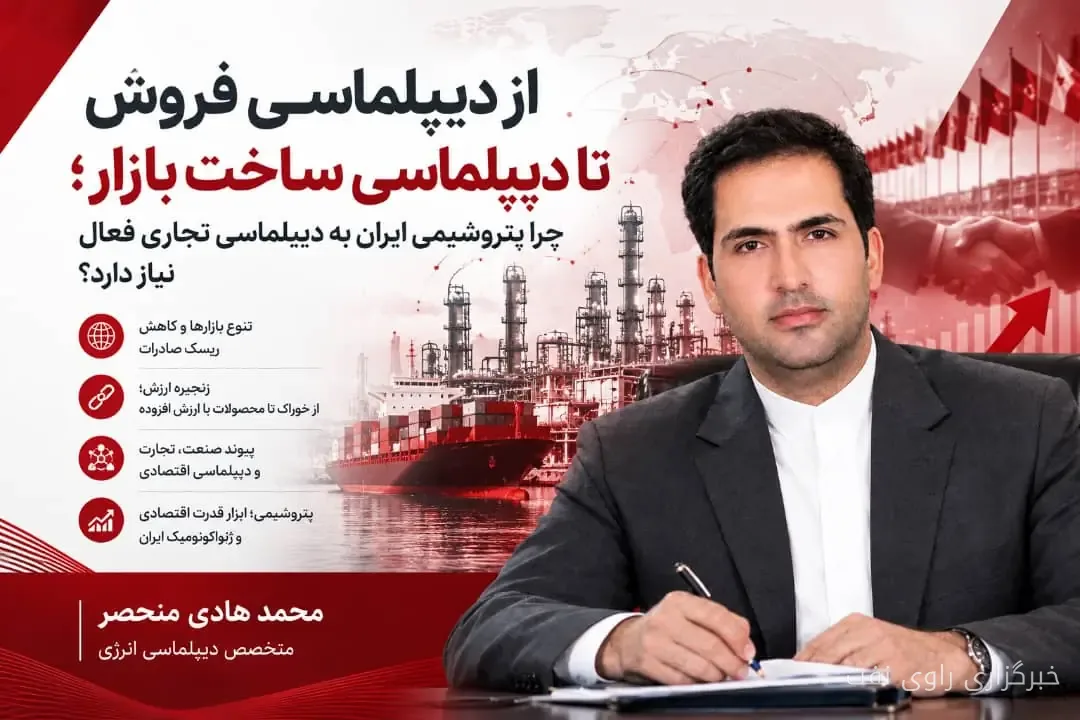
Over the past few decades, Iran's petrochemical industry has transformed from a predominantly production-oriented sector to one of the most important pillars of the country's energy economy. With access to extensive hydrocarbon reserves and the development of petrochemical complexes, the production and export capacity of this industry has significantly increased. Specifically, Iran's petrochemical production capacity has reached about 65 million tons per year, indicating the industry's high capability to meet domestic needs as well as export to global markets.
Shifting Focus from Production to Market Creation
However, in today's global economy, production alone cannot create a sustainable advantage. Successful countries in this field not only produce their products but also seek to identify new markets and diversify their customers. This is particularly important for Iran's petrochemical industry; as insufficient knowledge of global markets and lack of diplomatic capacity can hinder the extraction of maximum economic value from production capabilities.
Read more: Gulf oil exports reach 80% of pre-war levels
The main question is whether Iran's petrochemical industry should merely find customers for its products or should it create markets for these products? The difference between these two approaches is the difference between "selling" and "strategy." Selling a shipment is a short-term commercial success; however, creating a market means establishing a sustainable and expandable economic relationship.
The Necessity of Trade Diplomacy
Trade diplomacy can help Iran's petrochemical industry find its place more effectively in the global value chain by identifying new markets and reducing trade barriers. Other countries in this industry have established sustainable economic relationships with their customers through trade diplomacy, thereby maximizing productivity from their production capacities. Currently, Iran's petrochemical industry needs to adopt a new and more active approach towards trade diplomacy to identify its target markets and establish its position in international markets.
Following this shift in approach, Iran's petrochemical industry can effectively leverage its capabilities and become one of the main players in the global market. Given the high production capacities in hydrocarbon fields, the development of trade diplomacy and identification of new markets could pave the way for the success of this industry in the future.
Read more: Brent and West Texas oil prices drop with G7's decision to release diesel reserves · Farhad Tahmasbi managed the reconstruction of damaged oil facilities



