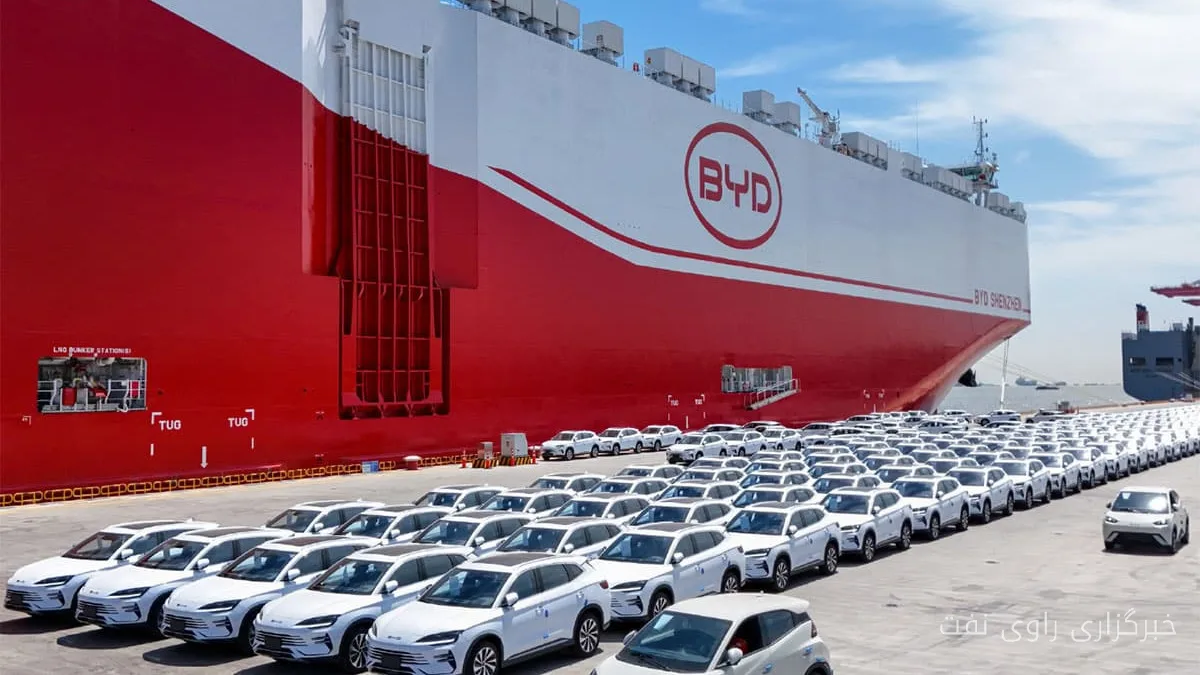
BYD, the Chinese electric vehicle giant, announced its third-quarter revenues for 2023 on Thursday, highlighting increasing challenges for Chinese automakers. The company reported that its net profit during this period reached 10.02 billion yuan (approximately 1.5 billion dollars), which, despite a 28 percent growth compared to last year, fell short of analysts' forecasts of 11.1 billion yuan.
Revenue Growth and Domestic Challenges
BYD's revenue for this period reached 221.5 billion yuan (about 33.3 billion dollars), reflecting a 13.6 percent increase, but this figure also fell below market expectations. This revenue shortfall comes as BYD faces intense competition and declining demand in its domestic market, heavily relying on international sales and higher profit margins.
Results from Other Chinese Automakers
Alongside BYD, Geely Automobile also announced its third-quarter results on the same day. Geely reported a 28 percent increase in its net profit to 4.84 billion yuan (726 million dollars), which also fell short of forecasts of 5.19 billion yuan. Additionally, the company's revenue in the third quarter rose to 98.96 billion yuan, with sales reaching approximately 812,500 vehicles during this period.
These contrasting results reflect a broader transformation in China's automotive industry, where manufacturers are increasingly turning to foreign markets to escape fierce price competition in the domestic market. With rising gasoline and diesel prices in Europe, electric vehicle registrations in the continent surged by 60 percent in September, benefiting BYD as well.
In response to new challenges, BYD is expanding its production capacity in Europe, with a factory in Hungary expected to reach mass production before the end of 2026. Geely is also continuing its international expansion in Spain in collaboration with Ford. For both companies, foreign growth is becoming increasingly important as the domestic market in China faces declining consumer confidence and reduced government subsidies for electric vehicles.
Read more: Rising Water Levels of the Rhine River and Its Impact on the Fuel Supply Chain · Trump's Reverse Strategy for Russia's Entry and China's Exit