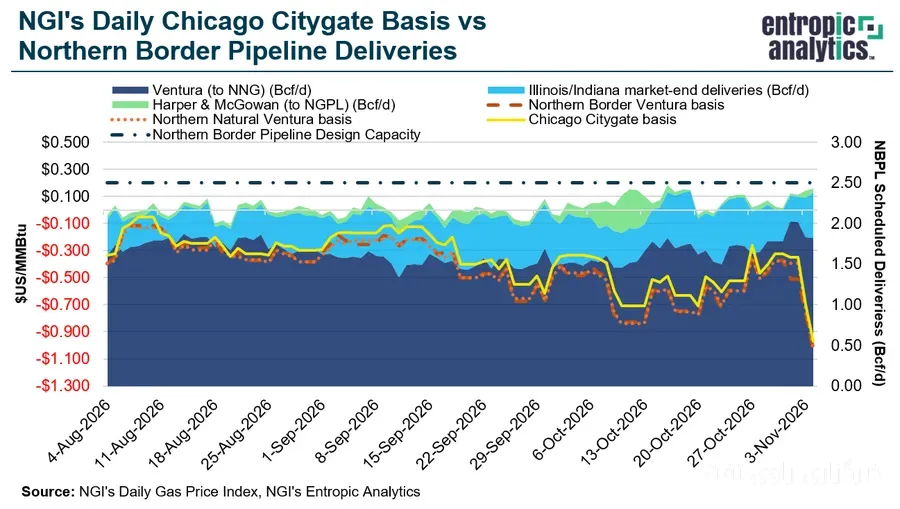
The Northern Border Pipeline has recently issued a high inventory flow order (OFO). This order was issued due to high pressures and the inability to absorb negative imbalances in the pipeline system. This situation has directly impacted the natural gas market in Chicago, increasing price volatility in the region.
Details of the Current Situation of the Northern Border Pipeline
The Northern Border Pipeline, as one of the main natural gas transmission lines in the United States, is currently facing challenges. This pipeline, which has a daily transmission capacity of 1.6 billion cubic feet of gas, is experiencing reduced flexibility in absorbing excess gas due to high pressures and inventory accumulation. These conditions have resulted in natural gas being traded at significant discounts in the Chicago market.
Read more: Ministry of Oil and Management Challenges in Iran's Oil Industry
Economic Consequences and the Gas Market
Natural gas basis discounts in the Midwestern regions have significantly increased. This increase in discounts has occurred due to negative supply and demand balance as well as increased pressure in the Northern Border Pipeline. For example, the price of natural gas in Chicago has been notably affected by these changes, and this situation could lead to increased costs for consumers in the region.
Experts believe that this situation could lead to increased price volatility in the natural gas market and create new opportunities for gas suppliers. At the same time, these changes could reduce competition in local markets, making it essential to focus on management strategies and optimizing gas transmission systems.
Read more: Rouhollah Khorshidvand and Challenges in Iran's Contracting Industry · Natural Gas Improves and Distances Itself from Severe Decline